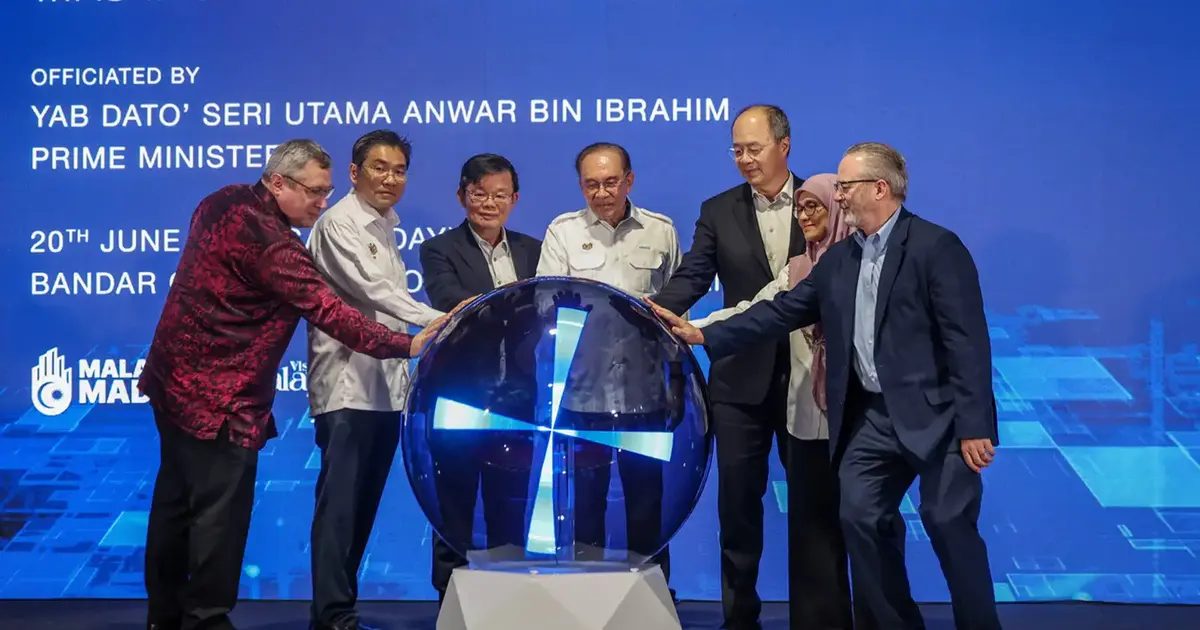
Prime Minister Anwar Ibrahim has moved to strengthen Malaysia's position in the global semiconductor ecosystem by appointing a dedicated adviser tasked with forging closer ties between industry players and academic institutions. The appointment reflects the government's strategic focus on leveraging the country's existing semiconductor capabilities whilst building a more robust pipeline of skilled talent and research output from tertiary education providers.
Anwar emphasised that the new advisory position will not impose additional financial strain on the federal budget, a significant assurance given the ongoing pressures on Malaysia's fiscal position. The arrangement suggests the adviser will operate within existing institutional frameworks and resource allocations, potentially drawing on secondment arrangements or restructuring of current advisory roles within the Prime Minister's office or relevant economic portfolios.
Malaysia's semiconductor industry occupies a meaningful but increasingly contested position in the region's tech landscape. The country hosts multiple wafer fabrication facilities, assembly and testing operations, and a network of component suppliers that collectively contribute substantially to domestic manufacturing output and export revenues. However, global competition has intensified dramatically, with rival economies investing heavily in capacity expansion, workforce development, and research facilities. The appointment signals recognition that maintaining competitive advantage requires deliberate coordination between commercial entities and knowledge institutions.
Universities across Malaysia have developed credible programmes in electrical engineering, materials science, and microelectronics. However, gaps persist between academic research agendas and industry hiring needs, creating inefficiencies in the transition from education to employment. A dedicated adviser can serve as a bridge, identifying where university curricula misalign with market demands, facilitating internship and graduate recruitment pathways, and potentially channelling research funding toward commercially relevant problems.
The timing of the appointment holds particular resonance given regional geopolitical developments. International semiconductor competition has become entangled with technology rivalry between the United States and China, whilst smaller economies like Malaysia navigate pressures to align with one bloc or another. By deepening domestic industry-university collaboration, Malaysia can strengthen its capacity for autonomous innovation and reduce dependency on imported technological know-how, whilst remaining attractive to multinational semiconductor firms seeking diversified manufacturing bases.
Southeast Asia has emerged as an increasingly vital region for semiconductor value chains. Vietnam, Thailand, and Singapore all employ sophisticated strategies to anchor semiconductor investments and develop technical workforces. Malaysia's competitive position rests partly on established manufacturing infrastructure and labour costs that remain competitive relative to developed economies, yet also on capacity for continuous innovation and productivity improvement. University collaboration directly addresses the latter requirement.
The adviser's role will likely encompass several dimensions. Facilitating conversations between corporate human resources departments and engineering faculties about curriculum content represents one strand. Identifying research collaboration opportunities—where university departments partner with industry on problems of mutual interest—constitutes another. Supporting the establishment of semiconductor-focused research clusters or innovation hubs that co-locate academic and commercial actors may also feature in the mandate.
Financial mechanisms for such collaboration often involve grants, shared investment in laboratory equipment, or access to company facilities for student projects and staff secondment. The adviser can identify existing funding sources—whether from the Ministry of Higher Education, the Malaysian Industry-Government Group for High Technology (MIGHT), or sector-specific industry associations—and help orchestrate deployment. Some models involve cost-sharing arrangements where universities and companies jointly fund positions or facilities, distributing expense across parties.
International experience suggests several best practices. Switzerland's approach of embedding apprenticeship within technical education has produced a highly skilled workforce aligned with employer needs. South Korea's chaebols actively partner with universities on semiconductor research whilst providing employment for graduates. Taiwan's collaborative technology research institutes function as intermediaries between academia and industry. Malaysia can draw on such models whilst adapting them to local institutional contexts and economic structures.
The semiconductor sector's significance extends beyond direct employment. Supply chain relationships, technology spillover effects, and productivity improvements ripple across manufacturing broadly. Universities that engage meaningfully with this sector benefit from access to cutting-edge equipment and expertise, enhancing the quality of student learning and research output. The resulting graduates command premium wages and contribute more substantially to economic growth. This virtuous cycle reinforces Malaysia's position as a destination for semiconductor investment.
Challenges remain. Smaller Malaysian universities may lack the technical depth to engage meaningfully with advanced semiconductor research without substantial capability building. Intellectual property frameworks sometimes create friction between academic institutions wanting to publish research and companies seeking competitive advantage. Geographic dispersion of universities across the country can complicate regular interaction with semiconductor manufacturers concentrated in certain states.
The appointment also reflects evolving priorities within Malaysia's government. Economic diversification away from reliance on resource extraction and commodities towards technology-intensive manufacturing has become increasingly central to policy rhetoric and action. Semiconductor manufacturing represents precisely the type of high-value-add activity that can sustain living standards whilst requiring sophisticated human capital development.
Looking forward, the effectiveness of this appointment will depend on the individual's ability to build consensus across disparate institutions with different cultures, incentives, and priorities. Success will be measured not by advisory reports but by tangible outcomes: increased collaborative research projects, improved alignment of graduate skills with employer requirements, and expanded industry investment in university-based development activities. These benchmarks will ultimately determine whether the adviser succeeds in positioning Malaysia's semiconductor ecosystem for sustained competitiveness.

