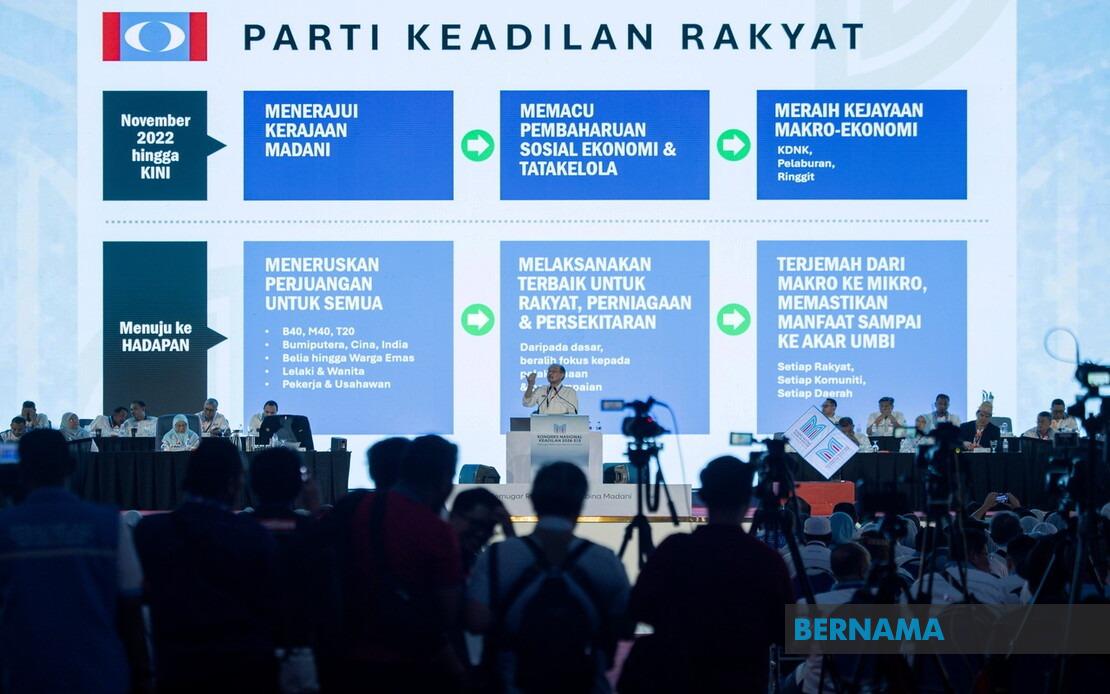
Prime Minister Datuk Seri Anwar Ibrahim has formally authorised Home Minister Datuk Seri Saifuddin Nasution Ismail to discharge the full responsibilities of PKR's deputy president position, a development that underscores significant shifts within the ruling party's leadership structure. The announcement came during Anwar's closing address at the PKR National Congress 2026 held at the Melaka International Trade Centre in Ayer Keroh on August 16, marking an important moment in the party's governance arrangements ahead of what political observers view as a critical period for coalition stability.
The decision to transfer these duties follows PKR's decision to grant Nurul Izzah Anwar, the incumbent deputy president and Prime Minister's daughter, a temporary leave of absence. This arrangement had been previously endorsed by the party's Central Leadership Council on August 6, with PKR Information Chief Datuk Seri Fahmi Fadzil confirming that Saifuddin Nasution would assume the interim role. The move reflects both the confidence Anwar places in his long-standing political ally and the pragmatic necessity of maintaining clear lines of authority within the party apparatus during a period when its top leadership requires flexibility.
Anwar characterised Saifuddin Nasution as someone he has known and trusted for many years, emphasising the Home Minister's loyalty and understanding of the party president's operational methods. Rather than framing the appointment as a burden, the Prime Minister positioned it as a natural continuation of existing work, suggesting that Saifuddin Nasution's existing responsibilities as Home Minister would not substantially conflict with his new deputy president duties. This narrative proved important in legitimising the arrangement, as it avoided presenting the situation as either a demotion for Nurul Izzah or an overload for Saifuddin Nasution, instead portraying it as orderly succession planning.
The broader context of these changes includes several other significant leadership appointments announced at the same congress. Datuk Seri Amirudin Shari, another vice-president, has been designated as the party's election director, a role likely to become increasingly important as Malaysia approaches the next general election cycle. Simultaneously, Tengku Datuk Seri Zafrul Tengku Abdul Aziz has been appointed as coordinator in the Prime Minister's Office, further consolidating the leadership team's reach into key government structures. These cascading appointments suggest Anwar is conducting a comprehensive recalibration of PKR's internal hierarchy and external positioning.
For Malaysian observers, the reshuffle carries implications beyond internal party mechanics. Saifuddin Nasution's expanded role coincides with his responsibilities as Home Minister, placing him at the intersection of party politics and national security governance. This dual positioning could enhance PKR's internal discipline and decision-making efficiency, but it also raises questions about how to balance partisan obligations with ministerial neutrality, a perennial tension in Malaysia's political system where party and government structures regularly overlap.
Anwar's personal intervention regarding Negeri Sembilan PKR leadership suggests the Prime Minister is actively managing party tensions at the state level. Six PKR division chiefs in Negeri Sembilan had called for a review of Datuk Seri Aminuddin Harun's position as chairman of the state party council, reportedly frustrated with the party's loss in the August 1 state election. However, rather than accede to removal demands, Anwar redirected Aminuddin's focus toward the vice-president role and training portfolio, effectively reassigning rather than removing him from influence.
This measured response demonstrates Anwar's approach to internal dissent: he acknowledges legitimate concerns while resisting wholesale leadership changes that might appear reactive or destabilising. By reframing Aminuddin's responsibilities around cadre development and member training, Anwar positioned the move as developmental rather than punitive. The Prime Minister's insistence that Negeri Sembilan's electoral defeat be treated as a collective responsibility rather than personal failure reflects both political prudence and his effort to maintain party cohesion during a challenging period.
The Negeri Sembilan election result itself merits examination. The state's loss represents a significant setback for PKR in a traditionally important political domain, and the subsequent demands for Aminuddin's removal indicate considerable grassroots frustration. However, Anwar's response prioritised party stability over placating dissidents, suggesting he believes retaining institutional continuity serves PKR's longer-term interests better than demonstrative disciplinary action. This calculation may prove prescient if it allows the party to learn from mistakes and reset strategically rather than fracturing over blame assignment.
The succession of appointments also reflects organisational thinking about the 2026 electoral cycle. By installing Amirudin as election director and Zafrul as Prime Minister's Office coordinator, Anwar has positioned PKR to leverage both party machinery and government infrastructure for electoral purposes. Such arrangements are standard in Malaysian politics, yet they underscore how ruling coalitions structure themselves to maximise organisational advantage. For opposition parties and independent analysts, these appointments signal Anwar's confidence in maintaining PKR's electoral prospects despite the Negeri Sembilan setback.
Saifuddin Nasution's expanded portfolio particularly warrants attention given Malaysia's current security environment. As Home Minister managing internal security, religious affairs, and administrative governance, he now simultaneously guides PKR's internal organisation and strategic direction. This concentration of power in one individual could enhance decision-making speed and coherence, but it also risks creating bottlenecks if conflicts emerge between ministerial and party obligations, or if his focus necessarily divides between competing demands during crises.
For the broader Southeast Asian context, PKR's internal reorganisation reflects patterns visible across the region where dominant parties balance democratic legitimacy with organisational control. Malaysia's coalition politics, compared to more centralised systems in neighbouring countries, requires constant calibration between maintaining party autonomy and coordinating across coalition partners. Anwar's approach here—selective delegation combined with careful reassurance of concerned factions—exemplifies the negotiation skills that have enabled him to hold together Malaysia's complex ruling arrangement since 2022.
The congress announcements ultimately reflect a leadership confident enough to make adjustments without suggesting instability. By giving Saifuddin Nasution clear authority while explaining Nurul Izzah's temporary absence and redirecting rather than punishing Aminuddin, Anwar has managed multiple competing pressures simultaneously. As Malaysia navigates the lead-up to the next general election, how effectively this reconfigured leadership translates into electoral and governance performance will test whether these organisational changes represented prescient strategy or merely cosmetic adjustment.

