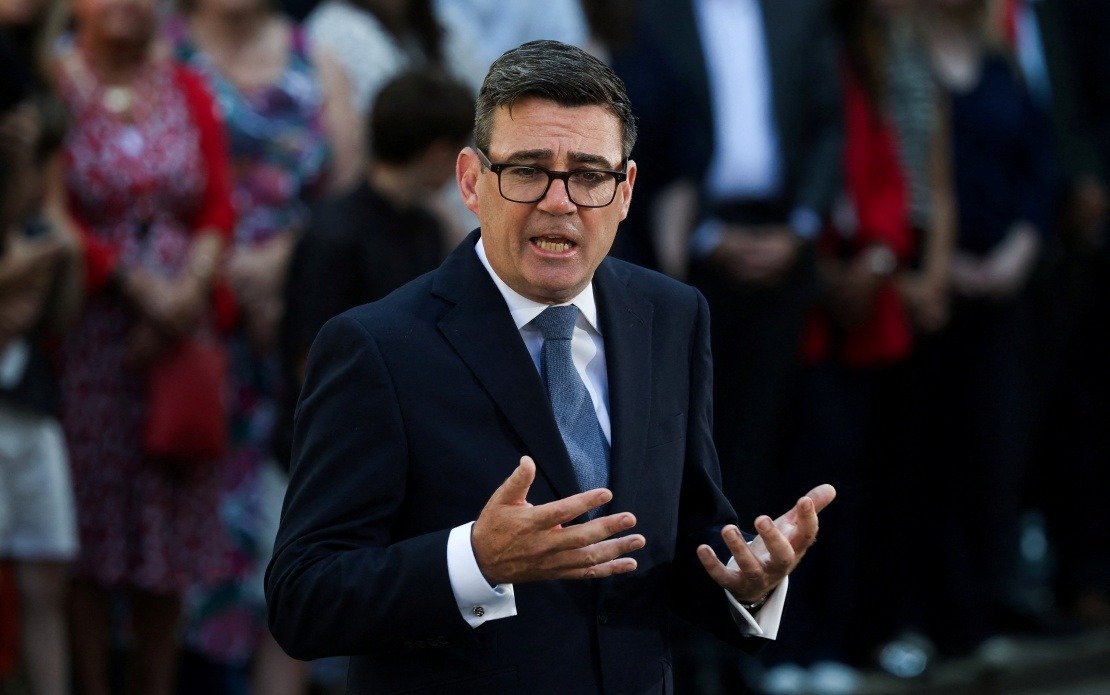
Prime Minister Datuk Seri Anwar Ibrahim has moved quickly to establish diplomatic ground with the newly installed British leadership, extending warm congratulations to Andy Burnham following his appointment as the seventh UK Prime Minister within a decade. The gesture, communicated through a Facebook post, reflects Malaysia's pragmatic approach to navigating transitions in Western leadership and signals the government's intention to capitalise on this moment of institutional change to advance shared interests.
Burnham's ascent to the British premiership came after the Labour Party selected him as its leader on Friday, with his formal appointment at Buckingham Palace following Keir Starmer's resignation on Monday. The rapid succession of British prime ministers over the past decade has become a defining feature of recent UK political history, a pattern that underscores the volatility of contemporary Western governance and the challenges facing Westminster as it grapples with persistent policy difficulties and public dissatisfaction.
Anwar's diplomatic overture carries strategic significance beyond routine courtesies. The Prime Minister explicitly flagged the upcoming 70th anniversary of Malaysia-UK diplomatic relations in 2025 as a pivotal moment for recalibrating the bilateral relationship and demonstrating renewed commitment from both capitals. This framing transforms what could be a ceremonial milestone into a substantive opportunity to reshape the partnership according to contemporary priorities and shared challenges.
The Malaysian government has identified several concrete areas where cooperation with Britain can be meaningfully expanded. Prominent among these is the finalisation of a Digital Trade Agreement, which would facilitate the movement of data-intensive services and digital goods between the two nations while establishing common regulatory frameworks in a rapidly evolving sector. Such an agreement holds particular appeal for Malaysia's growing technology sector and reflects the country's broader pivot toward the digital economy as a driver of future growth.
Beyond digital commerce, Anwar highlighted artificial intelligence and digitalisation as priority domains for collaboration. These fields represent frontiers where Malaysia sees both opportunity and the need for international partnership to ensure responsible development and deployment. The inclusion of these sectors in the diplomatic message signals that Malaysia is actively positioning itself within conversations about how AI governance should develop globally, rather than passively accepting frameworks dictated by larger powers.
Clean energy cooperation emerged as another pillar of the proposed partnership framework. Malaysia's energy transition remains incomplete, with continued reliance on natural gas and coal. British expertise in renewable energy deployment, grid modernisation, and the regulatory innovations required to support decarbonisation could provide valuable knowledge transfer. This cooperation also aligns with Malaysia's commitments under the Paris Climate Agreement and signals to international investors the seriousness of the government's environmental agenda.
Defence collaboration rounds out the stated priorities, a domain where Malaysia and Britain have historical institutional links through the Five Power Defence Arrangements. Deepening defence cooperation in the current geopolitical environment reflects Malaysia's hedging strategy in Southeast Asia, where regional powers compete for influence while global tensions intensify. Enhanced defence ties with Britain provide Malaysia with diversified security relationships and prevent over-reliance on any single partner.
Anwar also seized the opportunity to commend Burnham for his willingness to acknowledge British shortcomings in responding to the Gaza humanitarian crisis. The Prime Minister praised Burnham's candour in admitting that Britain's initial response had fallen short of moral expectations, and noted the new PM's renewed emphasis on pressuring the Israeli government. This acknowledgement serves multiple purposes: it demonstrates Malaysia's alignment with progressive British sentiment on Middle Eastern affairs, bolsters Anwar's own standing among constituencies within Malaysia that prioritise the Palestinian cause, and establishes a framework within which the two nations can cooperate on humanitarian and diplomatic issues.
Anwar's characterisation of Burnham's position on Gaza as demonstrating "moral clarity" stands in contrast to what he implicitly described as Western ambivalence on the issue. By highlighting this distinction, the Malaysian Prime Minister positions his government as part of an emerging coalition of nations and leaders willing to challenge Western consensus on Middle Eastern conflicts and assert alternative perspectives. This rhetorical positioning carries significance for Malaysia's standing among Organisation of Islamic Cooperation members and non-aligned nations.
The Prime Minister also extended courtesy to outgoing Prime Minister Keir Starmer, acknowledging his contributions to strengthening Malaysia-UK ties and wishing him well in future endeavours. This gracious recognition preserves bilateral goodwill and maintains continuity in the relationship despite leadership transitions. It reflects the understanding that prime ministerial tenures are inherently temporary, and that institutional relationships must be carefully maintained across successive administrations to achieve sustained progress.
The broader context for this diplomatic engagement involves Britain's strategic reorientation following its departure from the European Union. The UK has signalled renewed interest in deepening relationships with Commonwealth nations and Indo-Pacific partners, viewing these connections as essential to its post-Brexit identity and global positioning. Malaysia, as a significant Southeast Asian economy and Commonwealth member, occupies an important position in this recalibrated British foreign policy approach.
For Malaysia, the outreach to the new British leadership represents an opportunity to upgrade its Great Power relationships at a time of significant regional transition. As China's influence expands and the United States refocuses its attention on Indo-Pacific competition, Malaysia benefits from maintaining robust partnerships with established Western powers. These relationships provide alternative sources of investment, technology, and security cooperation, preventing strategic dependence on any single actor while maximising Malaysia's room for diplomatic manoeuvre.

