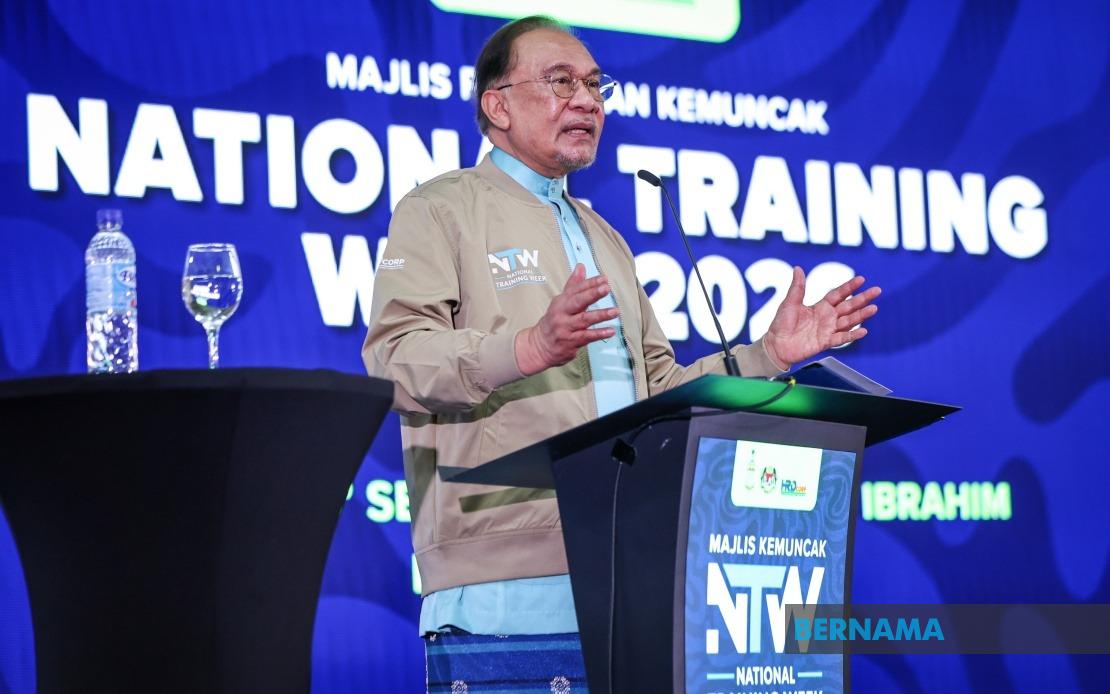
Prime Minister Datuk Seri Anwar Ibrahim has signalled strong confidence that Malaysia's Cabinet will authorise the disclosure of a long-awaited Royal Commission of Inquiry report examining governance issues at Lembaga Tabung Haji, with a formal decision expected at a Wednesday Cabinet session. Speaking at the National Training Week 2026 finale at Universiti Teknologi MARA's Permatang Pauh campus in Bukit Mertajam on July 25, Anwar indicated he would formally present the proposal to Cabinet colleagues and anticipated their approval, marking a potential conclusion to years of public anticipation over the document's contents.
The Prime Minister acknowledged sustained public pressure demanding transparency around the RCI findings, stating plainly that he harbours no reservations about making the report accessible to the Malaysian public. However, Anwar emphasised the critical importance of observing established governmental procedures, insisting that such a consequential decision cannot bypass proper Cabinet deliberation and consensus-building mechanisms. This adherence to process reflects broader commitments to institutional propriety that have characterised his administration's approach to sensitive governance matters.
Anwar provided context for the earlier decision to withhold the report from public view, explaining that Tabung Haji had previously requested additional time to implement remedial measures and strategic improvements identified by the inquiry. This deferral period was designed to allow the pilgrim fund to demonstrate concrete progress on reform initiatives without the complicating pressure of simultaneous public disclosure. The arrangement essentially granted Tabung Haji a window to rebuild institutional credibility before facing external scrutiny of the RCI's assessment.
The reinvigorated push for transparency now reflects changing circumstances at the institution. Anwar indicated that Tabung Haji has successfully installed new leadership and management structures capable of executing the necessary organisational reforms. With this institutional capacity now in place, the rationale for continued confidentiality has substantially weakened. The Prime Minister's position signals that governmental patience with the deferred release has reached a natural endpoint, and the moment for public disclosure has arrived.
The decision to potentially release the RCI report carries significant implications for Malaysian governance and public accountability. Tabung Haji manages hajj savings for approximately 7 million contributors across the country, making the institution's operational integrity and financial management a matter of widespread national concern. The underlying findings that prompted the commission's establishment suggest systemic governance shortcomings that affected millions of Muslim Malaysians' sacred journey preparations and accumulated funds. Public access to the inquiry's conclusions would finally permit informed societal assessment of institutional failings and reform adequacy.
The report's eventual release will also test the government's commitment to transparency and institutional accountability at a moment when public confidence in major financial institutions remains fragile. Many Malaysians have experienced disappointment with the pace and substantiveness of reforms at Tabung Haji, and the RCI report will provide an authoritative independent assessment of problems and their severity. Delaying disclosure further would risk appearing evasive or protective of institutional mismanagement, potentially eroding public faith in governmental oversight mechanisms.
Anwar's framing of the Cabinet decision reflects careful political management of a situation where competing institutional interests intersect. Tabung Haji's reputation requires both genuine reforms and public acknowledgement of past failings, but neither occurs effectively without transparency. Conversely, prematurely releasing findings before management transformation risked appearing to undermine leadership trying to implement corrections. The timing now proposed appears calibrated to balance these tensions—allowing sufficient reform implementation while providing the accountability that democratic governance demands.
The wider Southeast Asian context makes Malaysia's handling of institutional accountability noteworthy. Across the region, governments frequently struggle with balancing organisational development needs against transparency obligations. How Malaysia resolves this with Tabung Haji could establish instructive precedent for similar governance challenges elsewhere in the region, particularly regarding large public institutions managing citizen assets. The approach Anwar advocates—deferral for institutional strengthening, followed by full public disclosure—offers a model potentially applicable to other jurisdictions grappling with similar dilemmas.
Penang Chief Minister Chow Kon Yeow and Human Resources Minister Datuk Seri R. Ramanan's attendance at the Bukit Mertajam event alongside Anwar underscored the Cabinet's united approach to this matter, suggesting broad coalition consensus favouring eventual disclosure. Their presence implied endorsement of the Prime Minister's position, reducing likelihood of Cabinet resistance when the proposal comes to a vote. Such visible alignment on a governance accountability question reinforces messaging about administrative cohesion and shared commitment to institutional integrity.
The imminent Cabinet decision will effectively conclude an extended period of public speculation and official silence around the RCI report. For years, Malaysian media and civil society organisations have sought answers about specific findings, and speculation has occasionally spawned unfounded claims. Official disclosure will replace conjecture with documented evidence, enabling constructive public dialogue based on factual understanding rather than rumour. This transition from mystery to clarity represents the transparency imperative's ultimate purpose—converting institutional secrets into shared societal knowledge upon which informed citizenship depends.

