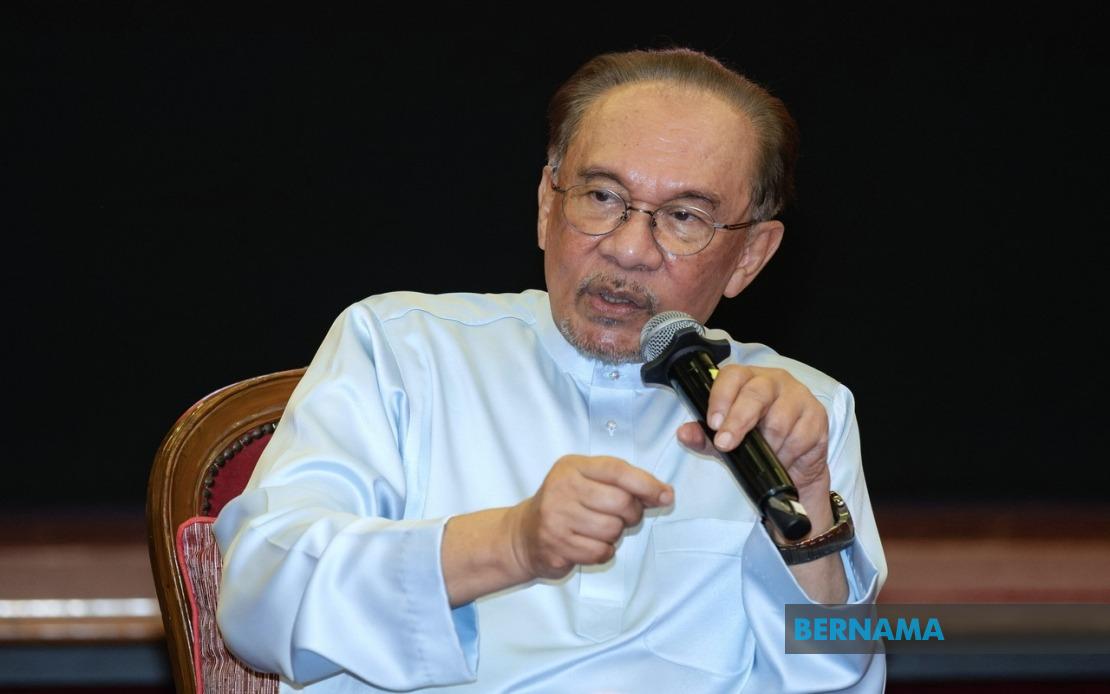
Prime Minister Datuk Seri Anwar Ibrahim has escalated Felda's mounting investment crisis in Indonesia to the highest diplomatic level, writing directly to President Prabowo Subianto to seek intervention over the Federal Land Development Authority's stake in PT Eagle High Plantations Tbk. The move underscores the severity of what has become one of Felda's most significant financial challenges, with projections of losses reaching RM2.5 billion against expected recoveries of merely RM200 million—a gap that demands intervention at the state level rather than through routine corporate channels.
Anwar disclosed the extent of the financial predicament during an engagement session with Felda's management ranks at Hotel Tenera in Bangi, attended by Felda chairman Tan Sri Ahmad Badri Mohd Zahir and director-general Datuk Dr Suzana Idayu Wati Osman. The disclosure strategy reflects a deliberate effort to ensure that mid-level managers throughout the organisation grasp both the scale of institutional challenges and the context within which recovery efforts must operate. By framing the crisis as a structural problem inherited from previous management decisions rather than a consequence of current operational failures, Anwar sought to shield frontline staff from demoralisation while maintaining accountability pressure on the broader organisation.
The investment in question remains entangled in Indonesia's court system, creating a particularly frustrating dynamic for Felda's recovery efforts. Unlike domestic litigation where Malaysian authorities retain greater influence over proceedings and timelines, disputes playing out in Indonesian courts introduce variables beyond Kuala Lumpur's direct control. This jurisdictional challenge explains why diplomatic engagement with the new Indonesian administration has become necessary—standard commercial remedies appear insufficient given the magnitude at stake and the uncertain legal landscape ahead.
Anwar's choice to engage President Prabowo directly carries symbolic and practical weight. The Indonesian president's recent assumption of office creates a window for renewed diplomatic approaches, and the timing of this formal correspondence suggests the Malaysian government views the political transition in Jakarta as an opportunity to reset discussions around this troubled asset. Whether Prabowo's office will prioritise Felda's interests in a complex international business dispute remains uncertain, but the escalation itself signals that Putrajaya no longer expects routine mechanisms to resolve the matter.
The Prime Minister's remarks to Felda personnel reflected a nuanced messaging approach designed to maintain institutional morale while confronting uncomfortable truths. He acknowledged that managers working in Pahang, Johor and other field locations bear no responsibility for investment decisions made at corporate headquarters, yet all employees must collectively absorb the consequences. This framing seeks to redirect blame upward toward strategic planning failures rather than allowing frustration to undermine frontline operations. At the same time, Anwar emphasised that understanding the scale of the problem represents a prerequisite for developing realistic recovery strategies, implying that minimising or obscuring the crisis would only postpone necessary corrective measures.
Governance failures constitute the underlying theme Anwar pressed throughout his engagement with Felda leadership. He stressed that the emphasis on institutional integrity and accountability does not target individuals for blame but rather seeks to restore public confidence in an organisation that has historically served as a cornerstone of Malaysia's agricultural and rural development architecture. This reframing attempts to separate legitimate scrutiny of decision-making processes from personal recriminations, encouraging an environment where past mistakes can be examined without triggering defensive reactions that impede reform.
The projected recovery of RM200 million against a RM2.5 billion exposure represents a recovery rate of approximately eight percent—a ratio that would normally trigger comprehensive institutional reviews and, in many cases, criminal investigations into decision-makers who authorised such value destruction. The magnitude of potential loss situates this dispute well beyond routine investment management challenges, suggesting either egregious errors in due diligence or possible misconduct during the initial acquisition and subsequent management phases. That Felda's leadership has not yet recovered the investment despite years of litigation indicates the complexity surrounding the underlying claims and the contested legal interpretations involved.
For Malaysian investors and stakeholders monitoring Felda's trajectory, this disclosure crystallises a broader concern about governance standards in major state-linked enterprises. Felda historically operated as a trusted vehicle for channelling rural development resources and had built considerable institutional credibility. The revelation of such substantial losses stemming from previous management decisions raises uncomfortable questions about oversight mechanisms and investment approval processes that permitted such exposure to materialise. Whether current management and the government can arrest further institutional deterioration depends partly on how effectively they resolve the Indonesia dispute and demonstrate systemic reforms preventing recurrence.
Anwar's commitment to accelerating welfare projects and infrastructure improvements for Felda settlers and managers represents an attempt to balance accountability messaging with demonstrated support for the organisation's membership. By pledging expedited funding for repairs and improvements outside the normal budgetary cycle, the government attempts to signal that reform and institutional repair do not equate to abandonment of Felda's core constituency. This dual approach—simultaneous accountability pressure and resource commitment—reflects the political sensitivity surrounding Felda's future within Malaysia's broader agricultural and rural development framework.
The unfolding situation demonstrates how legacy investment decisions from previous administrations continue complicating current policy execution and consuming senior leadership attention. Anwar's personal engagement with both Prabowo and Felda personnel suggests the government views resolution of this dispute as integral to broader institutional rehabilitation efforts. Whether diplomatic engagement with Indonesia yields tangible progress remains to be seen, but the very act of formalising the appeal through presidential correspondence indicates that Putrajaya has exhausted conventional remedies and now requires creative approaches to navigate an increasingly intractable situation.

