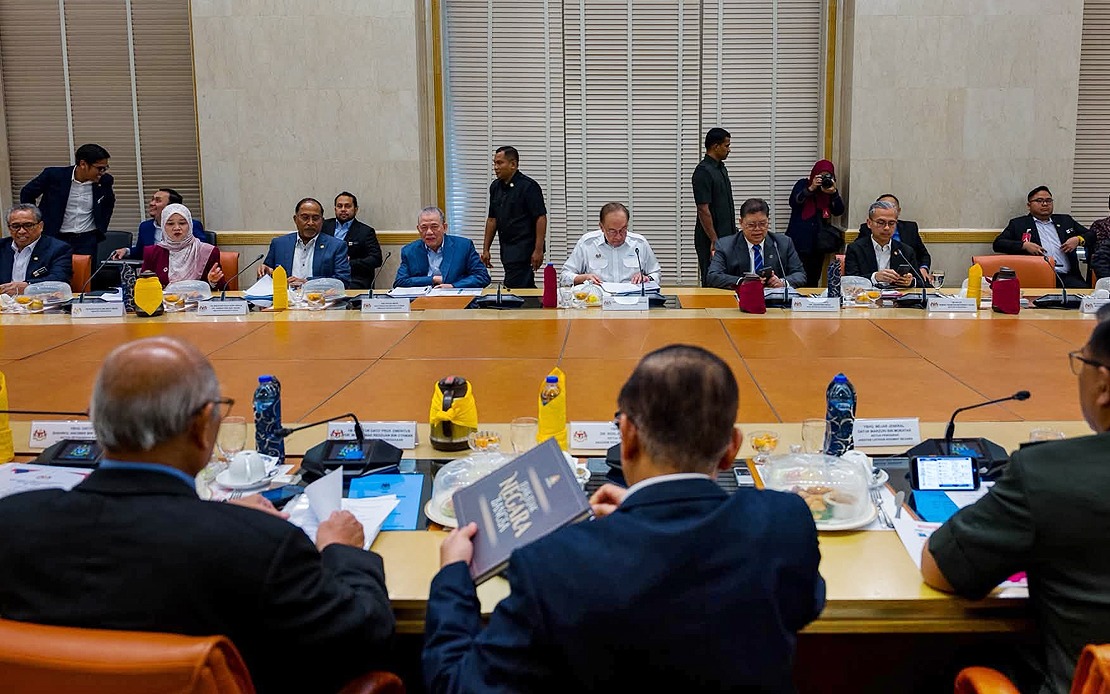
Prime Minister Datuk Seri Anwar Ibrahim has made a forceful case for deepening the nation's commitment to cultivating core nationhood values, arguing that such efforts are foundational to building a cohesive society with unwavering patriotic conviction. Speaking after chairing a Dewan Kenegaraan Board of Governance Meeting on July 6, Anwar highlighted that sustained investment in these principles would nurture citizens of strong character, personal integrity and elevated moral standing—qualities he framed as essential to advancing Malaysia's reputation globally and cementing social stability domestically.
The Prime Minister's remarks underscore a philosophical pivot in how the government approaches national development, moving beyond purely economic or infrastructural metrics to emphasise the intangible cultural and civic foundations that bind pluralistic societies together. In Malaysia's context, where diversity of ethnicity, religion and regional identity characterises the population, the emphasis on universally resonant nationhood values represents an attempt to identify unifying principles that transcend sectarian divides. Anwar's framing suggests that without deliberate, continuous cultivation of these shared values, even material prosperity and institutional stability may prove fragile.
A centrepiece of this strategy is the National Service Training Programme, or PLKN, which Anwar indicated has generated momentum and positive reception among both young participants and their families. The programme functions as a practical mechanism through which the abstract notion of nationhood values can be transmitted and embodied through structured experience. By bringing together youth from varied socioeconomic and geographic backgrounds, the initiative aims to forge personal connections across traditional boundaries and instil discipline, resilience and collective purpose—competencies that extend well beyond the military realm into civic engagement and workplace performance.
Anwar's emphasis on the PLKN's trajectory reflects broader regional trends in Southeast Asia, where several governments have revived or expanded national service schemes in recent years as responses to perceived erosion of social cohesion amid rapid urbanisation, economic disruption and digital fragmentation. The Malaysian approach, however, operates within the particular constitutional and demographic framework established by the Federal Constitution and the social contract that underpins the federation. Within this context, the programme serves not merely as character-building but as a vehicle for reinforcing the constitutional consensus that enables Malaysia's multiethnic federation to function.
Complementing the PLKN is the role of what Anwar termed Nationhood Fellows—a network of respected public figures, former statesmen and thought leaders drawn from diverse professional and ideological backgrounds. This initiative reflects recognition that nation-building cannot be imposed from above through governmental fiat alone, but requires the organic advocacy and intellectual contribution of trusted voices within civil society. By convening such figures around the explicit agenda of reinforcing nationhood values, the government appears to be attempting to depolarise political discourse and create space for cross-partisan reflection on shared national interests.
The timing of Anwar's emphasis on these themes is noteworthy given Malaysia's ongoing political and social transitions. The nation has experienced significant electoral volatility in recent years, with the 2022 general election producing a fractious coalition government and continued debate over the appropriate role of religious institutions, federalism and economic justice in national governance. Amid this pluralistic contestation, appeals to overarching nationhood values serve multiple functions: they provide a rhetorical framework within which diverse political actors can claim legitimacy, they offer a counterweight to divisive identity-based mobilisation, and they articulate a vision of national purpose that transcends transactional party politics.
For Malaysian readers and regional observers, the significance of Anwar's statements lies partly in what they reveal about the government's diagnostic assessment of contemporary challenges. The fact that a sitting Prime Minister feels compelled to repeatedly invoke the need for strengthened nationhood values and national identity suggests official concern that such commitment may be attenuating—whether due to generational change, economic anxiety, religious revivalism, or the centrifugal effects of social media and international cultural flows. Whether such concerns are empirically justified or partly reflect elite anxiety remains a matter for public debate, but the articulation itself signals how contemporary governance in Malaysia increasingly turns on questions of collective identity and shared purpose.
The invocation of character, integrity and noble principles as outcomes of nationhood value cultivation also merits scrutiny. These terms, while intuitively appealing, remain capacious and contested. Different constituencies may interpret them through distinct moral frameworks—some rooted in Islamic ethical traditions, others in secular humanist philosophy, still others in Confucian or Buddhist understandings of virtue. The challenge for policymakers lies in articulating nationhood values with sufficient specificity to guide institutional action while retaining sufficient elasticity to accommodate Malaysia's genuine pluralism without imposing any single vision of the good.
From a regional perspective, Anwar's emphasis on nation-building through values cultivation resonates with similar initiatives across Southeast Asia, where governments confront shared pressures of globalisation, technological disruption and ideological competition. Indonesia's ongoing grappling with Pancasila and the balance between secular nationalism and Islamic identity, Thailand's periodic campaigns around the monarchy, and Vietnam's management of communist party ideology all reflect comparable governmental efforts to define and defend national narratives. Malaysia's particular approach—rooted in constitutional federalism and explicit multicultural accommodation—offers distinctive lessons, though the underlying challenge of sustaining national cohesion amid diversity remains region-wide.
Moving forward, the concrete manifestation of these values through policy implementation will prove decisive. The expansion and qualitative improvement of the PLKN, meaningful engagement with the Nationhood Fellows network, and integration of values-based curricula throughout educational systems represent pathways through which rhetorical commitment could translate into sustained cultural change. Conversely, if articulations of nationhood values are perceived as hollow or deployed selectively to legitimise particular partisan agendas, such initiatives risk generating cynicism rather than renewal of civic commitment.

