Prime Minister Datuk Seri Anwar Ibrahim has lashed out at opposition parties for weaponising the Tabung Haji crisis as a vehicle for political attacks, arguing they are deliberately shifting blame away from governance failures within the institution itself. In a strongly-worded Facebook statement, the Prime Minister challenged the opposition to clarify whether their concern genuinely lies with Tabung Haji's recovery or with scoring political points at his expense. His intervention comes amid escalating tensions over how Parliament should address the 211-page Royal Commission of Inquiry report released on July 29, which detailed systemic weaknesses in Tabung Haji's management spanning 2014 to 2020.
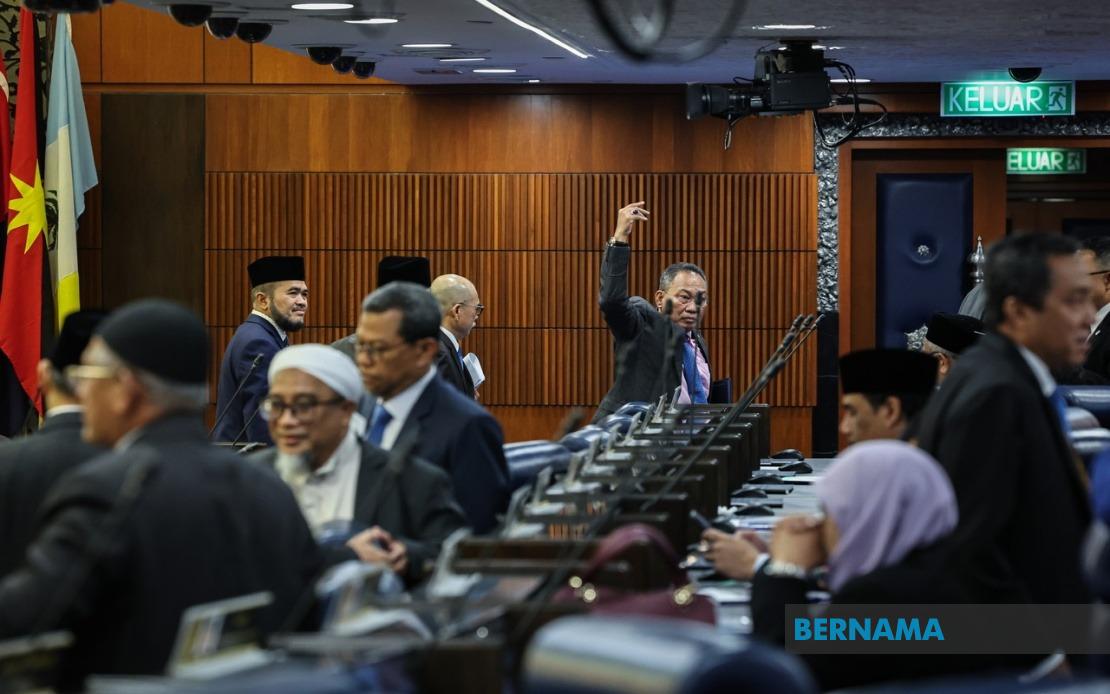
The catalyst for Anwar's rebuke was the walkout staged by several opposition Members of Parliament during a special Dewan Rakyat sitting convened to hear a ministerial briefing on the RCI findings and ongoing restoration efforts. Opposition legislators protested Dewan Rakyat Speaker Tan Sri Johari Abdul's decision to proceed with the session despite the Prime Minister's absence, and they objected to the rejection of a motion by PN Chief Whip Datuk Seri Takiyuddin Hassan to adjourn proceedings. Anwar had excused himself from attending due to medical grounds, having recently undergone an elective laparoscopic procedure to address a para-umbilical hernia and subsequently entering physiotherapy.
In his statement, Anwar drew a pointed distinction between legitimate institutional oversight and partisan opportunism. He framed the debate not as one between himself and the opposition, but between genuine stewardship of Tabung Haji and what he termed betrayal of the institution's depositors. The Prime Minister's rhetoric strategically positioned government efforts at institutional reform as the moral higher ground, while characterising opposition criticism as performative rather than substantive. This framing carries particular weight given Tabung Haji's symbolic importance as a savings vehicle for Muslim Malaysians seeking to fund Hajj pilgrimages, embedding the dispute within questions of faith and community trust.
Anwar specifically challenged the PAS-led Perikatan Nasional coalition, questioning whether their leadership genuinely prioritises the welfare of ordinary Tabung Haji depositors—fishermen, farmers, teachers, police officers, military personnel, and retirees whose modest savings aggregate the institution's troubled balance sheet. By invoking these occupational categories, the Prime Minister appealed to constituencies that traditionally form the backbone of Tabung Haji's membership, implicitly suggesting that opposition intransigence harms ordinary Malaysians rather than the government. This rhetorical strategy attempts to recast the RCI findings not as an indictment of government stewardship but as a crisis requiring unified problem-solving rather than partisan recrimination.
The RCI report itself presents a substantive factual foundation for the dispute. The 25 recommendations it contains address institutional weaknesses identified across a seven-year period, with 75 per cent already implemented by Tabung Haji as of July 30. This implementation rate suggests the government and institution have moved swiftly on reform recommendations, though it simultaneously raises questions about the pace and adequacy of ongoing remedial measures. Opposition criticism may therefore reflect doubts about whether the remaining 25 per cent of recommendations—and deeper systemic restructuring—receive sufficient priority and resources.
The timeline of the RCI process itself merits examination. The government announced the commission's establishment in 2021, appointed its members on January 20, 2022, and received the completed report in August 2022—a process spanning approximately eighteen months. The report's delayed public release until July 2024, more than a year and a half after submission to the Yang di-Pertuan Agong, suggests either deliberation about how to present damaging findings or administrative delays. Opposition parties may view this lag as evidence of reluctance to confront institutional failures transparently, lending credibility to their accusations of politicisation rather than reform.
For Malaysian depositors and the broader Muslim community, the dispute's underlying significance concerns Tabung Haji's financial rehabilitation and the security of accumulated savings. The institution has historically served as both a practical savings mechanism and a symbol of Islamic financial stewardship within Malaysia's institutional framework. Failures in governance and investment strategy that necessitated a full RCI represent not merely technical administrative matters but potential threats to depositors' ability to fulfil religious obligations. This dimension transcends ordinary political disagreement, explaining why both government and opposition have invested rhetorical energy in positioning themselves as Tabung Haji's true custodian.
The opposition's parliamentary walkout, while tactically dramatic, carries risks of being perceived as obstructionist rather than constructively critical. By abandoning the chamber rather than engaging with the ministerial briefing, opposition members forfeited the opportunity to pose penetrating questions about implementation timelines, resource allocation, and accountability mechanisms for the outstanding 25 per cent of recommendations. From a governance perspective, such walkouts may inadvertently validate Anwar's accusation that political posturing supersedes substantive institutional concern. However, opposition tactics may also reflect genuine frustration with what they perceive as inadequate government accountability for failures that occurred under previous administrations and continued under the current leadership.
Regionally, Malaysia's handling of the Tabung Haji crisis carries implications for other Muslim-majority nations managing comparable pilgrimage savings schemes and Islamic financial institutions. Successful transparent resolution of institutional failures, coupled with credible implementation of reform recommendations, strengthens investor confidence in Islamic financial products throughout Southeast Asia. Conversely, perception that domestic political rivalries obstruct genuine institutional reform could undermine confidence in Malaysia's regulatory frameworks among both domestic and international investors monitoring Islamic finance developments.
Looking forward, the substance of the dispute may prove less consequential than its resolution mechanism. If government and opposition can subordinate partisan positioning to collaborative oversight of Tabung Haji's rehabilitation, the crisis becomes a catalyst for institutional strengthening. If the dispute devolves into perpetual recrimination, depositors and public confidence suffer regardless of which party's political fortunes rise or fall. Anwar's challenge to the opposition to focus on institutional rather than political concerns thus contains an implicit invitation—or perhaps implicit pressure—to demonstrate whether they prioritise Tabung Haji's recovery above opposition to his administration. The opposition's response, whether through constructive engagement with reform implementation or continued confrontational tactics, will substantially shape perceptions of institutional credibility and governmental accountability in Malaysia's Islamic financial sector.

