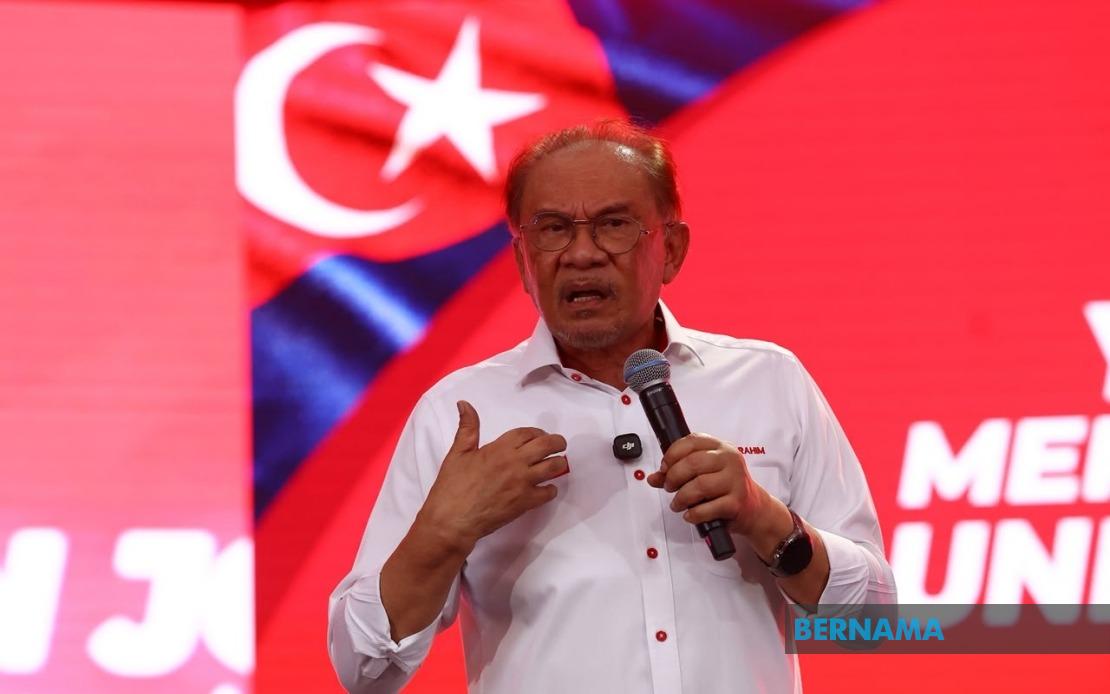
Prime Minister Datuk Seri Anwar Ibrahim moved swiftly to quash widespread rumours about his personal vehicle acquisitions during a campaign rally in Batu Pahat, dismissing claims circulating on social media that he had purchased a luxury BMW for his own use. The denials came at a Pakatan Harapan campaign event held in conjunction with the 16th Johor state election, underscoring how allegations about leadership lifestyles can gain traction during election cycles and potentially damage public perception of political figures committed to fighting corruption and addressing poverty.
Addressing supporters gathered at the 'Yok! Meriahkan Johor! Undi Harapan' programme in Senggarang, Anwar characterised the allegations as fabrications designed to undermine his credibility and messaging. His remarks reflected frustration with what he described as deliberate misinformation, particularly given his public messaging around fiscal responsibility and assisting disadvantaged communities. The prime minister was emphatic that the BMW in question represented an older vehicle already within government possession rather than a new acquisition, questioning why supporters of his government would amplify such unverified claims.
Beyond the BMW controversy, Anwar took the opportunity to clarify the status of his current official vehicle, a Mercedes-Benz that has become visible in his public movements. Rather than attempting to downplay the luxury sedan, he reframed its acquisition within a framework of royal protocol and government administration. According to Anwar, the vehicle was bestowed upon him by His Majesty Sultan Ibrahim, King of Malaysia, as part of the formal entitlements associated with holding the nation's highest executive office. This distinction carries weight in the Malaysian context, where royal gifts occupy a different legal and cultural category than personal purchases.
Crucially, Anwar emphasised that he had deliberately chosen not to register the Mercedes-Benz under his personal name, instead formalising its ownership through the Prime Minister's Department. This procedural detail addresses accountability concerns by ensuring the vehicle remains government property rather than becoming a personal asset that could be retained after his eventual departure from office. Anwar presented this choice as evidence of his commitment to governance standards, suggesting that his approach contrasted sharply with patterns of political enrichment he has previously criticised.
The Prime Minister's Department (JPM) and the Ceremonial and International Conference Secretariat Division (BIUPA) had already issued a formal statement addressing the BMW matter prior to Anwar's public remarks. The official position held that the BMW previously used by the prime minister constituted an existing government asset rather than a newly purchased official vehicle, effectively corroborating the prime minister's dismissal of the allegations. This statement indicated that the vehicle fell under BIUPA's management authority and had been designated for official government logistics purposes, suggesting its deployment predated recent controversies.
The timing of these clarifications during active campaigning for the Johor state election reveals how vehicle ownership narratives can become weaponised in competitive electoral environments. Pakatan Harapan was contesting all 56 state seats in the election, scheduled to take place on the Saturday following Anwar's remarks, making the management of public perception particularly acute. The coalition's investment in immediately addressing such allegations suggested internal recognition that questions about leadership privilege could resonate with voters concerned about government accountability.
Several prominent Pakatan Harapan figures were present at the Senggarang event, including Communications Minister Datuk Fahmi Fadzil, who serves as the coalition's communications director, alongside candidates contesting the Senggarang, Semerah, and Penggaram seats. The presence of senior communicators at the rally underscored the coalition's strategic focus on narrative management during the campaign period. In Malaysian electoral politics, where state-level contests often provide early indicators of federal sentiment, controlling storylines around leadership integrity proves essential for maintaining voter confidence.
The broader context of these allegations reflects evolving dynamics in Malaysian political discourse, where social media platforms have democratised the spread of unverified claims about public figures. What might once have required expensive media campaigns to amplify can now propagate organically through WhatsApp groups, Facebook pages, and TikTok videos, reaching substantial audiences before official institutions can respond. Anwar's acknowledgment of these rumours by explicitly addressing them represented a recognition that silence could allow misconceptions to calcify among undecided voters.
For Malaysian readers, the vehicle controversy carries particular resonance given the country's historical experience with corruption and misuse of public resources. Preceding administrations faced withering international and domestic criticism over government expenditure patterns, including vehicle procurement practices that appeared divorced from fiscal prudence. Anwar's positioning of himself as committed to different standards reflects an attempted differentiation from historical patterns, though critics have questioned whether rhetoric translates into substantive governance changes.
The distinction Anwar drew between personal ownership and departmental registration of government vehicles speaks to institutional frameworks governing asset management in Malaysia. Government vehicles technically belong to the state rather than individual officeholders, yet the practical reality involves significant official access and control. By emphasising his deliberate choice to register the Mercedes-Benz institutionally rather than personally, Anwar suggested an awareness of accountability requirements and a willingness to operate within transparent structures.
Looking forward, how Malaysian voters respond to these explanations during the Johor election and beyond will indicate whether such clarifications effectively neutralise allegations or whether persistent questions about leadership accountability continue shaping electoral behaviour. The incident illustrates how governance narratives extend beyond policy platforms to encompass symbolic dimensions of leadership conduct and personal restraint, factors that deeply influence public trust in political institutions across Southeast Asia.

