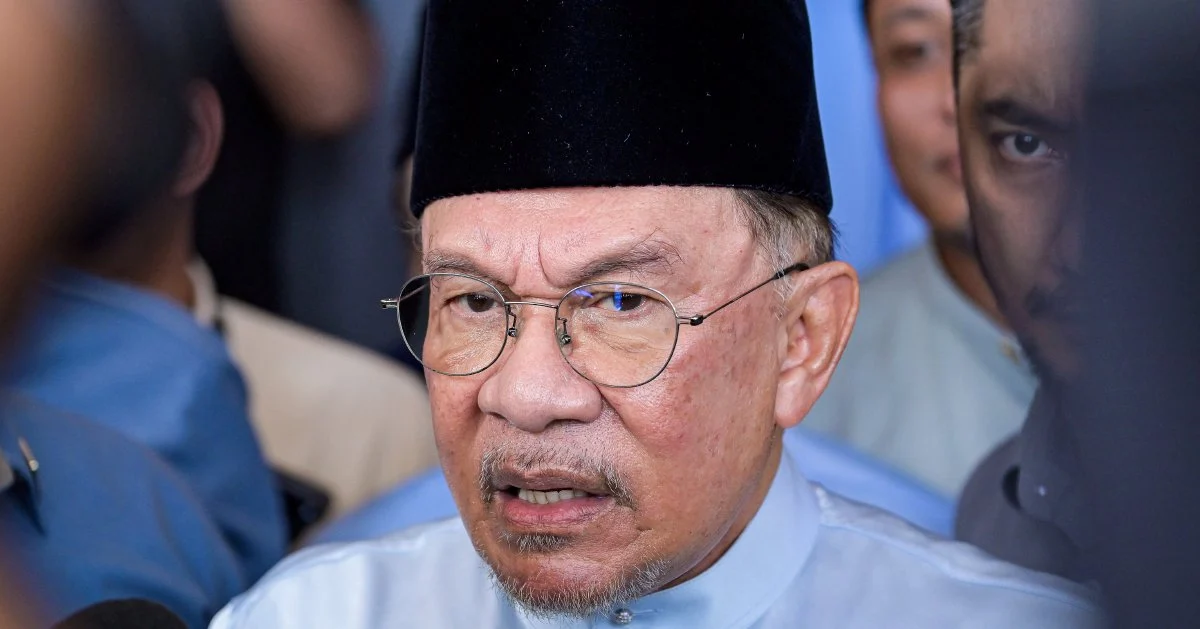
Prime Minister Datuk Seri Anwar Ibrahim has rejected allegations that caretaker Johor Menteri Besar Datuk Onn Hafiz Ghazi was instructed to stay away from events organised by Felda, the Federal Land Development Authority. Speaking in Dengkil, Anwar categorically dismissed rumours of any deliberate exclusion targeting the senior Johor politician from Felda-related activities or settlements.
The denial comes as political tensions simmer in Johor ahead of state elections, with various factions manoeuvring for advantage. Onn Hafiz, who leads the Johor state government in a caretaker capacity, has been a prominent figure in the state's political landscape. The allegation that he faced institutional barriers to accessing Felda settlements would have represented a significant breach of political convention and raised questions about federal-state coordination.
Felda, which manages vast tracts of land across the country for smallholder farmers, operates under federal jurisdiction but coordinates regularly with state governments. The settlements themselves are home to thousands of families who have benefited from land redistribution schemes spanning decades. Any directive preventing elected representatives from engaging with constituents in these areas would carry serious implications for democratic practice and federal-state relations.
Anwar's intervention to personally address these claims underscores the sensitivity surrounding allegations of political obstruction. The Prime Minister's swift denial suggests the government views such accusations as potentially damaging to its credibility, particularly in a state as politically contested as Johor. His statement aims to reassure the public that normal political engagement continues unimpeded.
The timing of these allegations reflects broader tensions within Malaysia's political ecosystem. With state elections potentially on the horizon, various parties have incentive to portray themselves as victims of unfair treatment or to suggest that opponents face institutional disadvantages. Such narratives can sway voter sentiment if they gain traction, making rapid public responses from senior figures strategically important.
For Malaysian readers monitoring political dynamics, this episode illustrates how rapidly narratives can spread in the contemporary media environment. Claims of political exclusion can quickly dominate discourse before facts are fully established. The Prime Minister's direct response demonstrates awareness of this reality and the need to address misconceptions promptly.
Felda's role in rural development and political representation remains significant across multiple states beyond Johor. Any suggestion that the organisation might be manipulated for partisan purposes threatens public confidence in its institutional independence. Protecting that independence is crucial for maintaining the organisation's effectiveness in serving settler communities and their broader economic interests.
The relationship between federal and state governments in overseeing Felda operations involves delicate political negotiations. Both levels must cooperate to ensure the organisation serves its intended purpose—improving livelihoods for rural smallholders—without becoming entangled in zero-sum political competition. Allegations of deliberate exclusion, whether accurate or not, can undermine this necessary cooperation.
From a Southeast Asian perspective, Malaysia's experience with federal-state coordination offers lessons for regional observers. How effectively nations manage tensions between central authority and regional government determines much about overall political stability. Public confidence that institutions remain above partisan manipulation depends significantly on rapid, transparent responses to allegations of abuse.
The broader political context matters here. Johor, as the second-largest state by population and economy, carries outsized significance in national politics. Events affecting political competition or public perception there ripple across the wider political system. This explains why the Prime Minister himself felt compelled to address what might otherwise be dismissed as routine political allegations.
Moving forward, this incident serves as a reminder that in Malaysia's complex political environment, clarity and transparency from senior officials remain essential. As the country continues navigating post-2022 political realignments and preparing for eventual general elections, maintaining public trust in institutional neutrality becomes increasingly important. Both the government and opposition must demonstrate commitment to political processes that operate fairly across party lines.

