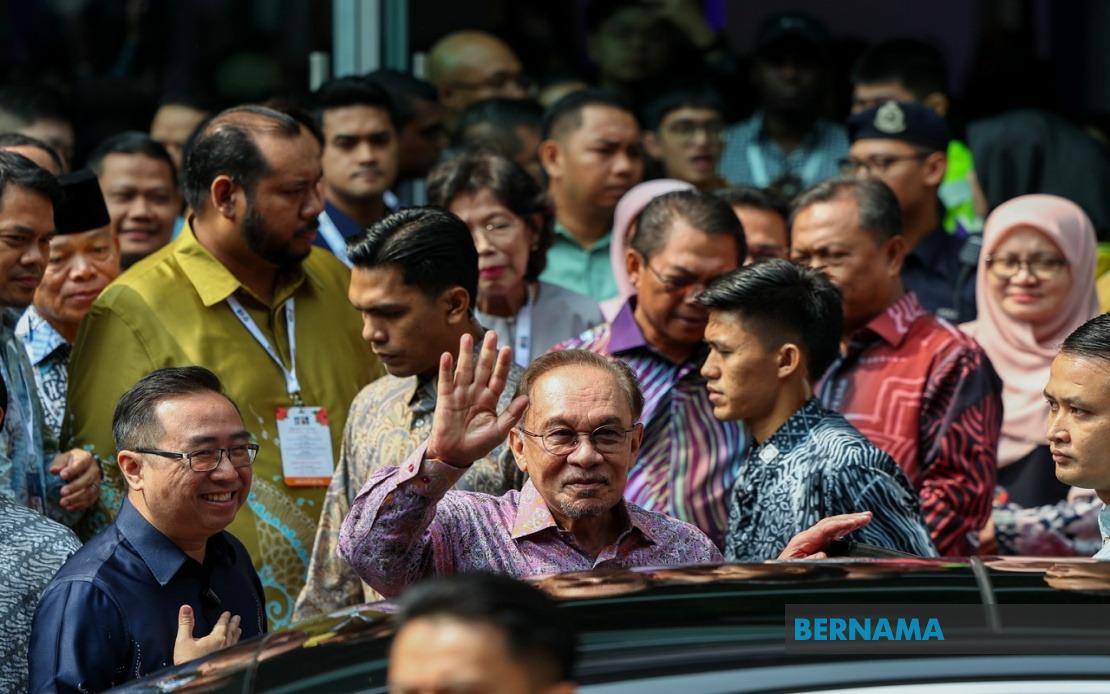
The question of whether Datuk Seri Mohamed Azmin Ali might return to PKR has become cloudier following comments from the party's president. At an event in Kuala Lumpur on August 27, Datuk Seri Anwar Ibrahim, who leads both PKR and the country, stated categorically that he had received no notification about any invitation extended to his former deputy. When pressed by reporters after officiating the National Innovation and Commercialisation Expo (NICE) 2026 at the Kuala Lumpur Convention Centre, the Prime Minister's response was terse: he simply said he had not been informed of any such approach to Azmin.
This statement arrives as the political landscape around PKR appears to be shifting. Just two days earlier, Azmin, who now serves as secretary-general of Parti Pribumi Bersatu Malaysia (Bersatu), had indicated publicly that despite reports of invitations going out to former party members, he would not be among those returning. His refusal effectively closes one potential door in what appears to be a broader recruitment effort. The specifics of how PKR is conducting this outreach campaign remain unclear, yet the initiative seems to be gaining momentum with other figures, suggesting an organized approach rather than isolated approaches.
The party's recent overtures have already borne fruit with at least one confirmed success. Datuk Dr Xavier Jayakumar, formerly a vice-president of PKR, has confirmed his intention to rejoin the party, signalling that some figures from the organization's past are receptive to returning to the fold. This development indicates a deliberate strategy to rebuild relationships with those who departed during periods of internal tension or political realignment. Beyond Jayakumar, other former members have reportedly been approached, including Datuk Kamarudin Jaffar, who previously represented Bandar Tun Razak, and Datuk Mansor Othman, who held the Nibong Tebal seat in parliament.
Azmin's position carries particular weight given his seniority within PKR before his departure. As deputy president, he occupied one of the party's most prominent positions, and his eventual move to Bersatu represented a significant loss of political firepower. His statement that he would never return to PKR, despite any overtures, suggests that some bridges may have been permanently damaged during his exit from the organization. The public nature of his refusal—communicated through media reports rather than private channels—adds another layer to the complexity of intra-coalition dynamics in Malaysian politics.
Anwar's apparent lack of knowledge about the invitation efforts raises questions about the internal communication channels within PKR or the autonomy granted to party officials managing recruitment. Either party operatives are conducting outreach without the president's direct involvement, or information about such efforts has not reached the Prime Minister's desk. For a party seeking to consolidate and strengthen its position within the ruling coalition, this kind of ambiguity could be problematic, particularly when high-profile figures are involved.
The broader context of these moves becomes apparent when considering PKR's electoral prospects and the competitive dynamics within the Pakatan Harapan coalition. By bringing back experienced figures who previously served as party members or leaders, PKR aims to bolster its bench strength and restore institutional memory. The party faces pressure from coalition partners and opposition forces alike, making the recruitment of tested political operators a rational strategic move. Former members typically understand the party's culture, networks, and machinery, making them valuable assets.
However, the case of Azmin illustrates a crucial limitation of this approach. Not all departures represent temporary absences from which figures might return. For some, leaving PKR reflected fundamental disagreements or personal ambitions that have since been accommodated elsewhere. Azmin's ascent to secretary-general within Bersatu suggests he has found a comfortable position, one that may offer advantages he values more than a potential comeback to his former party. His explicit rejection of return, made public through the media, appears designed to preempt any further speculation or pressure.
The timing of these developments carries significance within Malaysia's political calendar. With various state and federal elections potentially on the horizon, coalition partners are jockeying for position and strength. For PKR specifically, strengthening its parliamentary and state assembly presence through recruitment of experienced politicians makes tactical sense. Yet Anwar's apparent distance from these recruitment efforts—or his genuine lack of awareness—suggests the party's organizational structure may be more diffuse than ideal for a president overseeing both party and national leadership.
Looking ahead, the success or failure of PKR's recruitment initiative will depend partly on which other candidates respond positively to invitations. If figures like Kamarudin and Mansor accept, PKR will have increased its experienced political personnel significantly. Conversely, if Azmin's refusal becomes emblematic of a broader reluctance among former members to return, the outreach campaign may yield disappointing results. Anwar's public statement of non-involvement, whether intentional or not, has also introduced uncertainty about the campaign's official status and priority within party leadership.

