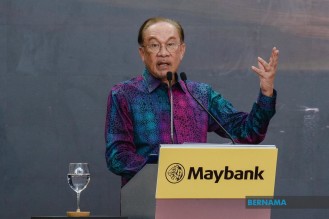
Prime Minister Datuk Seri Anwar Ibrahim has declared that Lembaga Tabung Haji, Malaysia's premier Islamic pilgrimage fund, has been successfully restored to financial and operational stability. Speaking at the opening of Maybank's new headquarters at Menara Merdeka Maybank in Kuala Lumpur on Thursday, Anwar expressed confidence that early intervention and decisive corrective action had arrested the problems stemming from previous governance failings. The statement comes as the Cabinet moved to make the full Royal Commission of Inquiry report public, signalling the government's commitment to transparency regarding the institution's troubled recent history.
Tabung Haji occupies a uniquely significant position within Malaysia's financial and religious landscape, serving as the custodian of hajj savings for millions of Muslim Malaysians undertaking the annual pilgrimage to Mecca. The institution manages funds on behalf of hundreds of thousands of pilgrims annually, making its integrity and solvency a matter of considerable public and religious importance. Any systemic failures within the organisation reverberate beyond mere financial concerns, touching upon trust and religious obligation for the Muslim community.
The discovery of problems within Tabung Haji was not recent, but rather represented the culmination of years of inadequate oversight and governance failures. According to Anwar, the administration's ability to detect these issues expeditiously proved crucial in preventing further deterioration of the institution's financial position. The Prime Minister's emphasis on early detection underscores the importance of robust internal controls and external scrutiny in the financial sector, lessons that extend beyond this singular case.
The Royal Commission of Inquiry examined Tabung Haji's management and operational conduct spanning the six-year period from 2014 through 2020, a critical juncture that witnessed both the accumulation of problems and the seeds of institutional failure. This specific timeframe encompasses the period when mismanagement intensified, investments underperformed, and governance structures proved inadequate to protect the public interest. The comprehensive nature of the investigation was designed to establish a definitive record of what transpired and how systemic weaknesses developed.
Anwar's invocation of "Alhamdulillah" (praise be to God) in describing the restoration efforts reflects both the religious dimension of the institution and the broader Malaysian approach to addressing national institutions. The linguistic choice demonstrates sensitivity to the sacred trust that Tabung Haji represents for Muslim Malaysians, positioning the recovery not merely as an administrative achievement but as a restoration of a pillar supporting religious observance.
The Cabinet's decision to release the full RCI report marks a significant policy shift toward institutional accountability and public disclosure. Rather than restricting findings to internal government circles or presenting sanitised summaries, the decision to make the comprehensive report publicly available signals a commitment to allowing scrutiny and informed public discourse. This transparency approach, while potentially uncomfortable for those responsible for past failures, reinforces democratic governance principles and enables the public to understand exactly where and how problems emerged.
The restoration of Tabung Haji carries implications extending throughout Malaysia's Islamic finance sector. The institution serves as a bellwether for governance standards in Islamic financial institutions, and its successful recovery provides reassurance to depositors and stakeholders across the sector. The handling of this crisis may influence how other Islamic banks and funds approach risk management and oversight going forward, potentially elevating standards across the industry.
For Malaysian pilgrims, the recovery of Tabung Haji is particularly significant as the organisation manages their hajj savings—often accumulated over years of dedicated contributions. The integrity of these funds directly affects millions of ordinary Muslims' ability to fulfil one of Islam's five pillars. Any loss or mismanagement of pilgrim savings constitutes not only financial harm but also a spiritual disruption, making institutional restoration deeply consequential.
The focus on restoration rather than recrimination in Anwar's public statements suggests a pragmatic approach to institutional failure—one that prioritises future stability and public confidence over backward-looking blame. While investigations into those responsible for mismanagement continue through appropriate channels, the government's public messaging concentrates on demonstrating that the institution remains fundamentally sound and capable of serving its essential function.
Looking forward, the release of the RCI report will likely prompt parliamentary scrutiny, policy reforms, and strengthened governance frameworks for Tabung Haji and comparable institutions. The findings may reveal specific weaknesses in oversight mechanisms, investment strategies, or operational procedures that require legislative or regulatory amendment. Malaysian authorities appear committed to implementing lessons learned to prevent similar institutional failures.
For regional observers, Malaysia's handling of the Tabung Haji crisis demonstrates how a Southeast Asian nation addresses institutional failure within a major publicly-trusted organisation. The approach balances transparency with institutional rehabilitation, maintaining public confidence while ensuring accountability—a model relevant to other regional economies managing their own financial institutions and building investor trust.

