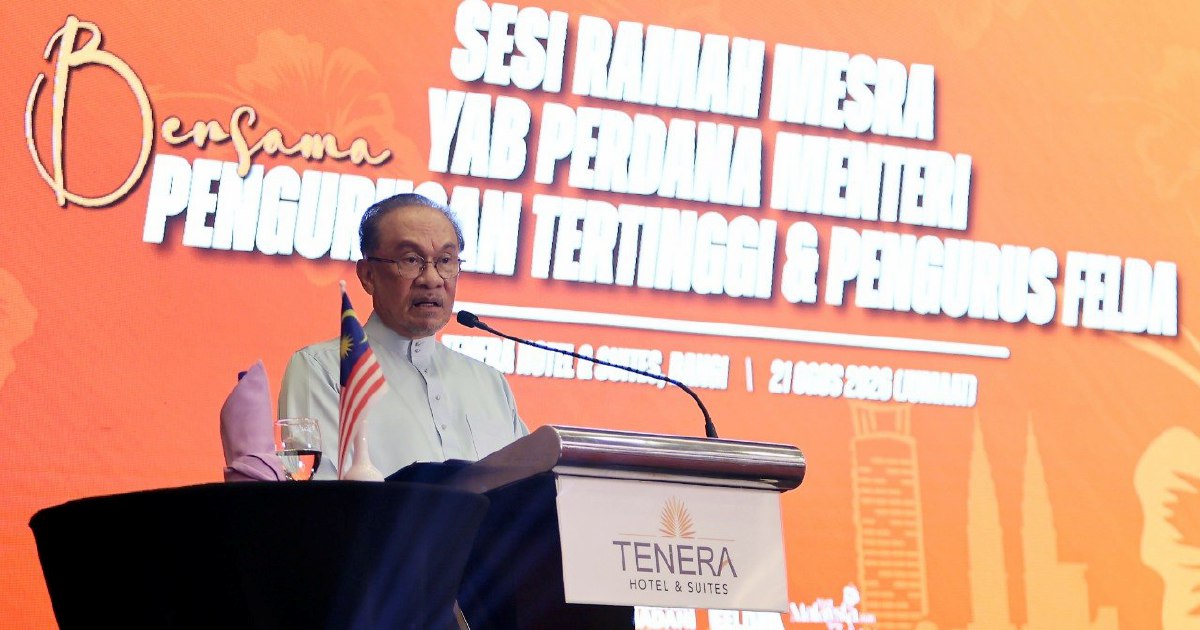
Prime Minister Datuk Seri Anwar Ibrahim confirmed in Bangi today that the specially appointed task force tasked with examining governance and operational issues at the Federal Land Development Authority has begun its formal investigations. The Premier indicated that a comprehensive report detailing the task force's discoveries and recommendations will be released to the public only after the inquiry concludes, signalling a methodical approach to addressing longstanding concerns within the statutory body.
Felda, one of Malaysia's largest land and agricultural development agencies, has faced mounting scrutiny in recent years over financial management, transparency, and the welfare of settlers dependent on its schemes. The formation of this dedicated task force reflects governmental acknowledgment that the institution requires external independent examination to restore public confidence and operational effectiveness.
The decision to establish the investigative body aligns with the government's broader accountability agenda. Since taking office, the Pakatan Harapan administration under Anwar has prioritised institutional reform and transparency across various federal agencies, positioning governance improvements as foundational to economic recovery and public trust.
Felda operates approximately 400 settlement schemes spanning over 700,000 hectares nationwide, affecting hundreds of thousands of settlers and their families whose livelihoods depend directly on the authority's performance. Many settlers have historically expressed concerns regarding inadequate support, fluctuating income, poor infrastructure maintenance, and limited access to modern agricultural technology. A comprehensive investigation could potentially address systemic weaknesses affecting these vulnerable communities.
The timing of this initiative carries significance for rural constituencies, where Felda schemes represent critical economic anchors. Political observers note that restoring settler confidence through tangible improvements could influence support levels in rural regions, traditionally important in Malaysia's electoral calculations. The task force's investigation therefore carries both administrative and political dimensions.
Anwar's announcement emphasises patience regarding the investigation's timeline, suggesting officials intend to conduct thorough due diligence rather than rush conclusions. This measured approach potentially indicates the task force will examine complex matters including historical financial transactions, governance structures, and policy implementation—investigations that typically require extensive documentation review and stakeholder consultation.
The authority's challenges extend beyond domestic concerns. Felda's international ventures, particularly its palm oil operations and investments in countries including Sudan and Liberia, have attracted international scrutiny regarding environmental practices and labour standards. A comprehensive internal investigation may provide opportunity to address global reputation concerns alongside domestic governance issues.
Sector analysts suggest the task force's findings could reshape Felda's operational model significantly. Potential recommendations might include restructuring settlement support systems, modernising agricultural practices toward sustainable operations, improving financial transparency mechanisms, or reconsidering international investment strategies. Such reforms could position Felda as a more competitive and sustainable development vehicle for smallholder agriculture.
The announcement also reflects broader regional trends. Throughout Southeast Asia, governments are increasingly establishing independent review bodies to examine state-owned enterprise performance, responding to public demand for institutional accountability. Malaysia's step aligns with similar initiatives across the region, where agricultural authorities face comparable challenges managing large rural populations and complex financial structures.
For Malaysian investors and agricultural stakeholders, the investigation outcome carries implications for policy direction and resource allocation. Clarity regarding Felda's operational future could influence investment decisions in palm oil, rubber, and emerging agricultural sectors that the authority promotes or supports. Institutional reform at Felda might also signal broader governmental commitment to improving efficiency across statutory bodies managing natural resources.
The task force's work occurs against a backdrop of global agricultural transformation, with increasing emphasis on sustainability, climate adaptation, and food security. Any recommendations emerging from the investigation likely will need to address how Felda can help Malaysian agriculture remain competitive while meeting international environmental standards and supporting settler welfare—a complex balancing act requiring thoughtful, evidence-based solutions.
Stakeholders including settler associations, agricultural unions, environmental advocates, and financial sector observers will monitor the task force's progress closely. The eventual findings and recommendations will significantly influence Felda's trajectory, potentially establishing new benchmarks for governance and performance across Malaysia's agricultural sector and beyond.

