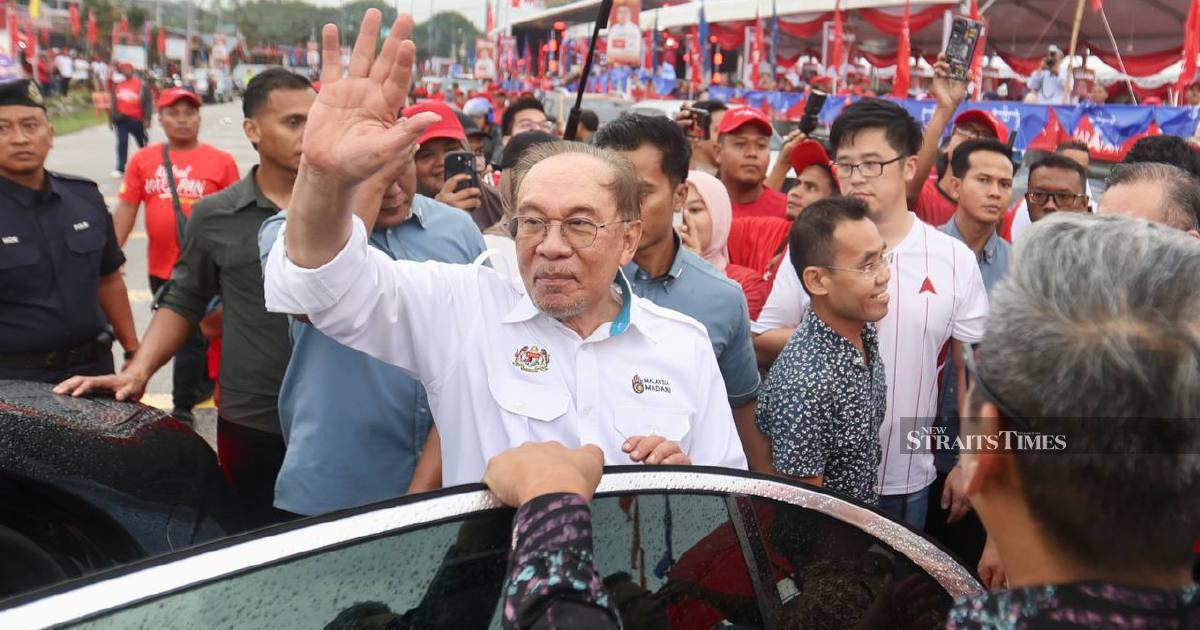
Prime Minister Datuk Seri Anwar Ibrahim has expressed alarm at the sustained personal attacks levelled against DAP secretary-general Anthony Loke during the Negeri Sembilan state assembly elections, signalling growing unease within the ruling coalition about the tenor of political discourse at the state level.
The comments from Malaysia's top political leader underscore mounting tensions within the Pakatan Harapan alliance as its component parties contest seats across the sultanate's constituencies. Anwar's public concern about campaign tactics against a senior coalition partner reflects broader anxieties about maintaining unity within the ruling bloc, which has faced considerable strain since coming to power and navigating complex coalition dynamics with both federal and state-level implications.
Attacks on opposition figures during election campaigns are commonplace across Malaysia, but criticism directed at coalition partners carries particular significance for the stability of Pakatan Harapan. The DAP, as the alliance's largest party by parliamentary representation, plays a crucial role in the government's majority calculations and policy implementation, making its standing and leadership vulnerable to damage that extends beyond electoral outcomes in individual states.
Anwar's public rebuke of these tactics demonstrates an attempt to rein in campaign excesses and protect coalition cohesion at a moment when Negeri Sembilan voting carries implications for national political momentum. The state, although smaller in absolute population terms, holds symbolic importance as a barometer of voter sentiment and serves as a testing ground for different political combinations and messaging strategies that may influence future national considerations.
The Jelebu-based remarks appear calculated to reassert the Prime Minister's authority over coalition discipline while signalling that certain boundaries around acceptable campaign conduct should not be crossed. By directly intervening in defence of Loke, Anwar sends dual messages: one to party members within his own Pakatan coalition about maintaining professional standards, and another to opposition elements about the limits of personal attacks he will tolerate against senior government figures.
Anthony Loke's position as DAP secretary-general makes him a high-profile target during any election cycle, but the relentlessness of attacks referenced by Anwar suggests a coordinated effort rather than sporadic criticism. Such sustained campaigns typically aim to undermine not just electoral prospects but also the standing of key figures within governing coalitions, potentially weakening their negotiating position in future coalition formations or policy decisions.
The Negeri Sembilan state elections take place within a broader context of shifting political alignments across Malaysia's states. Several state governments have recently undergone transitions involving complex negotiations between parties, demonstrating that state-level contests increasingly carry national implications. Results and campaign dynamics from Negeri Sembilan could influence calculations regarding future state-level cooperation agreements and federal-state relationships.
Within the DAP specifically, protecting Loke's authority and public standing carries strategic importance for the party's internal cohesion and external representation. As secretary-general, Loke is tasked with managing the party machinery and representing DAP interests in coalition negotiations. Damage to his credibility through unrestrained campaign attacks could weaken his position in intra-coalition discussions about seat allocations, policy priorities, and ministerial appointments.
Anwar's intervention also reflects awareness that the quality of political discourse affects public confidence in democratic institutions and processes. Repeated personal attacks that move beyond legitimate policy criticism or performance assessment risk eroding voter faith in elected representatives and contributing to broader cynicism about politics as a field of substantive disagreement rather than character assassination.
The specific nature of the attacks against Loke has not been detailed publicly, leaving room for interpretation about whether criticism centred on his policies, past statements, party affiliation, or personal matters. For Malaysian readers, this ambiguity highlights ongoing questions about campaign standards across different political competitors and the extent to which national leadership can enforce consistent expectations about acceptable election conduct across state contests where parties operate with considerable autonomy.
Moving forward, Anwar's statement may prompt internal coalition discussions about establishing or reinforcing guidelines for campaign language and tactics. Such conversations, though rarely made public, occur regularly within ruling coalitions seeking to maintain unity while accommodating the competitive impulses of different member parties in electoral contests.
The incident also serves as a reminder that Pakatan Harapan, despite being the governing coalition, faces persistent challenges in presenting unified governance to voters while simultaneously allowing component parties sufficient autonomy to differentiate themselves electorally. This tension between coalition solidarity and party competitiveness remains one of the defining characteristics of Malaysian politics under the current national leadership.

