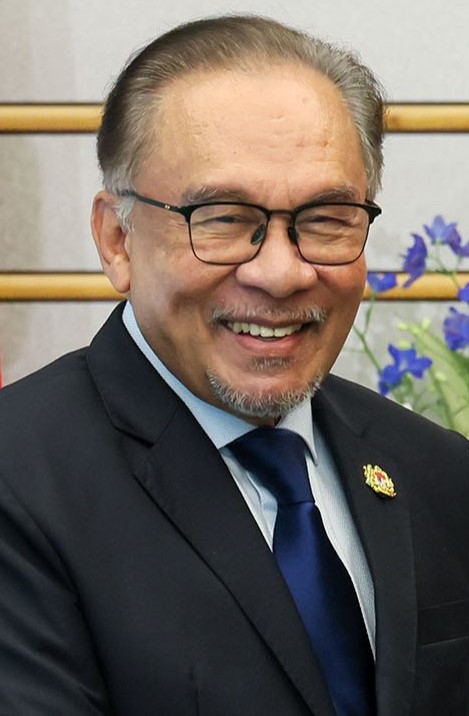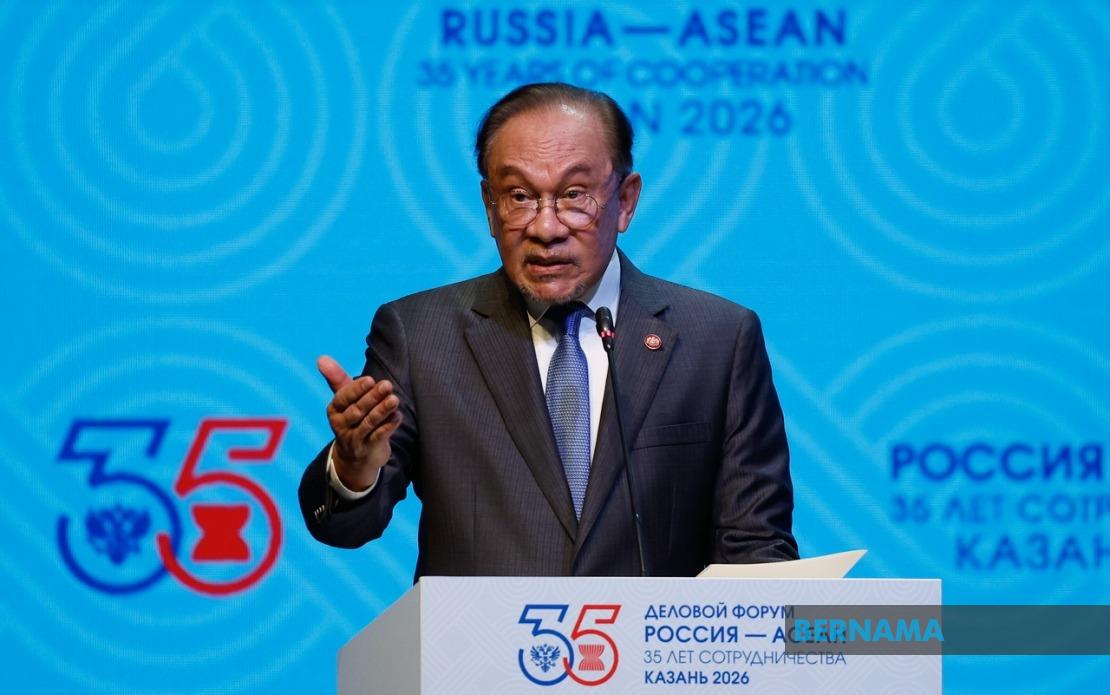
Prime Minister Datuk Seri Anwar Ibrahim has painted an ambitious vision for deepened ASEAN-Russia relations, suggesting that the bloc's partnership with Moscow remains substantially underdeveloped compared to its engagement with major powers like the United States, China and India. Speaking at the ASEAN-Russia Business Forum in Kazan on the sidelines of the Commemorative Summit, Anwar positioned collaborative platforms as essential mechanisms for bridging understanding and unlocking economic potential between the two regions.
The breadth of Anwar's remarks reflected the multifaceted nature of the bilateral relationship under examination. He specifically identified energy security, cybersecurity, agricultural development, digital infrastructure, scientific research and higher education as priority sectors ripe for expanded cooperation. This enumeration signals Malaysia's and ASEAN's strategic interests in diversifying their energy portfolios at a time when regional powers face mounting pressure to transition away from fossil fuels whilst maintaining economic competitiveness. Russia's established expertise in hydrocarbon production and nuclear technology makes it a logical partner for ASEAN nations navigating this complex transition.
Particularly significant was Anwar's emphasis on Tatarstan's technological and research capabilities. The Russian republic has emerged as a regional innovation hub, with documented achievements in defence, biotechnology and artificial intelligence. For Malaysia and its ASEAN neighbours, the prospect of knowledge transfer and research partnerships with Tatarstan's institutions offers pathways to technological advancement that might otherwise require costlier arrangements with Western or Chinese counterparts. This dimension of cooperation carries particular weight given Malaysia's ambitions within the digital economy and Industry 4.0 initiatives.
Anwar's recent engagement with Russian President Vladimir Putin yielded, by his account, productive discussions centred on economic cooperation and energy security. The timing of this bilateral interaction—occurring during escalating geopolitical tensions between Moscow and Western powers—underscores ASEAN's pragmatic approach to maintaining relationships across ideological and geopolitical divides. For Malaysian policymakers and regional observers, such diplomatic positioning reinforces ASEAN's commitment to strategic autonomy, a principle increasingly important as great power competition intensifies across the Indo-Pacific.
An unexpected yet revealing dimension of the forum emerged when journalists questioned Anwar about his documented appreciation for Russian cultural content, particularly songs featuring prominently on his social media accounts. Rather than deflecting, the Prime Minister articulated a thoughtful philosophy linking cultural exchange to deeper international understanding. His acknowledgement of personal enjoyment in Russian music—shared with his family—humanised the diplomatic discussion and illustrated how cultural affinity can facilitate political rapport at the leadership level.
Anwar's engagement with Russian literature proved equally illuminating for understanding his broader worldview. His stated admiration for Leo Tolstoy, Anton Chekhov and Boris Pasternak, combined with his observation that their works exist in Malay translation, suggests a recognition that cultural understanding transcends elite intellectual circles. The availability of Russian literary classics in Malaysian language opens avenues for grassroots familiarity that state-to-state diplomacy alone cannot achieve. Anwar's emphasis on the complementary nature of cultural and technological cooperation provided a refreshing counterweight to purely transactional discussions of bilateral ties.
The Prime Minister's invocation of Tatar poet Abdullah Tukay during his opening remarks demonstrated sophisticated cultural awareness and respect for regional Eurasian identities beyond Moscow-centric narratives. This gesture acknowledged Tatarstan's distinct cultural heritage whilst signalling Malaysian openness to understanding Russia's internal diversity—a nuance often lost in Western-focused media coverage of Russia that treats the country as monolithic.
When discussion pivoted to regional security matters, Anwar revealed ongoing consultations with multiple Islamic and strategically important leaders—Iranian President Masoud Pezeshkian, Pakistani Prime Minister Shehbaz Sharif, Egyptian President Abdel Fattah El-Sisi and Turkish President Recep Tayyip Erdogan. These contacts indicate Malaysia's position within an informal network of Muslim-majority nations seeking de-escalation and diplomatic solutions amid Middle Eastern tensions. The Prime Minister's role as a voice advocating peaceful resolution aligns with ASEAN's traditional emphasis on dialogue over confrontation, though it also reflects Malaysia's particular strategic interests in preventing regional instability that could disrupt energy flows and maritime security.
Anwar's commentary on Gaza represented perhaps the most emotionally charged segment of his remarks. His assertion that the international community has failed in its humanitarian obligations, combined with criticism of selective application of democratic and human rights principles, reflects a consistent position Malaysia has maintained throughout the conflict. Yet his framing—emphasizing the contradiction between professed values and inaction on documented civilian suffering—articulates grievances widely shared across Southeast Asia's Muslim populations. For Malaysian domestic audiences, such statements reinforce perceptions that their government champions principles often dismissed by Western powers when geopolitical interests diverge.
The Prime Minister's characterization of contemporary humanitarian failures raises substantive questions about international law enforcement mechanisms. His observation that systems permitting daily violence against children and women operate without serious consequence speaks to erosion of the international humanitarian regime established post-World War II. For Malaysia, a middle power invested in rules-based international order, Anwar's criticism reflects frustration with selective enforcement that undermines the legitimacy of global institutions.
Anwar's two-day working visit to Kazan, capital of Tatarstan, carried symbolic weight beyond standard diplomatic engagement. The venue selection itself—off the conventional Moscow-Saint Petersburg axis—suggested deliberate diversification of Russia engagement beyond traditional power centres. For Malaysian stakeholders monitoring evolving ASEAN-Russia dynamics, such positioning indicates that emerging opportunities may increasingly involve Russian regional actors rather than exclusively Moscow-based decision-making.
The forum discussions collectively demonstrated how contemporary diplomacy intertwines economic pragmatism, cultural understanding, security concerns and humanitarian advocacy. Anwar's performance across these domains illustrated Malaysia's sophisticated approach to great power engagement during an era of heightened ideological polarisation. His willingness to pursue cooperation with Russia whilst maintaining forthright positions on human rights issues presents a model of principled pragmatism increasingly necessary for Southeast Asian nations navigating competing pressures from major powers seeking exclusive alignments.