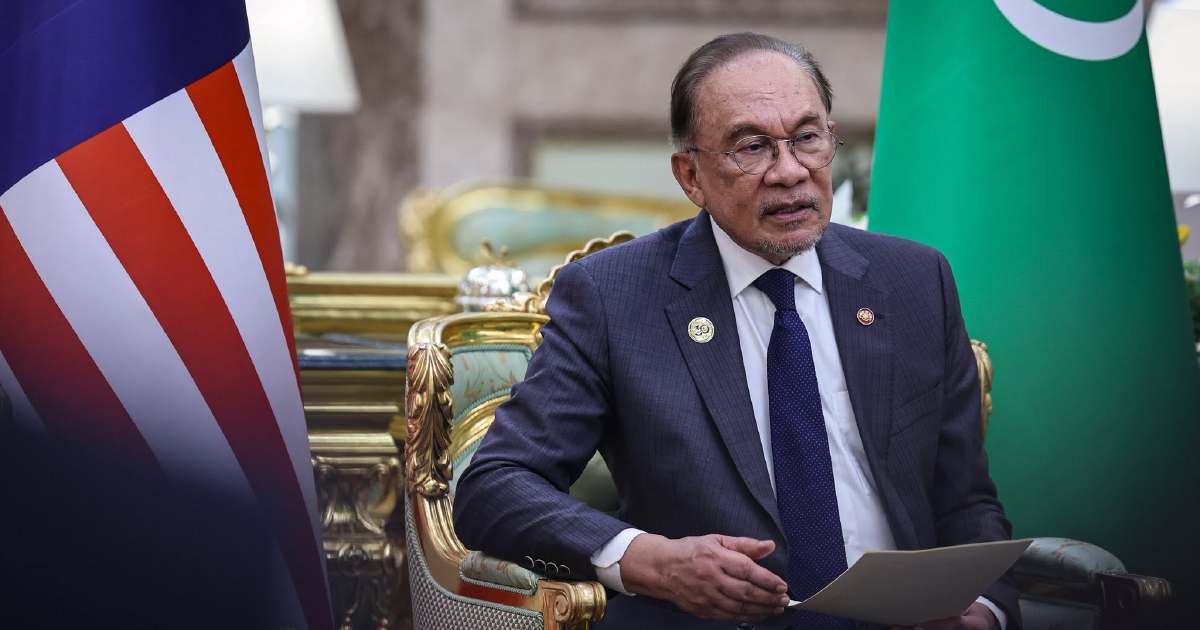
Prime Minister Anwar Ibrahim has publicly endorsed Petronas's newly announced gas field deal in Turkmenistan, signalling the government's commitment to expanding Malaysia's hydrocarbon footprint across new geographies. The breakthrough represents a significant milestone for the national oil and gas corporation as it diversifies its upstream portfolio beyond traditional operating regions in Southeast Asia and the Middle East, positioning the company to capitalise on Central Asian energy resources during a period of global energy transition and supply security concerns.
The agreement underscores Petronas's strategic pivot towards resource-rich jurisdictions where exploration and production opportunities remain substantial and relatively underexploited. Turkmenistan holds considerable proven and probable natural gas reserves—among the world's largest—yet has historically attracted limited international upstream participation compared to Middle Eastern producers. This gap has created openings for established operators like Petronas to establish footholds in fields that offer long-term production potential and export opportunities through regional pipeline networks connecting to Europe and Asia.
For Malaysia, the transaction carries implications extending beyond commercial returns. Securing energy assets abroad addresses longstanding concerns about the nation's ability to sustain domestic production as mature fields in the Peninsular and Sabah regions experience natural decline. Enhanced overseas oil and gas holdings strengthen Petronas's cash generation capacity, which in turn funds exploration domestically and supports the government's energy security agenda. The company's international success also bolsters its creditworthiness and capacity to finance capital-intensive deepwater and frontier projects that Malaysia depends upon to maintain production volumes.
The timing of this partnership reflects pragmatic energy diplomacy at a moment when traditional suppliers face geopolitical pressures and demand volatility from energy-intensive Asian economies. Turkmenistan's strategic position—bordering the Caspian Sea and serving as a transit corridor for hydrocarbons flowing westward—offers Petronas exposure to multiple revenue streams through different export routes. This geographic diversification reduces operational and political risk inherent in concentrating assets within any single region or subject to any single buyer market.
Petronas's ability to secure such agreements also testifies to the company's technical expertise and financial capacity in competing against supermajors and state-owned champions from Russia, China, and Europe. The corporation maintains advanced subsurface capabilities and project execution experience accumulated across decades of operations in challenging offshore environments. These competitive advantages prove particularly valuable in Central Asian fields where geological complexity and infrastructure constraints demand sophisticated engineering solutions and disciplined cost management.
The Turkmenistan development aligns with Petronas's broader decarbonisation strategy and transition planning. While natural gas itself faces long-term demand headwinds under climate scenarios, it remains the preferred fossil fuel for power generation and industrial applications during the energy transition period. By establishing production positions now, Petronas secures decade-long cash flows while positioning itself to pivot operations toward lower-carbon gases—including hydrogen and liquefied natural gas—as market dynamics shift.
Central Asian gas development also carries geopolitical weight for Malaysia's standing in broader regional architecture. Engagement with Turkmenistan and other Central Asian states elevates Malaysia's diplomatic profile beyond its immediate Southeast Asian neighbourhood, supporting its aspirations as a significant voice in multilateral forums and energy governance discussions. Petronas serves as an instrument of this soft power projection, projecting Malaysian technical competence and reliability onto the global stage.
The partnership framework likely encompasses multiple phases, from exploration and appraisal through production and commercialisation. Petronas typically structures such agreements to balance operational control with host-government requirements, ensuring transparency and maximum benefit distribution. Given Turkmenistan's strategic importance and energy leverage, the government has probably negotiated terms reflecting its priorities regarding technology transfer, local employment, and profit-sharing arrangements.
Investment into Turkmenistan's hydrocarbon sector also carries risks that Petronas and the Malaysian government will have weighed carefully. Political stability in Central Asia remains subject to regional tensions, sanctions regimes affecting certain jurisdictions, and the long-term trajectory of European energy demand as the continent accelerates renewable deployment. Currency volatility and potential regulatory changes in Turkmenistan could affect returns. Nevertheless, the strategic benefits of geographic diversification and long-term production security evidently outweigh these considerations in the company's assessment.
For Malaysian energy investors and policy makers, the Petronas-Turkmenistan venture demonstrates that opportunities persist for establishing meaningful positions in world-class hydrocarbon systems. It encourages other Malaysian companies to pursue similar international expansion strategies and signals government support for companies investing capital and expertise abroad. Anwar's endorsement thus carries broader economic messaging beyond the specific transaction, reinforcing Malaysia's commitment to leveraging national champions as vehicles for value creation and strategic positioning in competitive global energy markets.

