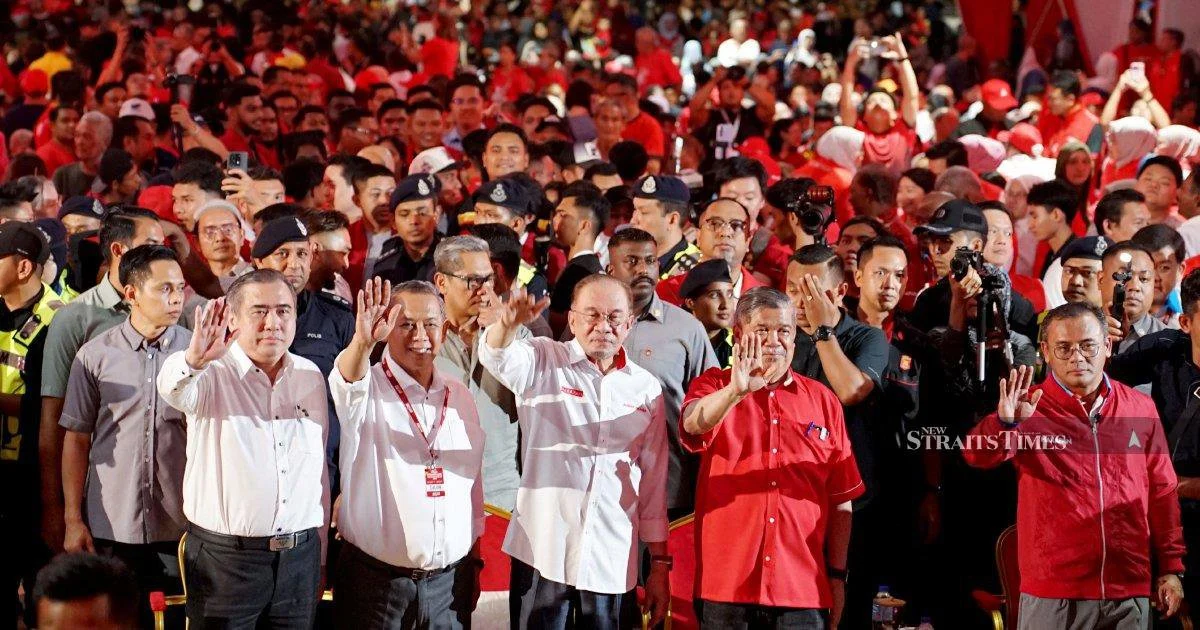
Prime Minister Datuk Seri Anwar Ibrahim has delivered a direct warning to Malaysia's political establishment that the nation's royal institutions must remain insulated from campaign fervour, particularly as Negri Sembilan gears up for its state elections. Speaking in Kuala Pilah, Anwar made clear that all parties—with pointed emphasis on political leaders themselves—bear responsibility for maintaining this constitutional boundary during the electoral process.
The directive reflects deepening concerns about the instrumentalisation of constitutional symbols during campaigns across Malaysia. The monarchy holds profound constitutional significance as the apex of Malaysia's Westminster-derived system, with the Yang di-Pertuan Agong and state rulers occupying ceremonial and symbolic roles that deliberately distance them from partisan politics. This separation has been foundational to Malaysian constitutional stability since independence, yet periodic tensions emerge when candidates and campaigns seek to invoke royal support or proximity to enhance their electoral credibility.
Negri Sembilan's electoral context makes Anwar's intervention particularly timely. The state, one of Malaysia's nine monarchies, carries special symbolic weight given the Sultan's prominent ceremonial role and the deep cultural reverence accorded to the institution across the state. When political operatives campaign by alluding to royal preference or blessing—whether explicitly or through innuendo—they risk fracturing the carefully maintained consensus that shields constitutional rulers from party-political contestation. Anwar's statement signals concern that the intensity of the state election campaign may be pushing some actors toward such boundary violations.
The warning carries particular weight given Anwar's own position as Prime Minister. His government stands to gain or lose seats in the Negri Sembilan election outcome, yet his public plea for institutional restraint demonstrates awareness that long-term governance stability depends on preserving constitutional norms even when short-term electoral interests might benefit from their erosion. This restraint represents a significant statement of principle at a moment when competing coalitions might be tempted to maximise every available advantage.
Malaysia's constitutional architecture fundamentally depends on the depoliticisation of the monarchy. Article 32 of the Federal Constitution invests broad powers in the Yang di-Pertuan Agong, yet these powers function constitutionally only because the monarchy remains above party politics. When citizens and leaders respect this boundary, the institution retains the legitimacy necessary to exercise ceremonial and reserve powers without public controversy. Conversely, if the monarchy becomes perceived as aligned with particular political movements, its constitutional functionality deteriorates as rival camps question its impartiality.
Historical precedent in Malaysia offers cautionary lessons. Previous electoral campaigns have occasionally brushed against this boundary, with rival parties accusing each other of claiming royal endorsement or proximity. These incidents typically generate constitutional concern beyond the immediate electoral cycle, prompting senior statesmen and legal scholars to reaffirm institutional norms. Anwar's preemptive statement aims to prevent such erosion before it begins in Negri Sembilan, establishing clear expectations for acceptable campaign conduct.
The implications extend beyond Negri Sembilan's immediate electoral stakes. As Malaysia navigates a period of coalition volatility and shifting political alignments, the stability provided by constitutional institutions becomes increasingly valuable. Political leaders who might be tempted to weaponise royal institutions for electoral gain risk undermining the very constitutional framework that legitimises their positions. Anwar's warning implicitly appeals to enlightened self-interest among the political class: preserving constitutional norms serves everyone's long-term interests.
For Southeast Asian observers, Malaysia's approach to this challenge offers a model of constitutional discipline. While other regional democracies have experienced erosion of institutional boundaries, Malaysia's political culture—despite periodic strains—has generally maintained respect for the depoliticisation of the monarchy. This reflects deliberate institutional design, reinforced by leadership statements like Anwar's, that teach successive generations of politicians the importance of observing constitutional boundaries even when electoral advantage beckons.
The Negri Sembilan context also highlights the particular sensitivity of state-level elections involving hereditary monarchies. State rulers possess both ceremonial significance and, in some constitutional contexts, specific reserve powers. When state elections occur, the temptation to invoke the ruler's implicit authority becomes acute. Anwar's intervention recognises this dynamic and seeks to manage it preemptively through clear public communication to political stakeholders.
Moving forward, monitoring campaign discourse in Negri Sembilan will reveal whether Anwar's warning achieves its intended effect. Political observers should attend to campaign messaging for subtle allusions to royal preferences, claims of institutional closeness, or suggestions that particular candidates enjoy monarchical support. The absence of such claims would vindicate Anwar's faith that Malaysian political leaders, when reminded of constitutional proprieties, voluntarily comply with institutional boundaries.
Ultimately, Anwar's statement represents principled democratic leadership. Rather than exploiting the electoral cycle to advance his government's interests in Negri Sembilan, the Prime Minister prioritises institutional integrity. This sets an important tone for the political class, signalling that Malaysia's constitutional monarchy remains genuinely above politics precisely because political leaders choose to keep it there. Sustaining this arrangement requires constant reinforcement through leadership actions and statements, making Anwar's intervention both timely and symbolically significant for Malaysia's democratic trajectory.

