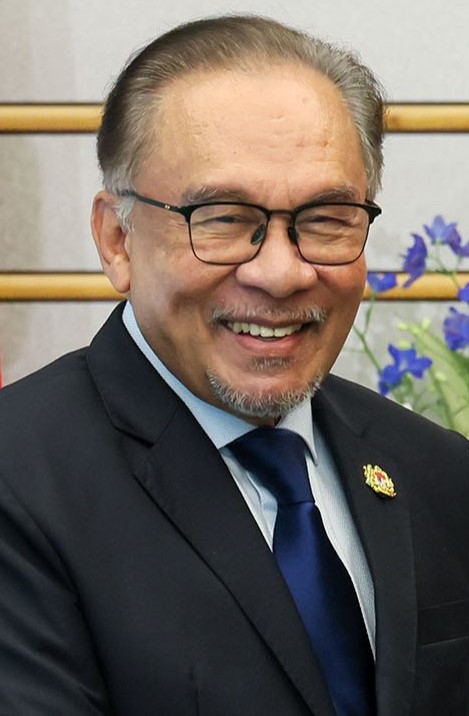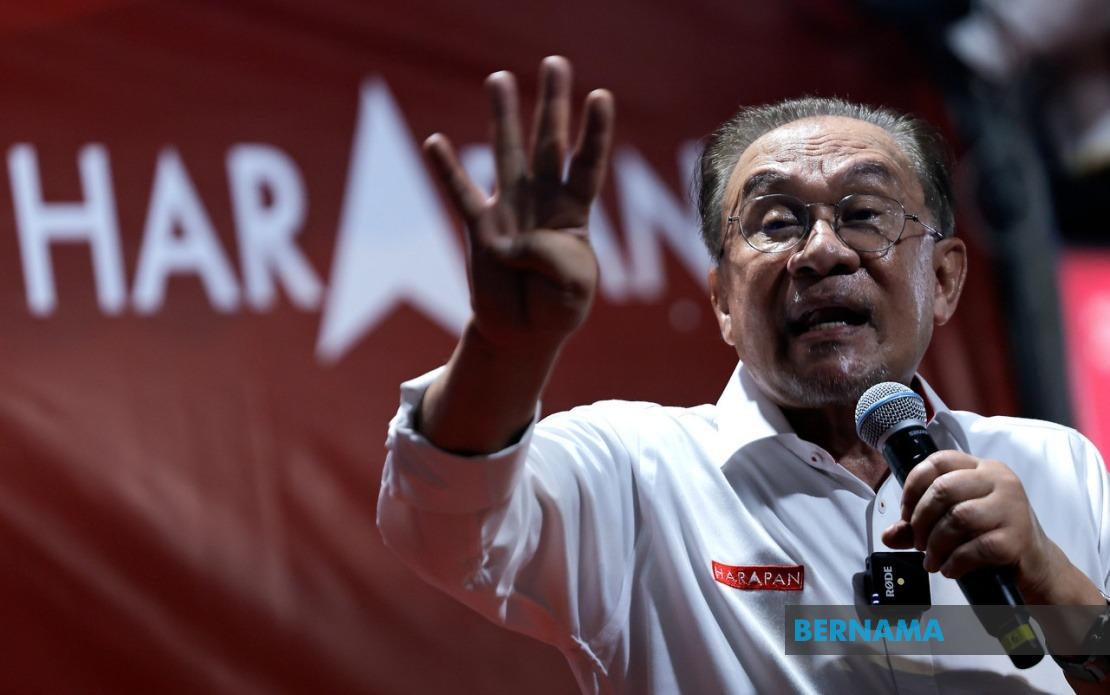
Prime Minister Datuk Seri Anwar Ibrahim took his campaign message directly to Johor voters during a Pakatan Harapan rally in Muar, emphasising that the choice of leadership will fundamentally shape the state's future trajectory. Speaking to supporters gathered for the grand rally, Anwar stressed that electing principled and humble representatives should be the paramount consideration for Johor residents as they prepare to cast votes in the state election scheduled for July 11. The PH chairman's remarks underscore a broader campaign strategy focused on character and governance standards rather than mere partisan competition.
Anwar's comments reflected growing concern within Pakatan Harapan circles about what the coalition views as opportunistic political behaviour from rival factions. He specifically cautioned against voting for candidates and parties that rely on stoking racial and communal sentiments to mobilise support, only to neglect their obligations to constituents once elected. This critique appears targeted at opposition parties that have traditionally dominated Johor politics, particularly UMNO and its allies. By framing the election around values and delivery rather than identity politics, Anwar attempted to reposition PH as the more serious governance choice for the industrialised state.
The Prime Minister extended his argument to encompass long-term considerations affecting Johor's population across multiple generations. He invoked images of schools, hospitals, and national development to illustrate why thoughtful electoral choices matter beyond immediate political cycles. This rhetorical approach seeks to elevate the election conversation above short-term factional disputes and tribal voting patterns, appealing particularly to younger, urban voters and the growing professional middle class in Johor's major cities. Anwar's emphasis on protecting the welfare of poorer and grassroots communities suggests PH's strategy involves mobilising lower-income voters with promises of tangible government services and targeted assistance programmes.
A central theme of Anwar's Muar speech centred on administrative coordination between state and federal governments. He argued that political alignment between Johor's state administration and the federal government under PH could unlock substantial economic benefits currently constrained by bureaucratic friction. This coordination argument carries particular weight in Johor, which serves as Malaysia's economic hub for trade with Singapore and a crucial node in regional supply chains. Anwar presented the federal government as the architect and executor of major development initiatives, positioning state-level PH control as necessary to ensure Johor fully captures dividends from these investments.
The Johor-Singapore Special Economic Zone emerged as a flagship example in Anwar's pitch to voters. This ambitious bilateral project, which the federal government negotiated and oversees, represents one of Southeast Asia's most significant recent economic collaboration frameworks. Anwar highlighted the federal government's central role in establishing and advancing the JS-SEZ while diplomatically acknowledging state government contributions. His argument implicitly suggested that a PH-led state government would remove policy obstacles and bureaucratic delays that might otherwise hinder the zone's development and expansion. This resonates particularly with business communities and workers in Johor's industrial corridors who stand to benefit from enhanced trade infrastructure.
Anwar similarly referenced ongoing expansion of the Port of Tanjung Pelepas, another major federal initiative that carries enormous strategic significance for Southeast Asian maritime commerce. The port's development directly affects employment, logistics efficiency, and Johor's competitiveness within regional shipping networks. By attributing this project's advancement to federal stewardship, Anwar sought to demonstrate that votes for PH candidates would unlock greater momentum for economic transformation. For port workers, logistics professionals, and maritime industries centred in southern Johor, the promise of federal-state coordination represents tangible economic interest in the election outcome.
However, Anwar's statement that he would personally oversee federal projects regardless of who controls the state government revealed inherent tensions in his argument. This admission potentially undermines the logic that state-level PH representation is essential for extracting federal investment benefits. Nevertheless, Anwar framed state government responsibility differently, arguing that state representatives and executive council members should focus on essential local services—healthcare, education, social assistance—rather than competing with the federal government on infrastructure megaprojects. This delineation attempts to clarify role boundaries and rebrand the state election as primarily about local welfare governance.
Anwar's campaign also targeted diaspora voters by explicitly urging Johor residents living elsewhere in Malaysia or abroad to return home for the July 11 election. This mobilisation effort reflects PH's recognition that voter turnout often decides marginal contests, particularly in competitive electoral districts. Johor contains numerous constituencies where victory margins have historically been narrow, meaning even modest improvements in voter participation could swing the overall state outcome. The appeal to non-resident voters suggests PH strategists believe they have marginal support advantages among educated, mobile populations who have relocated for employment but retain emotional attachment to Johor.
The emphasis on voter responsibility and civic duty in Anwar's remarks positioned electoral participation as a moral obligation rather than mere political choice. He articulated that every vote carries weight in determining whether economic growth benefits permeate to ordinary citizens or concentrate among ruling elites. This framing attempts to counter potential voter apathy in a country where local and state elections sometimes attract lower participation than national ballots. By connecting individual voting acts to collective outcomes—whether Johor's poor receive healthcare, whether schools improve, whether wage earners share prosperity—Anwar sought to motivate mobilisation beyond PH's core activist base.
The Johor state election carries significance extending beyond the state's boundaries. As Malaysia's most economically productive state and a bastion of traditional UMNO-led governance, any shift toward PH control would substantially reshape the country's political geography. A PH victory would demonstrate the coalition's capacity to expand beyond its 2022 national election mandate and compete effectively in state contests. Conversely, an UMNO or Barisan Nasional victory would suggest the opposition retains hold over traditionally conservative Malay-Muslim voters despite federal government control by a PH-led coalition. The election thus functions as a mid-term referendum on the Anwar administration's performance and public confidence in his governance agenda.
For Malaysian business communities and investors monitoring regional stability, the Johor election outcome carries implications for economic predictability and policy continuity. A state government aligned with federal development priorities could streamline regulatory processes, facilitate industrial expansion, and ensure consistent implementation of economic initiatives. Conversely, political division between state and federal authorities might introduce policy inconsistencies that complicate business planning. Anwar's campaign messaging therefore appeals to economic stakeholders who benefit from clear governance frameworks and coordinated development planning across administrative levels.