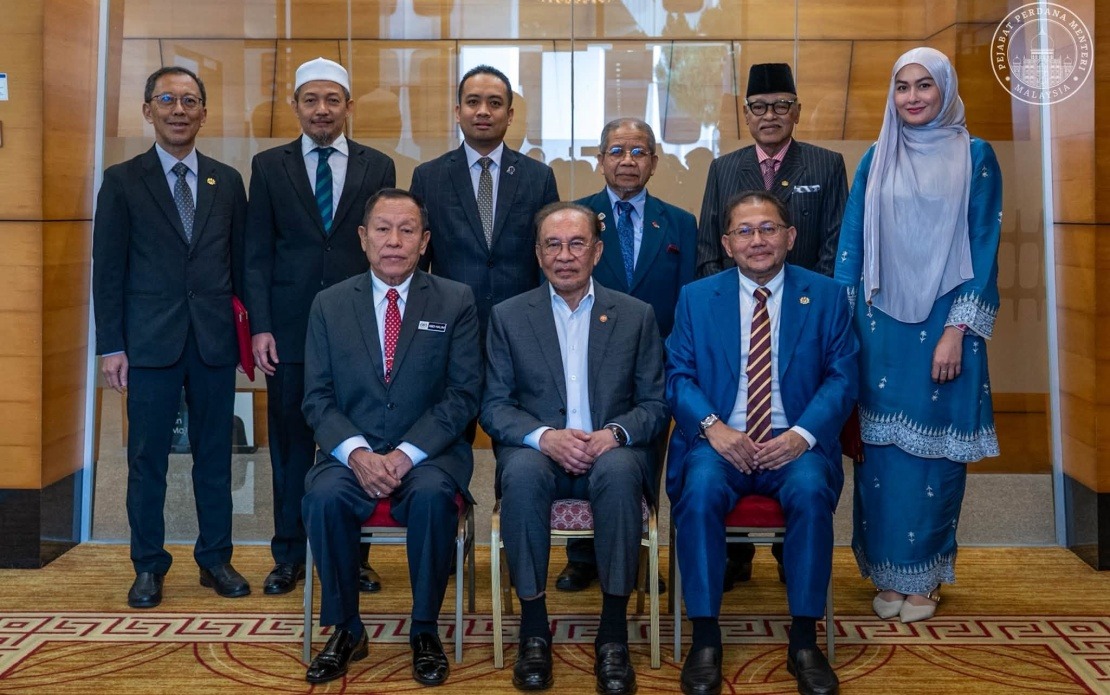
Prime Minister Datuk Seri Anwar Ibrahim has reinforced the message that Malaysia's fight against corruption cannot rest on the shoulders of a single agency, but instead demands a coordinated, comprehensive approach drawing in enforcement bodies, parliamentary institutions, government departments, the business community, and ordinary citizens. Speaking at Parliament, he outlined his vision of a multi-stakeholder framework where different actors work in concert to strengthen the nation's defences against graft and misconduct.
The Prime Minister emphasised the critical role played by two key oversight mechanisms in this broader architecture: the Special Committee on Corruption (JKMR) and the Anti-Corruption Advisory Board (LPPR). These bodies function as independent watchdogs within the system, providing impartial scrutiny and expert guidance that help calibrate and improve the effectiveness of anti-corruption initiatives across government. By operating outside the direct chain of command, they offer the institutional distance necessary to challenge assumptions and hold enforcement agencies accountable to high standards.
Anwar presented appointment instruments to newly appointed members of both bodies following formal approval from the Yang di-Pertuan Agong. In remarks directed at the incoming officeholders, he appealed to them to bring renewed determination to their work on the anti-corruption agenda. His call reflected an understanding that fresh personnel can inject vigour into established institutions and signal renewed political commitment to the cause.
Despite their varied professional backgrounds and life experiences, the newly appointed members share a singular mandate: strengthening Malaysia's capacity to identify, prosecute, and ultimately deter corrupt behaviour. This diversity of perspective is intentional, as leaders drawn from different sectors and communities bring distinct vantage points to the challenge of understanding and countering corruption in all its forms.
The JKMR operates under formal legal authority granted by Section 14 of the Malaysian Anti-Corruption Commission Act 2009 (Act 694). Its composition deliberately spans the political divide, with members appointed by the King drawn from both the Government and Opposition benches of the Dewan Rakyat, as well as the Senate. This cross-party structure reflects an implicit recognition that corruption transcends political ideology and that meaningful progress requires transcending partisan divisions.
The LPPR, governed by Section 13 of the same legislation, takes a different approach to member selection. Rather than focusing on political representation, it draws its membership from individuals whose careers have been marked by integrity and distinction. These may be retired civil servants, professionals who have achieved excellence in law, business, academia, or other fields, or citizens who have demonstrated exceptional commitment to public service values. This criteria-based selection process aims to populate the board with people of proven character and credibility.
The structural relationship between these two bodies creates complementary oversight functions. The JKMR, with its parliamentary roots, maintains institutional connections to the legislature and can bridge executive and legislative perspectives. The LPPR, comprising independent experts and respected figures from civil society, brings technical knowledge and moral authority grounded in professional achievement rather than political position. Together, they create multiple points of entry for critical scrutiny of anti-corruption work.
For Malaysian readers, the appointment announcement carries implications for how corruption cases may be handled and investigated in coming months. The strength of these advisory bodies directly affects the independence and credibility of the Malaysian Anti-Corruption Commission (MACC), the primary enforcement agency. When these oversight committees enjoy genuine autonomy and public confidence, they amplify pressure on the MACC to maintain professional standards and avoid politicisation of investigations.
The Prime Minister's broader message also reflects growing international emphasis on whole-of-society approaches to governance challenges. Rather than viewing anti-corruption as the exclusive domain of police and prosecutors, modern best practice recognises that sustainable progress requires buy-in from businesses that establish ethical procurement standards, civil society organisations that monitor government activity, educational institutions that cultivate integrity, and citizens who report wrongdoing. This perspective acknowledges that formal enforcement, however rigorous, cannot succeed without cultural and institutional reinforcement throughout society.
For Southeast Asian observers, Malaysia's institutional framework offers a regional model worth studying. Many countries in the region struggle to establish credible anti-corruption mechanisms that appear independent rather than weaponised for political purposes. The inclusion of opposition figures on the JKMR and the criteria-based selection of LPPR members represent attempts to build institutions with legitimacy that transcends electoral cycles. Whether these structures ultimately achieve their intended insulating effect will depend on whether governments actually respect their recommendations and protect members from political pressure.
The timing of these appointments also warrants attention. Coming during a period when Malaysia has been pursuing various governance reforms, the move signals continuity in anti-corruption commitment. The frequency with which governments refresh these bodies, the calibre of individuals appointed, and the visibility they receive in public discourse all indicate whether anti-corruption remains a genuine policy priority or risks becoming rhetorical window dressing.
Looking forward, the effectiveness of the newly constituted JKMR and LPPR will be measured not merely by their formal reports and recommendations, but by observable changes in MACC operations, conviction rates, case outcomes, and public perception of corruption risk. The Prime Minister's appeal to members to strengthen their resolve suggests awareness that institutional architecture alone cannot guarantee results; the individuals within these structures must possess both competence and courage to discharge their duties faithfully.

