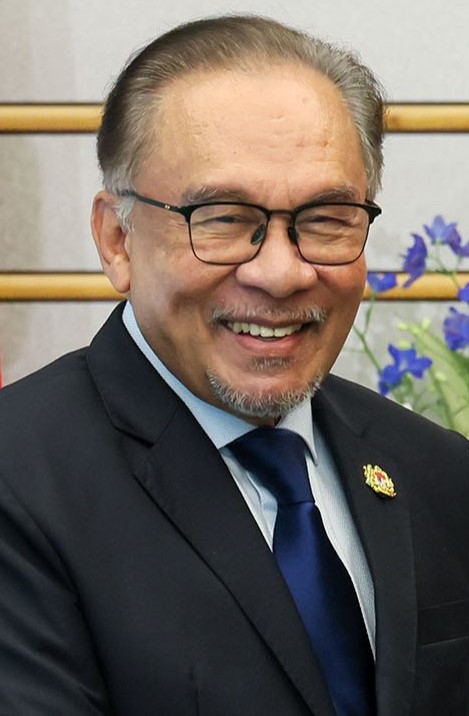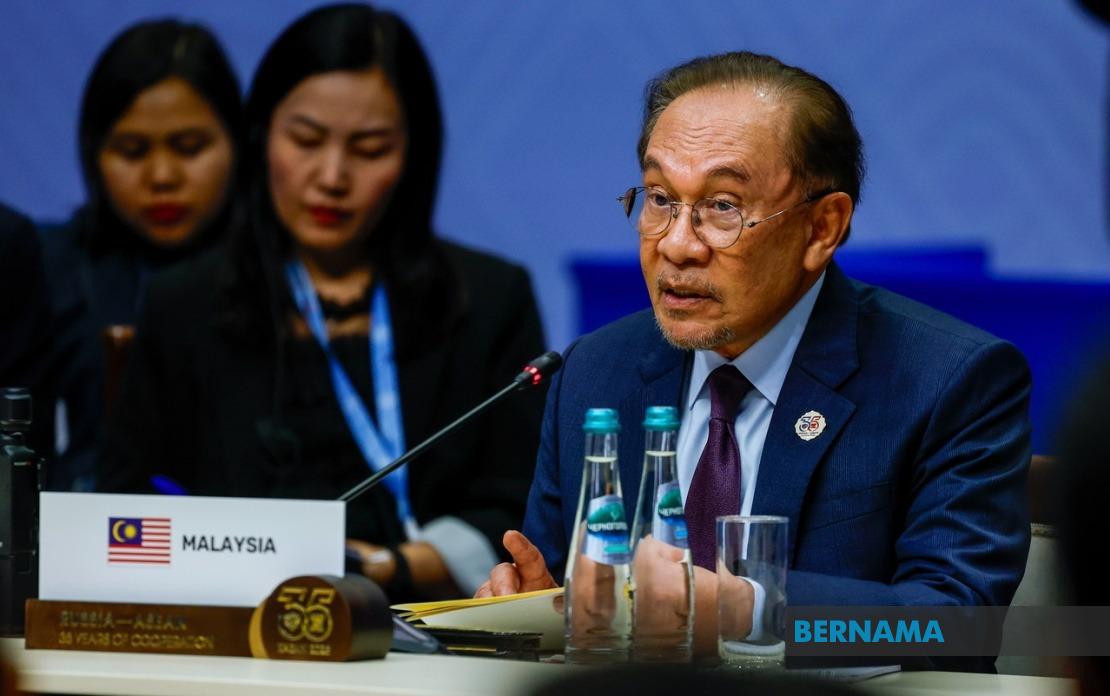
Prime Minister Datuk Seri Anwar Ibrahim delivered a forceful call for strengthened cooperation between ASEAN and Russia at the ASEAN-Russia Commemorative Summit in Kazan, positioning dialogue and diplomacy as essential tools for navigating an increasingly unstable world. Speaking during the plenary session, Anwar framed the gathering as a critical platform for the two regional actors to pursue partnership strategies that transcend traditional security boundaries, particularly as global uncertainty deepens across multiple domains.
The summit itself carries symbolic weight, marking three and a half decades of formal relations between ASEAN and Russia—a partnership that began in 1991 in Kuala Lumpur and has since evolved into a structured dialogue mechanism. This occasion provided the stage for ASEAN leaders, including Philippines President Ferdinand Marcos Jr., who holds the bloc's rotating chairmanship this year, to take stock of accumulated achievements and recalibrate their engagement with Moscow for the coming years.
Anwar's intervention highlighted Malaysia's conviction that sustainable peace emerges exclusively through sustained engagement, mutual comprehension, and adherence to established international legal frameworks. Rather than merely restating familiar diplomatic platitudes, he connected this principle to concrete pathways of collaboration. Malaysia's emphasis on dialogue mechanisms carries particular significance for regional stability given the nation's historical commitment to non-alignment and its efforts to maintain balanced relations across competing geopolitical camps.
The prime minister articulated an expansive vision of cooperation spanning economic, technological, and developmental sectors. Trade and investment frameworks represent the foundation for deepening ties, but equally important are emerging domains including artificial intelligence, digital infrastructure, scientific research partnerships, and energy security. These cooperation zones reflect recognition that modern strategic relationships extend far beyond military and political dimensions into the knowledge economy and infrastructure domains where Southeast Asia increasingly faces competition and vulnerability.
Food security and the halal industry emerged as unexpected yet revealing priorities in Anwar's address. These sectors directly address Southeast Asian needs—ASEAN's growing population and import dependence in certain agricultural sectors create genuine opportunities for Russian partnership—while also reflecting how contemporary geopolitics encompasses non-traditional security concerns. The inclusion of halal industry cooperation underscores the region's unique commercial and cultural characteristics, suggesting that ASEAN-Russia partnership should accommodate Southeast Asia's specific developmental requirements rather than adopting one-size-fits-all frameworks.
People-to-people exchanges, though often treated as ceremonial in diplomatic discourse, received emphasis as genuine vectors for building understanding beyond official channels. Given historical suspicion between some ASEAN nations and Russia, cultural and academic engagement serves practical functions in normalizing relations and creating constituencies within societies that benefit from and support continued cooperation.
Malaysia's stance on West Asian conflicts revealed the limits and tensions within ASEAN-Russia partnership. While advancing bilateral cooperation, Anwar nonetheless reiterated Malaysia's unambiguous position demanding an immediate end to violence in Gaza, unimpeded humanitarian assistance delivery, and recognition of Palestinian self-determination rights. Malaysia additionally condemned Israeli military expansion into Lebanon and opposed strikes against United Nations peacekeeping forces. These statements, delivered at a Russian-hosted summit, illustrate Malaysia's determination to maintain independent positions on Middle Eastern questions despite deepening ties with Moscow.
The four outcome documents expected from the summit—including the Kazan Declaration marking the 35-year milestone, joint statements on energy and cultural cooperation, and a comprehensive implementation plan for 2026–2030—provide the scaffolding for translating aspirational statements into tangible initiatives. The establishment of a multi-year action plan signals commitment beyond the summit itself, suggesting that both parties view this partnership as requiring structured, long-term institutional architecture rather than episodic engagement.
For Malaysia specifically, deepened ASEAN-Russia cooperation offers strategic diversification benefits. As the country navigates complex relationships with major powers and seeks alternative partnerships to reduce dependence on any single external actor, Russia provides a counterweight and additional options for technological, energy, and security cooperation. The emphasis on energy cooperation holds particular relevance given Malaysia's evolving energy transition needs and potential complementarities with Russian energy exports and technical expertise.
The timing of this summit carries geopolitical significance extending beyond the bilateral relationship. Occurring amid persistent tensions between Russia and Western powers, the gathering demonstrates Moscow's continued capacity to maintain substantive engagement with non-aligned Asian regional organizations despite international isolation in some quarters. For ASEAN, the summit reinforces the bloc's commitment to maintaining inclusive dialogues and resisting pressure to choose sides in great power competitions—a principle central to ASEAN's traditional diplomatic approach.
Anwar's emphasis on respect, mutual benefits, and shared commitment to peace and stability reflected diplomatic language designed to appeal across ASEAN's diverse membership while acknowledging Russia's own security concerns and interests. This balancing act remains perpetually challenging, as ASEAN members hold varying perspectives on Russia's role in regional affairs and maintain differing strategic relationships with Western nations.
Looking forward, the success of the ASEAN-Russia Strategic Partnership 2026–2030 will depend substantially on whether cooperation transcends declaratory statements to generate measurable outcomes in trade volumes, technology transfer, joint research initiatives, and people-to-people exchange programs. Malaysia's leadership in articulating this vision positions it as a potential implementer of these ambitious cooperation frameworks, though success requires sustained commitment from both ASEAN member states and Russian counterparts amid ongoing international pressures.