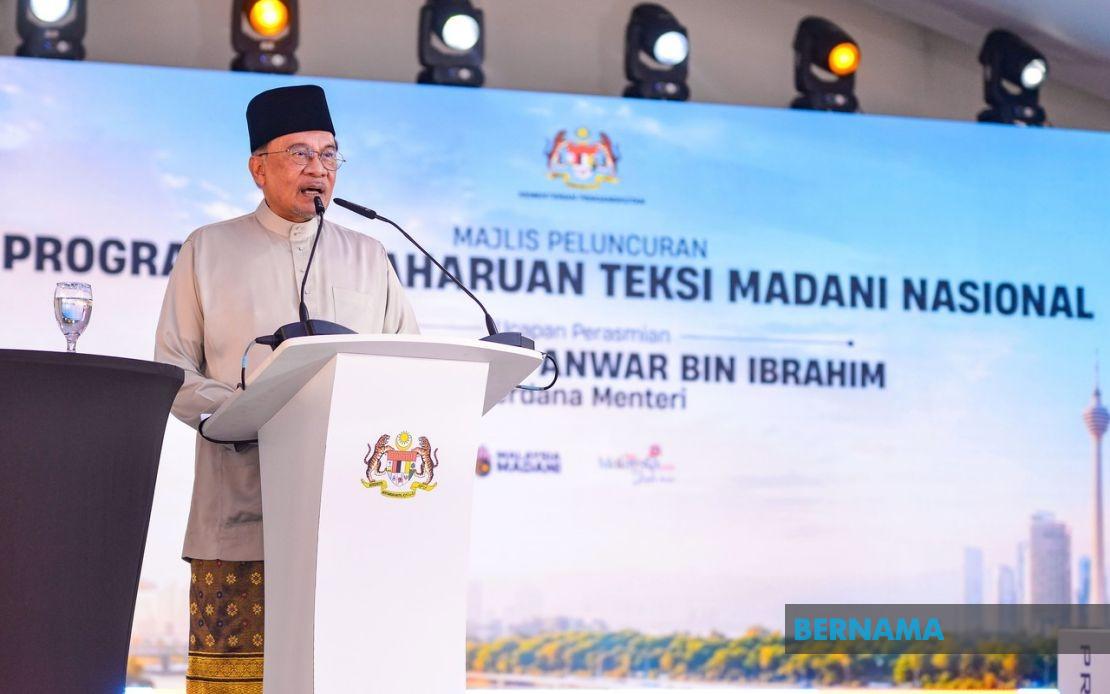
Prime Minister Datuk Seri Anwar Ibrahim has doubled down on the government's commitment to modernising Malaysia's taxi fleet by announcing an additional RM10 million injection into the Vehicle Replacement Matching Grant Programme. The move came during the official launch of the National MADANI Taxi Reform Programme at Dataran Merdeka in Kuala Lumpur on July 3, underscoring the administration's determination to revitalise an industry long plagued by ageing vehicles and driver dissatisfaction.
The fresh allocation builds upon the original RM10 million earmarked in Budget 2026 for the taxi reform initiative. Anwar, who doubles as Finance Minister, indicated that the overwhelming uptake of the initial funding prompted him to approve the supplementary amount swiftly. His decision reflects a recognition that demand from taxi operators and drivers far outpaced available resources, signalling genuine interest in fleet modernisation across the sector.
A cornerstone of the revised strategy is a newly forged agreement between the government, Proton, and the Transport Ministry to create a tailored financing mechanism for taxi drivers seeking to purchase the Proton S70. This partnership represents a pragmatic approach to bridging the affordability gap that has historically prevented many drivers from upgrading their vehicles. By leveraging Malaysia's national automotive manufacturer and developing purpose-built loan terms, the scheme aims to make ownership of a modern, locally-built vehicle financially viable for a broader cross-section of the industry.
The timing of this initiative carries significance for Malaysia's ride-hailing and taxi ecosystem. For years, the industry has grappled with competition from digital platforms, driver recruitment challenges, and the physical deterioration of traditional taxi fleets. Many vehicles operating on Malaysian roads exceed their practical lifespan, raising concerns about passenger safety, fuel efficiency, and the environmental impact of emissions. By targeting vehicle replacement, the government is attempting to address multiple pain points simultaneously while preserving the traditional taxi sector's viability.
The Proton S70, a sedan designed with comfort and reliability in mind, represents an intentional choice for the programme. Its positioning as an affordable yet respectable family vehicle aligns with the need for comfortable, dependable transport that meets modern passenger expectations. The bespoke financing arrangement suggests that standard loan terms have proven prohibitive for many drivers, necessitating customised solutions with potentially extended repayment periods or subsidised interest rates to make ownership achievable.
The programme launch drew senior government figures including Transport Minister Anthony Loke, Hannah Yeoh in her role as Minister in the Prime Minister's Department overseeing Federal Territories, and Chief Secretary to the Government Tan Sri Shamsul Azri Abu Bakar. Their collective presence underscored the whole-of-government nature of the initiative and signalled that taxi reform enjoys backing across multiple portfolios, from transport policy through to finance and the federal administration.
For Malaysian taxi drivers, particularly those operating in urban centres where vehicle replacement costs have become prohibitive, the expanded funding and Proton partnership offer tangible relief. Many drivers have postponed fleet upgrades due to prohibitive financing terms or insufficient capital reserves. The RM20 million total commitment—combining the original and additional allocations—provides a larger pool of matching grants, though distribution mechanisms and eligibility criteria will determine how effectively funds reach those most in need of support.
The broader context is Malaysia's transition towards more sustainable and modern urban transport infrastructure. While ride-hailing services have captured market share, traditional taxis remain essential for passengers who prefer hailing vehicles on the street, particularly in areas with limited digital connectivity or among older populations less familiar with app-based services. By investing in fleet modernisation, the government is implicitly affirming the taxi sector's continued relevance whilst acknowledging that modernisation requires direct fiscal support and partnerships with industry stakeholders.
Proton's involvement is instructive for Malaysia's automotive policy. Rather than importing foreign vehicles, the scheme channels government support towards a domestic manufacturer, potentially boosting local production and supporting the broader automotive supply chain. This approach generates multiplier effects throughout the economy whilst ensuring that taxi drivers gain access to vehicles backed by local after-sales service networks, spare parts availability, and technical expertise.
Looking ahead, the success of this initiative will hinge on execution. Distribution of the RM20 million must reach drivers efficiently; the Proton financing scheme must offer terms genuinely competitive with alternatives; and the vehicles themselves must perform reliably under the demanding conditions of professional taxi service. Additionally, the government may need to consider complementary measures such as driver training on vehicle maintenance, insurance subsidies, or licensing support to maximise the programme's impact.
For regional observers, Malaysia's approach reflects a broader Southeast Asian trend of governments actively supporting traditional transport sectors facing digitalisation pressures. The combination of direct grants, public-private partnerships, and targeted financing represents a measured intervention designed to preserve livelihoods whilst modernising service quality. As implementation proceeds, outcomes will likely influence how other Malaysian industries and neighbouring countries approach similar transitions.

