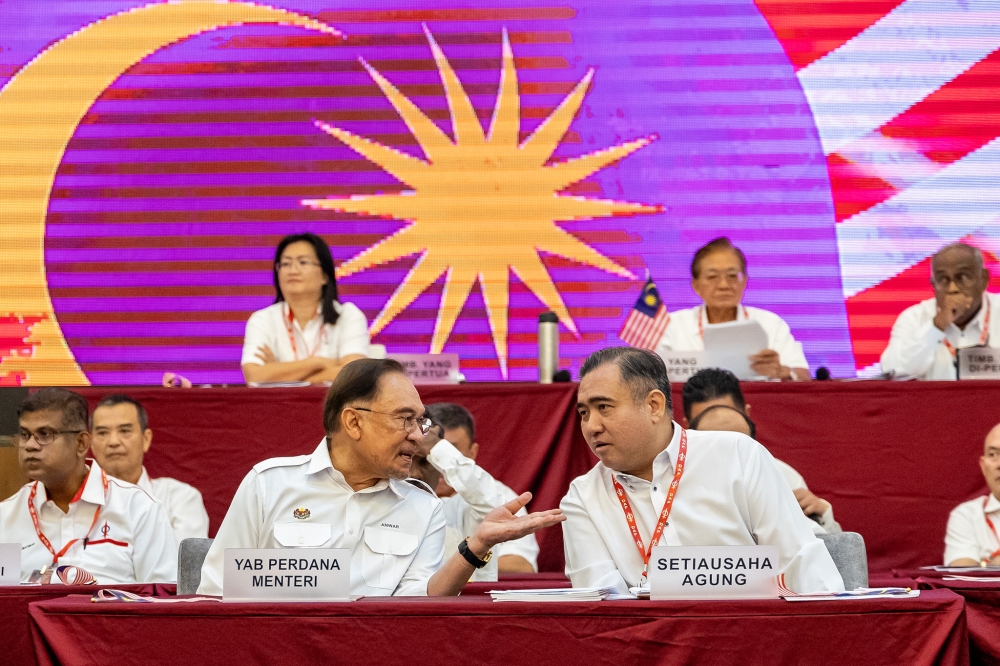
Prime Minister Datuk Seri Anwar Ibrahim has appealed directly to the Democratic Action Party's Melaka chapter to reconsider its decision to withdraw from the state administration, urging the party to maintain its commitment to the ruling coalition through the upcoming election cycle. Speaking in Port Dickson on July 14, Anwar framed the DAP's proposed exit as contrary to the interests of stable governance and cautioned against the timing of such a departure.
The plea represents a significant intervention by the federal government in what has become an increasingly delicate situation at the state level. Anwar's remarks underscore the political sensitivity surrounding the Melaka administration, where the DAP's participation has been crucial to maintaining the coalition's grip on power. The party's threatened withdrawal threatens to destabilise the state government if other coalition partners do not fill the void, potentially opening the door to opposition advances.
Anwar framed his appeal in terms of broader political responsibility, arguing that departing before the election would undermine the coalition's ability to deliver on development commitments made to Melaka residents. He emphasised that the public expects elected representatives to remain focused on service delivery rather than engaging in internal political manoeuvres that could disrupt administration. This argument attempts to elevate the debate beyond factional disputes within the coalition, positioning the DAP's continued participation as essential to maintaining public trust.
The timing of the DAP's exit announcement has proven contentious among coalition partners. By withdrawing before the election, the party risks appearing to abandon its responsibilities at a critical juncture. However, DAP's leadership has cited tensions within the coalition and concerns about governance issues as reasons for reconsidering its involvement. The party has suggested that conditions within the Melaka administration have deteriorated to the point where continued participation becomes untenable.
From a broader Malaysian political perspective, this episode reveals the fragility of multi-party coalitions that have become necessary for governing stability. The Pakatan Harapan coalition, to which DAP belongs, has long depended on component parties maintaining discipline and unity across various state governments. When component parties begin questioning their involvement, it signals potential fissures that could have implications beyond Melaka itself.
The Melaka situation also reflects a recurring pattern where smaller coalition partners feel marginalised in state-level decision-making despite holding ministerial positions. DAP has historically demanded meaningful voice in policy matters proportional to its electoral contribution and representation. Tensions over such questions often escalate when coalition partners perceive that their interests are being overlooked or that other parties are making unilateral decisions.
Anwar's intervention carries particular weight given his position as prime minister and coalition leader. His personal appeal to Melaka DAP suggests that federal leadership recognises the serious threat that the party's exit poses. The fact that he felt compelled to address the matter publicly indicates that behind-the-scenes discussions may not have succeeded in convincing DAP to remain. This adds urgency to the political negotiations occurring within coalition circles.
For Melaka voters, the DAP's potential exit raises practical questions about government continuity and the delivery of development projects. An unstable state government could redirect resources away from public services and towards managing coalition crises. This concern underpins Anwar's framing of the issue as one affecting ordinary citizens rather than merely political parties jockeying for advantage.
The unfolding situation also matters for Southeast Asian political observers studying coalition dynamics in contemporary Malaysian democracy. The ability of disparate parties with different ideological orientations and demographic bases to govern together effectively remains an ongoing experiment. The Melaka case offers a test of whether federal leadership can mediate inter-party disputes and maintain coalition cohesion under stress.
DAP's threatened departure also intersects with broader questions about Melaka's political trajectory. The state has experienced significant political volatility in recent years, with multiple leadership transitions and shifting coalitions. Another government disruption could reset expectations about political stability and voter preferences ahead of the next election. Opposition parties may view government instability as an opportunity to rebuild their position in the state.
Looking ahead, the resolution of this dispute will likely depend on whether coalition parties can negotiate a framework that addresses DAP's specific grievances while maintaining sufficient unity for electoral purposes. This may require concessions regarding ministerial portfolios, decision-making processes, or state-level policy priorities. However, such negotiations must occur without becoming so visible that they appear to reward coalition partners for threatening departures, which could set troubling precedents.
Anwar's public plea represents a gamble: by highlighting the tension, he attempts to shame DAP into reconsidering, but he also publicly acknowledges that coalition management has become difficult. The coming weeks will reveal whether the party responds positively to his appeal or whether Melaka faces renewed political turbulence ahead of elections.

