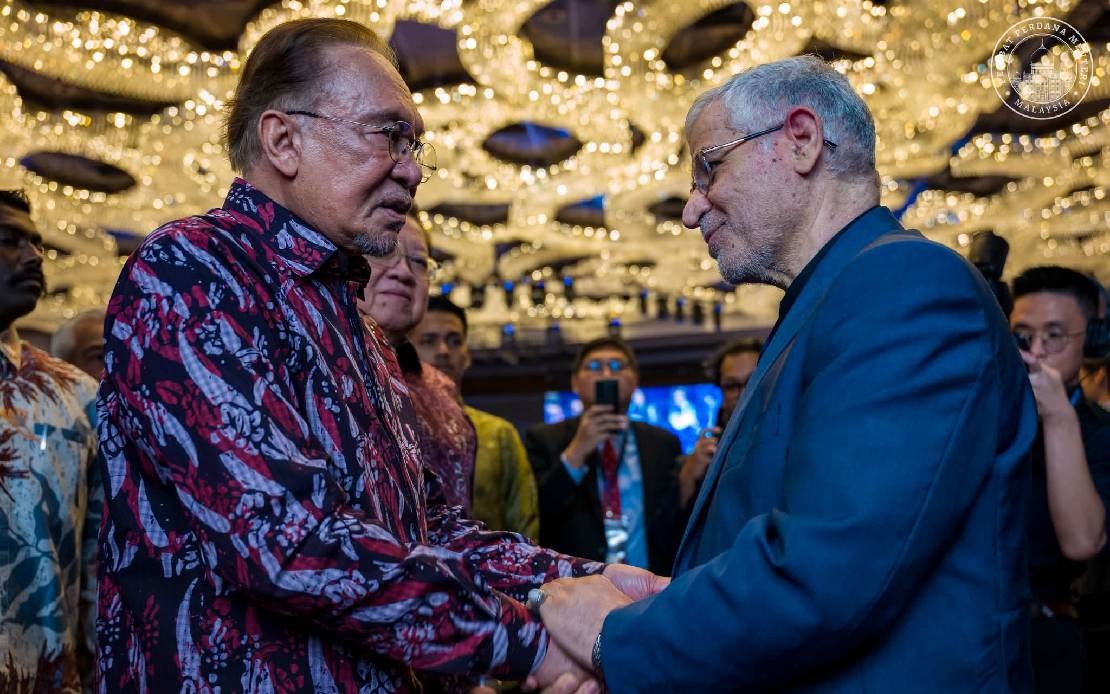
Prime Minister Datuk Seri Anwar Ibrahim has formally apologised to the Iranian government for his inability to attend the state funeral and farewell ceremonies honouring Iran's Supreme Leader, the late Ayatollah Ali Khamenei. The apology was communicated during a bilateral meeting with Iranian Ambassador to Malaysia Valiollah Mohammadi on the sidelines of the 39th Asia-Pacific Roundtable conference in Kuala Lumpur on Tuesday. Through a statement posted on social media, Anwar explained that prior official commitments made his attendance impossible, though he simultaneously extended Malaysia's condolences to both the Iranian government and its people.
The scheduling conflict reflects the diplomatic balancing act frequently required of Malaysia's leaders, particularly when managing simultaneous regional and international obligations. The Asia-Pacific Roundtable, held in Malaysia's capital, represents a crucial platform for high-level strategic dialogue among regional powers and international stakeholders. Anwar's presence was essential to Malaysia's interests in this multilateral engagement, creating a genuine constraint on his capacity to travel to Tehran for the multi-day ceremonial proceedings.
To ensure Malaysia's diplomatic representation at the Iranian ceremonies, Anwar designated Agriculture and Food Security Minister Mohamad Sabu to attend in his stead. This appointment carries particular significance, as it signals Malaysia's commitment to maintaining bilateral relations with Iran despite the Prime Minister's absence. The selection of a senior cabinet minister underscores the importance Malaysia attaches to the occasion and to its relationship with the Islamic Republic.
Ayatollah Ali Khamenei, who was 86 years old, passed away on February 28 at his residence in central Tehran. According to reports, his death followed a combined military operation involving the United States and Israel. As Iran's supreme leader since 1989, Khamenei wielded enormous influence over the nation's religious, military, and political institutions, making his passing a watershed moment for Iranian governance and regional geopolitics.
The Iranian government has arranged an extensive ceremonial programme to honour Khamenei's legacy and mark his transition from office. The state funeral and farewell ceremonies span six consecutive days, commencing on July 4 and extending through July 9. This extended timeline reflects the deeply significant position Khamenei held within Iran's Islamic system and the scale of public mourning anticipated across the nation.
The ceremonial itinerary begins with funeral processions in two major cities: Tehran, the capital where Khamenei maintained his official residence, and Qom, a centre of Shia Islamic learning and spiritual significance. These processions will allow the Iranian public and international delegations to participate in or witness the early stages of the farewell proceedings. The programme culminates with Khamenei's burial at the Imam Reza Shrine in Mashhad, Iran's holiest city and home to one of Shiaism's most revered pilgrimage destinations, scheduled for July 9.
The timing of these ceremonies places them at a delicate juncture for Iran's political transition and for regional stability. Khamenei's death occurs against a backdrop of ongoing tensions with Western nations, particularly over Iran's nuclear programme and regional military activities. The succession process and the positioning of various factions within Iran's complex power structure will likely influence the country's foreign policy direction in coming months, with implications extending across the Middle East and beyond.
Malaysia's diplomatic response, through both Anwar's personal apology and the ministerial representation, reflects the nation's pragmatic approach to managing relationships across the Muslim world. As a moderate Muslim-majority nation with significant economic and strategic interests, Malaysia maintains cordial relations with Iran despite the latter's more hardline regional positioning. This balanced diplomacy is essential for Malaysia's standing within both ASEAN and the broader international community.
The incident also illustrates the challenges inherent in contemporary diplomatic protocol, where leaders must navigate competing obligations on the world stage. Anwar's decision to apologise personally, rather than simply sending an envoy without explanation, demonstrates an effort to acknowledge the significance of the occasion while managing reasonable constraints on his schedule. Such gestures, though seemingly small, carry weight in diplomatic circles where recognition and respect form the foundation of interstate relations.
For regional observers, Malaysia's handling of this situation provides insight into how Southeast Asian nations calibrate their engagement with non-regional powers facing internal transitions. The selection of Mohamad Sabu as Malaysia's representative, a figure with experience in security and agricultural policy, suggests consideration of who among the cabinet could most effectively represent Malaysian interests while paying appropriate respects to the Iranian government during this significant moment.

