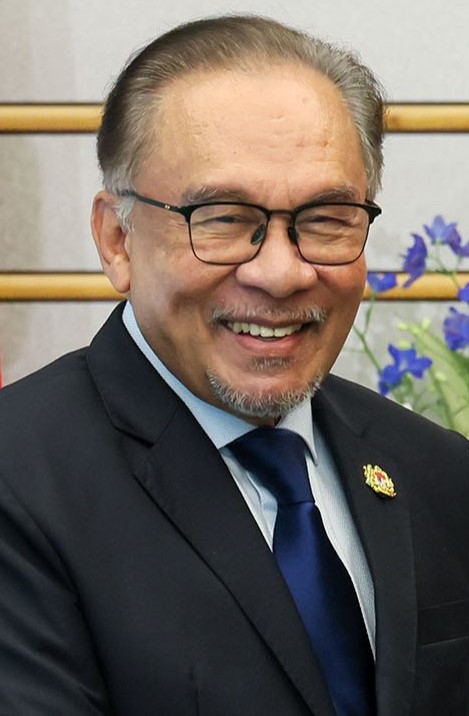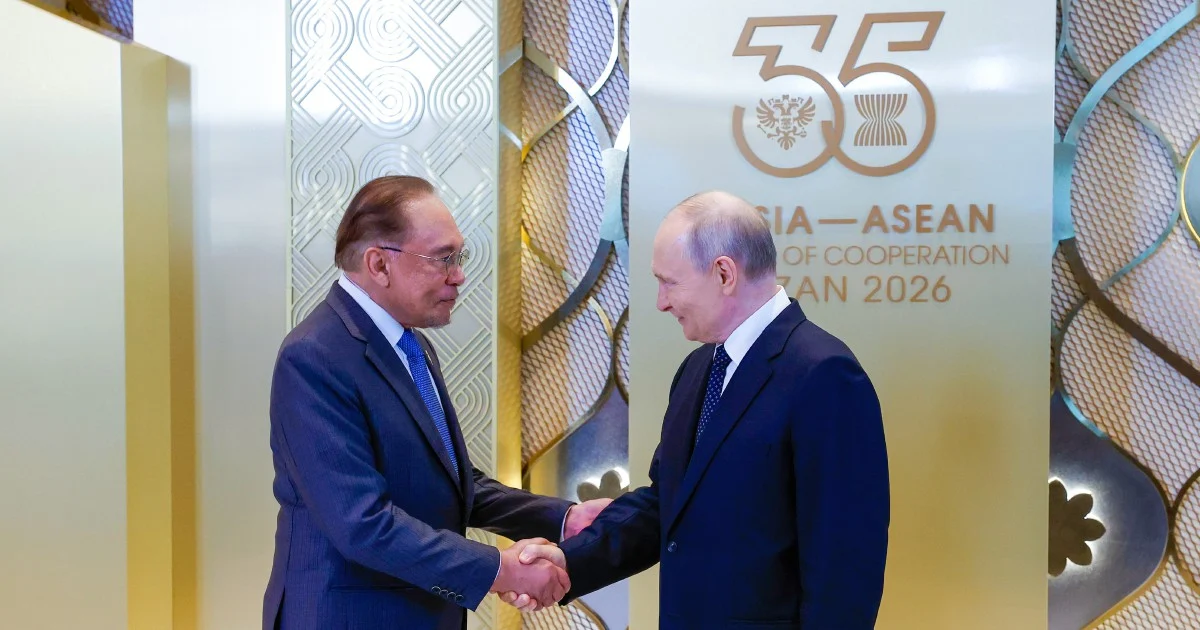
Prime Minister Datuk Seri Anwar Ibrahim and Russian President Vladimir Putin held discussions in Kazan centred on deepening Malaysia and Russia's strategic partnership, with particular emphasis on securing energy supplies and reshaping commercial ties around non-dollar settlement mechanisms. The meeting reflects Malaysia's broader strategic positioning in an era of shifting global alliances and its pragmatic approach to diversifying energy sources amid geopolitical uncertainty.
Energy security emerged as a cornerstone of the bilateral dialogue, signalling both nations' recognition that reliable hydrocarbon supplies underpin regional stability and economic growth. For Malaysia, a country heavily dependent on imported energy to fuel its manufacturing base and electricity generation, diversifying suppliers beyond traditional sources carries significant economic weight. Russia's position as a major global energy exporter, despite Western sanctions, remains strategically relevant for Southeast Asia. The discussion reflected mutual interest in creating stable, long-term arrangements that insulate both economies from price volatility and supply disruptions that have periodically rattled Asian markets.
The emphasis on trade denominated in Malaysian ringgit and Russian ruble signals a deliberate pivot away from dollar-dominated commercial arrangements. This de-dollarisation agenda has gained traction across emerging economies seeking greater autonomy in international commerce and reduced exposure to US monetary policy volatility. For Malaysia, which sits at the intersection of major trading blocs and maintains substantial foreign currency reserves, transacting in local currencies offers competitive advantages. It reduces currency conversion costs, mitigates exposure to dollar fluctuations, and creates direct incentives for both nations to deepen institutional banking relationships and settle accounts without intermediaries.
The Kazan venue carries symbolic weight, positioned as Russia's economic pivot toward Asia following Western sanctions imposed after 2022. By engaging at this location, Malaysia signals receptiveness to Russia's reorientation and positions itself as a credible economic partner in Russia's strategy to deepen Asian partnerships. For Malaysian policymakers, the engagement demonstrates the government's commitment to maintaining pragmatic relationships across geopolitical divides rather than aligning exclusively with Western-led blocs, a positioning consistent with Malaysia's non-aligned foreign policy tradition.
Bilateral cooperation frameworks between Malaysia and Russia span defence, education, and scientific research, though commercial ties have historically remained modest relative to Malaysia's engagement with other powers. Expanding energy trade and financial settlement mechanisms could create multiplier effects across other sectors. Enhanced cooperation on petro-chemical processing, for instance, could leverage Malaysia's existing refinery infrastructure and technical expertise alongside Russian feedstock. Such arrangements would create employment, technology transfer opportunities, and deeper institutional connections between Malaysian and Russian companies.
The energy security discussion also addresses longer-term trends reshaping Asian energy markets. Liquefied natural gas imports have become critical for Southeast Asian economies, with Malaysia itself a significant LNG producer and exporter. Discussions on energy cooperation likely touched upon stability in LNG supply chains, pricing mechanisms, and potential collaboration in downstream sectors where Malaysia has established competitive advantages. Russia's advanced energy infrastructure and expertise in extreme-climate extraction technologies could complement Malaysian capabilities in tropical-zone resource development.
For Malaysia's government, engagement with Russia demonstrates the nation's capacity to navigate between competing great powers whilst maintaining commercial pragmatism. This approach resonates with ASEAN's broader commitment to non-alignment and strategic autonomy, principles increasingly tested as regional states calibrate relationships with the United States, China, Russia, and India. Malaysia's willingness to engage substantively with Moscow, whilst maintaining deep ties with Western partners, underscores the government's effort to position the nation as a bridge-builder rather than a committed member of any single bloc.
Local currency trade arrangements also carry implications for Malaysia's financial sector development. Expanded ringgit usage in international transactions supports the ringgit's internationalisation, potentially enhancing Kuala Lumpur's role as a regional financial hub. The Central Bank of Malaysia and private sector banking institutions benefit from increased cross-border transactions denominated in local currency, creating deeper liquidity pools and incentivising foreign financial institutions to establish regional ringgit-trading operations. Over time, such developments strengthen Malaysia's financial infrastructure and reduce dependence on external currency systems.
The meeting's focus on bilateral cooperation rather than multilateral mechanisms reflects both nations' current positioning. Russia, subject to international sanctions, prioritises bilateral relationships with nations willing to engage constructively. Malaysia, whilst committed to ASEAN-centred regional frameworks, recognises that bilateral arrangements often move more swiftly and can be tailored to specific sectoral opportunities. This two-track approach—maintaining multilateral commitments whilst advancing pragmatic bilateral deals—characterises contemporary Malaysian foreign policy under Anwar's leadership.
Energy security discussions likely included concrete proposals for long-term supply agreements, joint ventures in extraction or processing, and technical cooperation on sustainability and emissions reduction. Russia's experience in managing large-scale energy infrastructure projects could inform Malaysian development of renewable and traditional energy systems. Conversely, Malaysia's technological expertise in palm oil derivatives and biofuel production might interest Russian partners seeking to diversify energy portfolios beyond hydrocarbons.
The Anwar-Putin meeting underscores Malaysia's determination to maintain genuine strategic flexibility as regional geopolitical competition intensifies. By engaging substantively on energy and financial arrangements with Russia whilst sustaining partnerships with Western nations and China, Malaysia positions itself to extract maximum benefit from competing interests in regional economic development. This balancing act requires careful diplomatic management but reflects the reality that most Southeast Asian nations maintain multiple strategic relationships simultaneously rather than exclusive alignments.