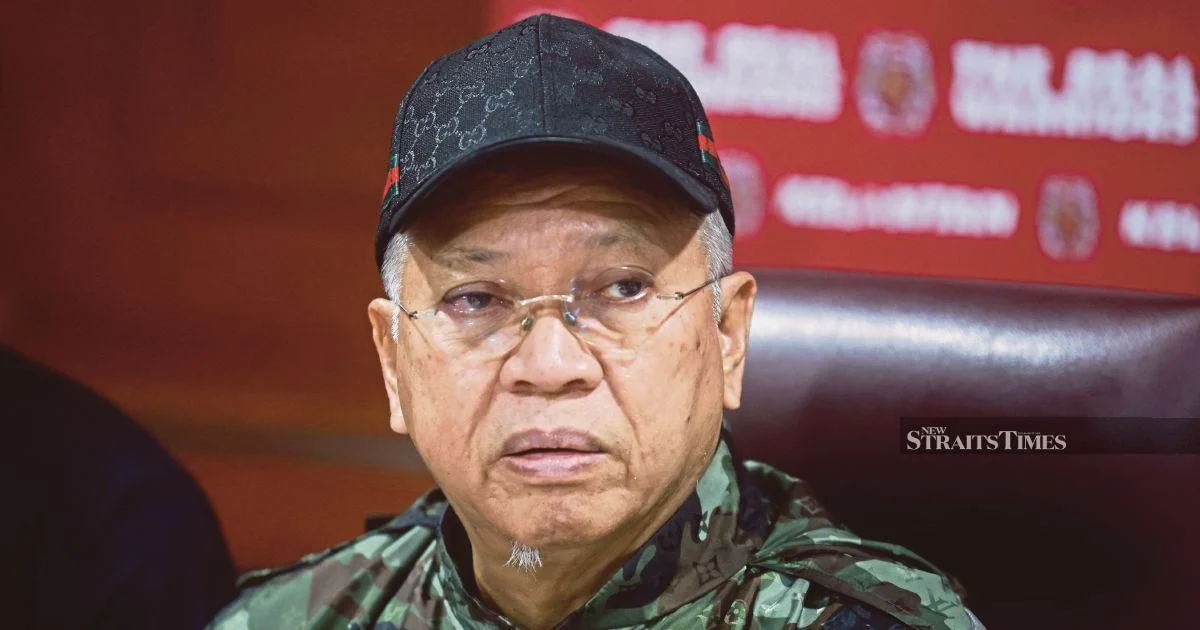
Tan Sri Annuar Musa acknowledged today that his efforts to bridge an increasingly fractious Perikatan Nasional have hit a wall, as tensions between Pas and multiple Bersatu factions continue to threaten the stability of Malaysia's governing coalition. Speaking in Kota Baru, the senior coalition figure disclosed that he had undertaken several personal interventions aimed at resolving the fundamental differences dividing these major parties, but those attempts ultimately proved unsuccessful in containing the escalating conflict.
The revelation comes at a particularly precarious moment for Perikatan Nasional, the coalition that captured federal power in the 2022 general election and has served as the backbone of the current government. The alliance was built on the premise that Pas, the Islamist PAS party with deep grassroots organisation, could forge common cause with Bersatu, the breakaway faction led by former prime minister Muhyiddin Yassin. However, the emergence of competing power bases within Bersatu, coupled with Pas's increasingly independent assertiveness, has created multiple pressure points that threaten to unravel the partnership entirely.
Annuar's public acknowledgment of failure represents a significant moment of clarity about the true state of the coalition's internal dynamics. For months, senior leaders from both parties had presented a unified public face, downplaying reports of disagreement and promising continued cooperation. The decision to speak candidly about these reconciliation attempts suggests that the situation may have deteriorated beyond the point where public relations management could contain the damage. Rather than continuing to pretend harmony exists, key figures within the coalition appear to be preparing the ground for conversations about the very future of their partnership.
The fracturing within Bersatu itself has proven particularly damaging to coalition cohesion. What was once a monolithic party under Muhyiddin Yassin's control has increasingly fragmented into competing power bases, with different leaders pushing divergent political agendas. This internal instability has made it extraordinarily difficult for Perikatan Nasional to function as an integrated political force, as individual Bersatu factions sometimes pursue their own interests rather than collective coalition objectives. The absence of clear central authority within the party has rendered it nearly impossible for negotiators like Annuar to broker meaningful agreements.
Pas, meanwhile, has consolidated its own position significantly over the past two years. The party's electoral strength, particularly in traditional strongholds across Peninsular Malaysia and in key urban constituencies, has translated into considerable political leverage within the coalition. This shifting balance of power has emboldened Pas to assert its priorities more forcefully, sometimes in ways that conflict with Bersatu's preferences. As Pas has become more confident in its independent standing, the incentives for compromise within the coalition have diminished proportionally.
The implications of these divisions extend well beyond internal coalition management. A fractious governing partnership inevitably struggles to deliver coherent policy outcomes, leaving the government vulnerable to parliamentary challenges and increasingly reliant on support from Pakatan Harapan, the opposition coalition. This fragility has already manifested in legislative gridlock on several occasions, and further deterioration could render the government substantially less effective at advancing its agenda. For ordinary Malaysians, this paralysis translates into delayed reforms, stalled infrastructure projects, and uncertainty about key policy directions.
Annuar's candid assessment also underscores the challenge of managing deeply ideological differences beneath a nominal coalition framework. Pas operates from an Islamic governance paradigm, while Bersatu encompasses a broader range of political orientations. These philosophical differences, which were papered over in the excitement of achieving federal power, have become increasingly difficult to manage as the practical realities of governing have forced difficult choices about law, social policy, and resource allocation.
The timing of Annuar's disclosure may signal a shift toward more direct confrontation of the coalition's structural problems. Rather than continuing behind-the-scenes reconciliation attempts that have consistently failed, coalition leaders may be preparing for more fundamental negotiations about the coalition's future direction. This could potentially involve restructuring arrangements, clarifying decision-making processes, or even contemplating a reconfiguration of the ruling partnership altogether.
For Malaysian political observers and international analysts watching the country's governance trajectory, these developments carry considerable weight. The stability of the coalition directly affects Malaysia's economic policy-making, regional engagement, and domestic social cohesion. A government paralysed by internal division struggles to attract foreign investment, implement necessary reforms, or navigate complex regional challenges. The coming weeks will likely reveal whether Perikatan Nasional's leaders can fashion a sustainable new arrangement or whether the coalition is heading toward a more decisive rupture.

