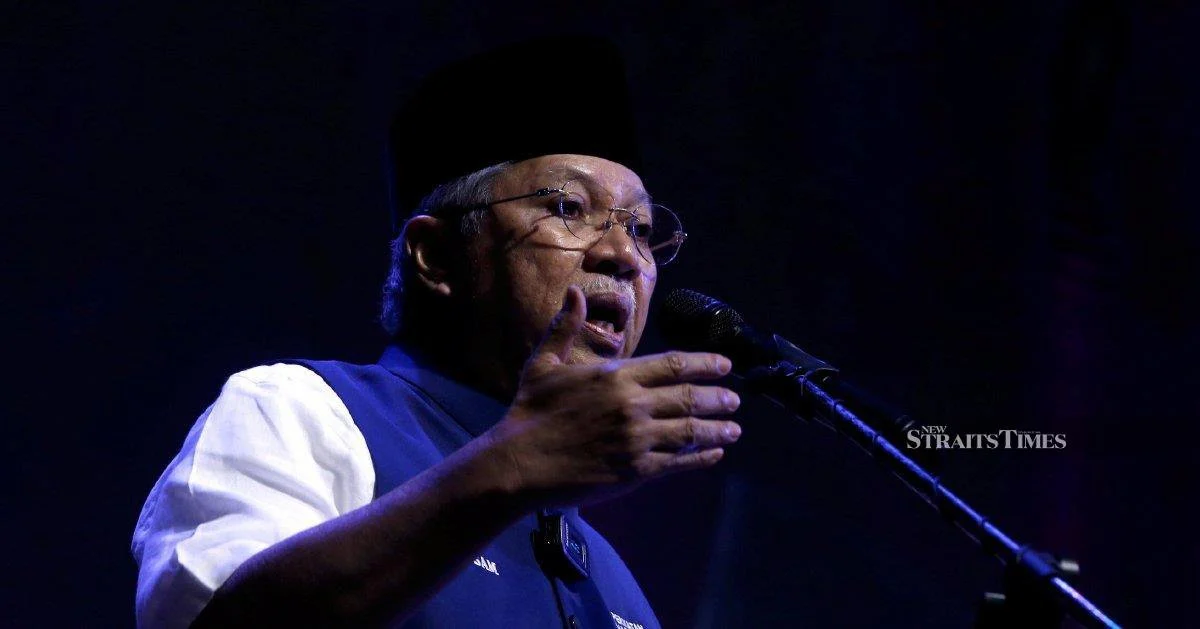
Finance Minister Annuar Musa has appealed to Bersatu to exercise restraint and avoid rushing into public pronouncements as tensions continue to simmer within the broader Perikatan Nasional alliance. The call for calm comes at a particularly delicate juncture for the opposition coalition, which has been navigating a series of disagreements that threaten to undermine its cohesion ahead of what many analysts expect to be a closely contested political period.
The dynamics within Perikatan Nasional reflect deeper challenges facing the coalition since its formation. Bersatu, as a key component of the alliance alongside PAS and other partners, holds significant sway over the direction of PN's political strategy. However, recent developments suggest diverging interests among coalition members on matters ranging from electoral cooperation to policy priorities, necessitating careful management to prevent public fractures that could be exploited by rival political forces.
Annuar's intervention underscores the delicate balance required to maintain coalition stability in Malaysian politics. When constituent parties feel compelled to issue rapid-fire responses to developments—even if justified internally—public disagreements can quickly escalate and erode confidence among supporters. His appeal effectively urges Bersatu to adopt a longer-term perspective, recognising that hasty statements may provide short-term rhetorical advantages but risk deeper damage to the coalition's electoral positioning.
The tension points within Perikatan Nasional are multifaceted. Historical ties and ideological differences between components such as PAS and Bersatu have occasionally surfaced despite their shared opposition status. Distribution of seats, ministerial representation, and strategic direction remain perennial friction areas in any coalition arrangement. Additionally, both PAS and Bersatu harbour distinct grassroots constituencies with sometimes competing expectations, making unified messaging challenging.
For Malaysian political observers, the health of opposition coalitions matters considerably. A fractured Perikatan Nasional could benefit the ruling Pakatan Harapan government by presenting voters with a disunited alternative. Conversely, if PN can maintain sufficient coherence, it enhances its capacity to capitalise on any government missteps or public dissatisfaction. The stakes are therefore high not merely for coalition insiders but for the broader trajectory of Malaysian electoral politics.
Bersatu's position within PN warrants particular attention. The party emerged from UMNO schism and has attempted to chart its own ideological path while maintaining relationships with both PAS and elements within UMNO. This intermediary role, while potentially influential, also makes Bersatu vulnerable to being caught between competing pressures. Annuar's counsel to remain measured likely reflects recognition that Bersatu's reputation for political flexibility could be weaponised against it if party leaders appear erratic or disloyal to coalition partners.
The broader context of Malaysian coalition politics suggests that Annuar's appeal also serves as a test of PN's maturity as a political force. The opposition coalition has struggled historically with maintaining discipline, and observers closely monitor whether it can evolve beyond the patterns that weakened earlier opposition alliances. Successfully managing internal disputes while preserving public unity would demonstrate that PN has learnt from past failures.
From a Southeast Asian perspective, coalition stability in Malaysia carries implications for regional political trends. Malaysian politics continues to influence dynamics in neighbouring jurisdictions through migration, cultural connections, and trade relationships. A strong, coherent opposition in Malaysia contributes to healthier democratic competition, whereas chronic instability can create governance uncertainty that affects wider regional confidence.
The financial and economic dimensions of Malaysia's political landscape also feature implicitly in this situation. Annuar himself, as Finance Minister, carries responsibility for economic management and necessarily thinks in terms of how political uncertainty affects market confidence and investor sentiment. Excessive coalition turbulence could undermine the perception of stable governance that Malaysia requires to maintain its economic competitiveness regionally.
Looking forward, the question becomes whether Bersatu and other PN partners can internalise Annuar's message. Maintaining coalition discipline requires party leaders to absorb grievances internally rather than ventilating them through media channels. This demands considerable restraint, particularly when members feel aggrieved by coalition decisions or the actions of partner parties. The success or failure of this calibration will likely determine whether Perikatan Nasional emerges as a genuine alternative to Pakatan Harapan governance or continues fragmenting.
Ultimately, Annuar's intervention represents a critical juncture for coalition maturity in Malaysian opposition politics. His appeal to Bersatu extends implicitly to all PN components—the principle that short-term rhetorical victories achieved through public disagreement pale against the strategic advantages of maintaining coalition integrity. Whether Bersatu leadership heeds this counsel will provide important signals about the coalition's capacity to function effectively when tested by internal strains.