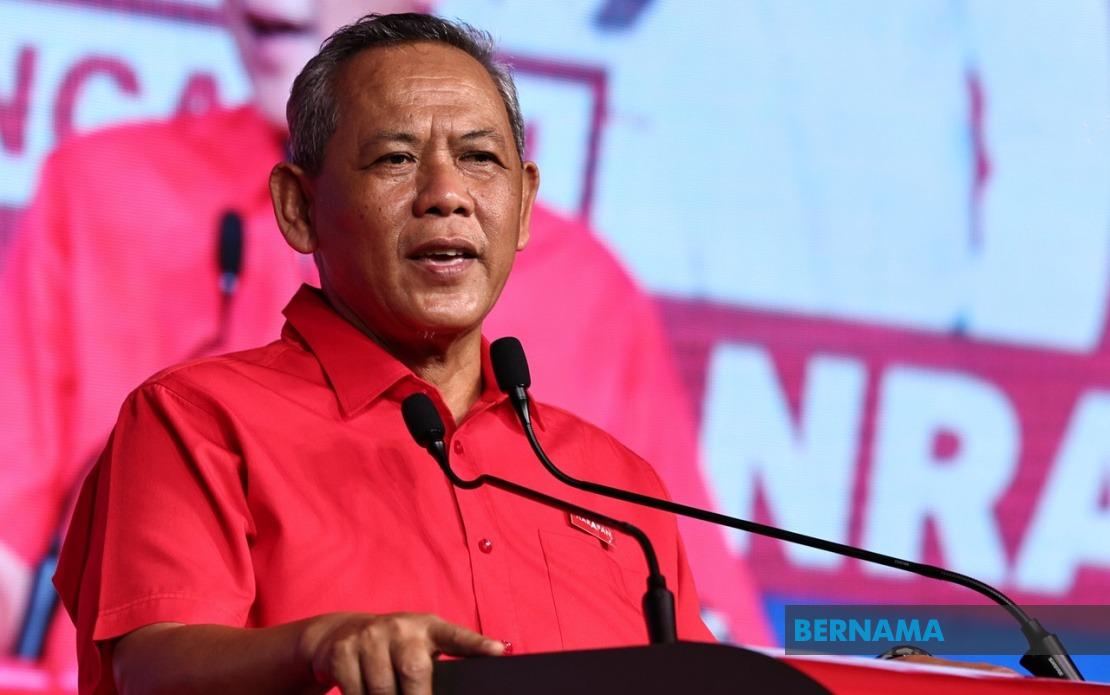
Negeri Sembilan Menteri Besar Datuk Seri Aminuddin Harun has appealed to voters in the run-up to the state election to base their electoral decisions on the government's tangible action on infrastructure rather than permitting the chronic flooding situation in Linggi to be weaponized for political advantage. Speaking after Friday prayers in Seremban on July 17, Aminuddin, who is contesting the Linggi state seat as the Pakatan Harapan (PH) candidate, sought to redirect public attention away from what he characterized as opportunistic exploitation of the flooding issue and towards the concrete interventions the government has initiated.
The flooding problem in Linggi has long plagued residents, with complaints periodically resurfacing on social media following heavy downpours in the Seremban area. Rather than dismissing these concerns, Aminuddin acknowledged the persistent nature of the challenge while arguing that meaningful resolution requires sustained commitment to infrastructure development rather than rhetorical promises. He emphasized that the government has treated the matter with appropriate seriousness, moving beyond mere acknowledgment to securing formal approval and funding for two dedicated flood mitigation projects designed specifically to address the area's vulnerabilities.
Both projects are now at the implementation stage, representing a collaborative undertaking between state and federal authorities. This partnership approach underscores the recognition that large-scale infrastructure challenges often transcend state boundaries and require coordinated resource allocation. Aminuddin stressed that such projects inherently demand extended timelines and cannot be hastily completed, positioning realistic expectations against what he implicitly critiqued as simplistic political messaging that promises overnight solutions to entrenched problems.
The Menteri Besar's framing of the issue reflects a broader strategic emphasis within the Pakatan Harapan campaign for the 16th Negeri Sembilan state election, scheduled for August 1. Rather than engage in competing claims about who will best address Linggi's flooding, Aminuddin pivoted towards contrasting governance philosophies, characterizing the government's approach as rooted in systematic planning and infrastructure investment versus what he suggested were opposition tactics that prioritize emotional appeal and sentiment manipulation to mobilize support.
This distinction carries particular resonance in Malaysian electoral contexts, where development delivery has emerged as a significant factor in voter calculus. Aminuddin positioned Pakatan Harapan's offering to the electorate as grounded in demonstrated administrative performance across the state and the visible trajectory of ongoing development initiatives. By anchoring his appeal in track record rather than future promises, he attempted to shift the terrain of electoral competition towards assessment of actual governance capacity and results.
The strategic decision to address the flooding issue at this juncture reflects the heightened focus on local concerns as polling day approaches. Election Commission procedures have set the nomination phase for July 18, with early voting scheduled for July 28 and the main election day on August 1, compressing the campaigning window. Within this tight timeframe, both Pakatan Harapan and opposition parties are intensifying their outreach, and flood management in Linggi has evidently emerged as a touchpoint that resonates with local residents and voters in the broader Seremban district.
The social media circulation of flooding narratives demonstrates how localized infrastructure grievances can rapidly acquire broader political significance in the digital age. Complaints about inadequate drainage systems or flood prevention measures, once confined to community discussions, now circulate widely and can shape public perception of governmental competence. Aminuddin's intervention sought to reclaim control of this narrative by presenting documentary evidence of action, thereby attempting to convert potential criticism into demonstration of responsive governance.
For voters in Negeri Sembilan and particularly in the Linggi constituency, the election presents an opportunity to evaluate which political coalition they believe better equipped to deliver on infrastructure priorities. The existence of two approved mitigation projects can be verified and assessed, providing concrete reference points against which campaign claims can be measured. This shifts electoral calculation away from personality-driven appeal towards evaluating institutional capacity and resource mobilization.
Aminuddin's statement also reflects awareness that opposition parties may attempt to capitalize on the flooding issue by suggesting governmental inaction or neglect. By pre-emptively documenting approved projects and collaborative implementation frameworks, the Menteri Besar moved to inoculate against such critiques while inviting voters to assess the comparative track records of competing political entities. The implicit message positioned Pakatan Harapan as the incumbent coalition with demonstrable commitment to Linggi residents' welfare, versus challengers who must establish their credibility on the same metric.
The broader context of state-level governance in Malaysia increasingly demonstrates that voters are responsive to infrastructure delivery and developmental outcomes. Negeri Sembilan's electoral dynamics reflect this pattern, with voters in constituencies like Linggi seeking evidence that their elected representatives and state governments actively channel resources towards resolving community problems. The flood mitigation projects thus serve simultaneously as practical interventions and as political signifiers of governmental attention to local needs.
Among Malaysian and Southeast Asian urban and semi-urban populations, infrastructure challenges related to drainage, flooding, and water management have become increasingly salient as climate patterns become more volatile and rainfall intensity increases. Linggi's chronic flooding problem is emblematic of broader regional challenges that multiple states and municipalities across the peninsula confront. The government's willingness to invest in mitigation projects positions this locally specific intervention within a wider narrative about climate adaptation and urban resilience.
The electoral timeline converges with the practical reality that monsoon seasons and heavy rainfall events remain unpredictable, potentially generating additional flooding incidents even as mitigation projects advance. This temporal uncertainty introduces an element of risk to the Menteri Besar's political positioning, as renewed flooding could undermine claims about effective intervention. Conversely, if the area experiences relative dryness through the election period and into the subsequent rainy season while the projects progress, Aminuddin's emphasis on sustained commitment to infrastructure may be vindicated in voter assessments.
As Negeri Sembilan voters prepare to cast ballots on August 1, the convergence of specific local concerns like Linggi's flooding with broader evaluations of state-level governance capacity will shape electoral outcomes. Aminuddin's framing of the issue as a legitimate but non-urgent problem being conscientiously addressed through proper channels represents one argument in a contested field where competing visions of governmental effectiveness are being actively advanced and tested.

