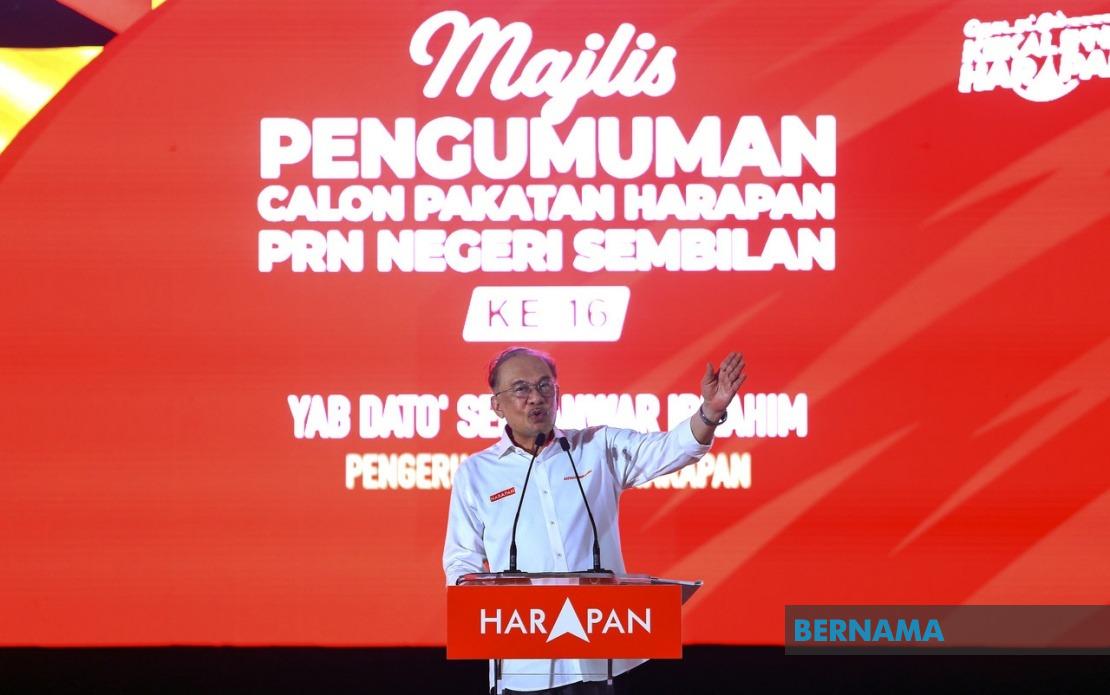
Negeri Sembilan Menteri Besar Datuk Seri Aminuddin Harun will seek the Linggi seat as Pakatan Harapan's candidate in the forthcoming state election, Prime Minister Datuk Seri Anwar Ibrahim announced at a packed candidate declaration ceremony in Kuala Pilah on Monday. The move signals a strategic repositioning for the coalition's leadership in the state, with Aminuddin vacating the Sikamat seat he has occupied successfully for four consecutive terms since 2008.
Aminuddin's shift to Linggi comes as Pakatan Harapan continues to consolidate support ahead of the 16th Negeri Sembilan State Election. As both Menteri Besar and PH chairman for Negeri Sembilan, Aminuddin has been instrumental in shaping the coalition's political fortunes in the state, and his candidacy in a fresh constituency underscores the coalition's confidence in expanding its electoral footprint. The move also reflects broader coalition calculations about which seats present the most advantageous electoral opportunities as the party enters its third general election cycle under Anwar's leadership.
Joining Aminuddin on the PH ticket is DAP secretary-general Anthony Loke, who has been fielded to defend the Chennah seat he has successfully held since 2013. Loke's re-nomination provides continuity and stability for the coalition in a seat where the party has demonstrated consistent electoral appeal. His seniority within DAP and his performance as a sitting assemblyman make him a cornerstone candidate for Pakatan Harapan's electoral machinery in Negeri Sembilan.
The announcement, delivered by Anwar Ibrahim in his capacity as PH chairman, took place before a substantial crowd of coalition supporters and party leadership. The ceremony underscored the significance Pakatan Harapan places on the Negeri Sembilan contest and the coalition's readiness to mount a comprehensive campaign across the state's constituencies. The presence of senior figures reflected the importance of the election to the broader coalition strategy.
Also in attendance were Amanah president Datuk Seri Mohamad Sabu, whose party is a crucial partner in the PH alliance, and PH communications director Datuk Seri Fahmi Fadzil, indicating the coalition's intention to conduct a coordinated and well-resourced campaign. The election director, Datuk Seri Amirudin Shari, was present to oversee the rollout of campaign mechanics and candidate support structures.
For Malaysian political observers, the announcements carry significance beyond Negeri Sembilan's state assembly. State elections have become crucial testing grounds for national coalition health and voter sentiment. The momentum or setbacks in Negeri Sembilan will be closely watched as indicators of how Pakatan Harapan's brand has weathered recent political turbulence and whether the coalition retains sufficient grassroots support to maintain or expand its presence in the state.
Aminuddin's track record in Sikamat—holding the seat across four electoral cycles spanning over a decade and a half—suggests strong personal political capital and organisational capability. His transition to Linggi implies calculated confidence that these strengths can be transferred to a new constituency, though any incumbent member vacating a held seat carries inherent risks as successor candidates inherit both opportunity and uncertainty.
Loke's continued representation of Chennah provides the coalition with experienced legislative representation. His decade-long tenure in the assembly position has allowed him to build relationships with constituents and develop a localised political infrastructure. In Malaysian state politics, such incumbency advantages often translate to electoral resilience, particularly when the sitting representative has maintained visible engagement with constituent needs.
The Negeri Sembilan state election will be closely monitored by federal political actors, as state-level contests frequently influence perception about national coalition strength. For Anwar Ibrahim's administration in Putrajaya, a strong showing in the state would reinforce the government's political legitimacy and governing capacity. Conversely, unexpectedly poor results could amplify questions about coalition durability and voter confidence.
From a regional perspective, Negeri Sembilan's political trajectory matters to broader Southeast Asian democratic health. Malaysia's multi-level federal system, with competitive state and national elections, contributes to the region's democratic character. Strong performance by incumbent state governments and coalition formations helps validate institutional stability and electoral processes that remain important markers of Malaysia's standing within Southeast Asia's diverse political landscape.
The candidate announcements also reflect evolving demographics and political preferences within Negeri Sembilan constituencies. Strategic movements like Aminuddin's repositioning often respond to demographic shifts, urbanisation patterns, and changing voter behaviour. Such tactical adjustments, multiplied across multiple constituencies, shape how coalitions compete in contemporary Malaysian electoral contests.
Packatan Harapan's readiness to announce candidates and conduct campaign events demonstrates the coalition's operational preparedness for the state election. The visible deployment of senior leadership at the announcement ceremony sends signals to party grassroots that the coalition prioritises the Negeri Sembilan contest. Such public investment in campaign activity helps energise volunteer networks and supporter enthusiasm that translate into doorstep canvassing and community engagement during campaign periods.
The path forward will likely see Aminuddin and Loke embarking on intensive constituency tours, establishing campaign headquarters, and mobilising party machinery. The competitive landscape in Negeri Sembilan, with Barisan Nasional and other opposition parties fielding their own candidates, will test whether Pakatan Harapan can sustain momentum and translate candidate strength into electoral victories when voters go to the polls.

