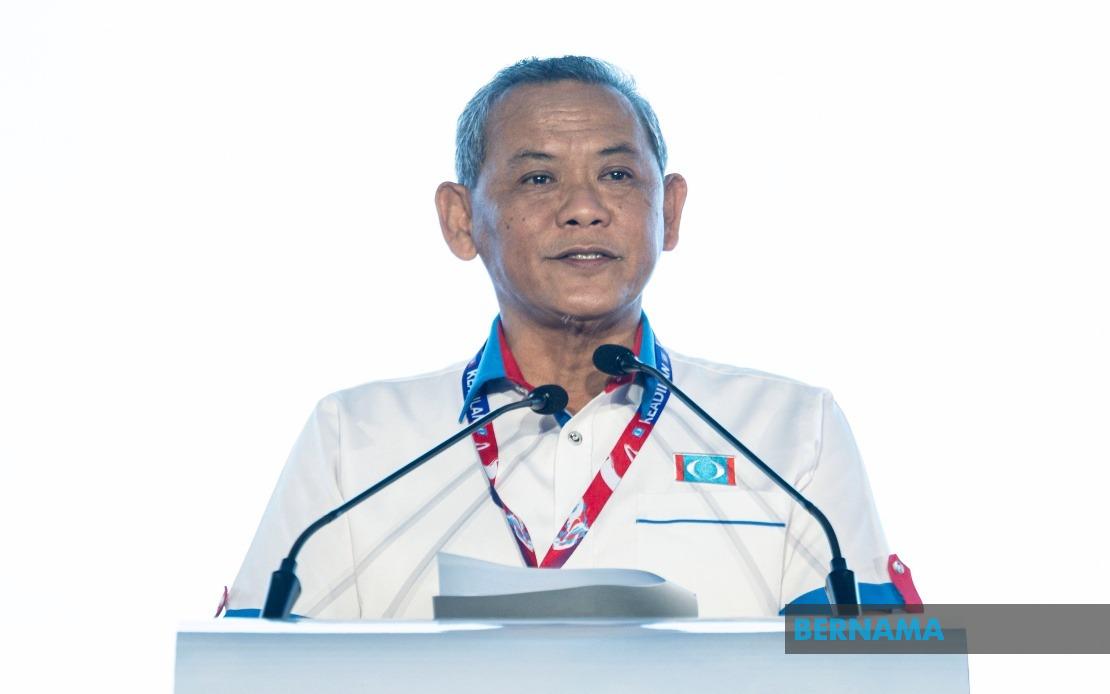
Datuk Seri Aminuddin Harun, the former Menteri Besar of Negeri Sembilan, publicly declared his preparedness to relinquish his position as chairman of the state party's leadership council during the Parti Keadilan Rakyat's national congress in Melaka this week. His announcement comes in the aftermath of a disappointing electoral showing that has prompted intense internal discussions within PKR's state machinery about accountability and future direction.
The catalyst for Aminuddin's statement was mounting pressure from six senior branch leaders within Negeri Sembilan's PKR organisation, who had publicly called for a comprehensive review of the party's electoral strategy and leadership performance. These party veterans argued that failing to secure adequate representation in the state assembly demanded serious introspection and structural changes. Rather than defending his position or deflecting criticism, Aminuddin chose to acknowledge their concerns and align himself with the calls for reassessment, signalling a more conciliatory approach to party management.
In his address to the gathering at Melaka International Trade Centre, Aminuddin framed his potential departure not as a personal defeat but as an act of democratic responsibility. He articulated that positions within the party organisation exist in service of the broader PKR agenda and that individual leaders must remain subordinate to the collective will of the party. This stance reflects a measured recognition that leadership roles are held in trust and can be relinquished when circumstances demand it. He explicitly stated his readiness to accept whatever decisions the party hierarchy deems necessary for its future progress and electoral competitiveness.
The August 1 state election proved particularly bruising for PKR in Negeri Sembilan, a state where the party had hoped to consolidate support and expand its legislative footprint. The party managed to retain only two seats—Chuah and Sri Tanjung—out of the fifteen constituencies it contested. This outcome represented a substantial contraction of PKR's presence in the state assembly and raised troubling questions about the party's organisational effectiveness and messaging resonance among voters. The scale of the setback left little room for alternative explanations and demanded substantive accountability from party leadership.
Aminuddin himself experienced direct electoral rejection when he contested the Linggi state seat, a constituency where his organisational infrastructure and name recognition should have provided distinct advantages. He finished in second place with 6,163 votes, trailing Barisan Nasional incumbent Datuk Mohd Faizal Ramli, who secured 9,139 votes. The loss was cushioned slightly by the presence of Bersatu candidate Datuk Zamri Md Said, whose 391 votes came exclusively from the opposition camp, yet this three-way division scarcely diminished the significance of his personal defeat. The 2,976-vote margin represented a substantial popular rejection in a state seat where he presumably invested considerable personal political capital.
Notably, Aminuddin avoided adopting a confrontational stance toward the branch leaders who sought his removal or resignation. Instead, he embraced their criticism as constructive feedback and positioned himself as committed to the same outcomes they desired: party rejuvenation and electoral recovery. This collaborative framing may serve multiple purposes simultaneously—it diffuses potential internal conflict, demonstrates leadership maturity to the broader party membership, and allows him to maintain influence even if he formally steps away from the chairmanship. The distinction between accepting responsibility and accepting dismissal is sufficiently elastic to preserve Aminuddin's political standing within PKR's ecosystem.
His remarks regarding the relationship between electoral defeat and future strategy offer insight into PKR's internal reasoning about the August election. Rather than treating the outcome as a terminal verdict on the party's viability in Negeri Sembilan, Aminuddin characterised the setback as a pivot point for organisational recalibration and renewed commitment. This narrative permits party members to distinguish between tactical failure and strategic bankruptcy—a necessary framing if PKR intends to maintain membership morale and recontest the state with competitive prospects in the next electoral cycle. The implicit suggestion is that the August results revealed problems in execution rather than fundamental rejection by voters.
For Malaysian political observers, Aminuddin's willingness to acknowledge accountability reflects broader shifts within PKR's internal culture since the 2022 general election. The party has experimented with more inclusive and consultative approaches to leadership transitions, partly in response to earlier controversies surrounding factional disputes and power concentrations. This evolution toward accepting collective responsibility and respecting demands from lower-level party structures may enhance PKR's organisational stability, though it also raises questions about whether leadership transitions driven by electoral underperformance ultimately resolve underlying strategic deficiencies.
The implications for PKR's trajectory in Negeri Sembilan remain consequential for the broader Malaysian political landscape. The state occupies an intermediate position in Pakatan Harapan's calculations—neither a stronghold nor a lost cause. PKR's failure to consolidate support in Negeri Sembilan during the August election suggests that the coalition's ability to organise at state level outside of traditional bastions requires strengthening. Aminuddin's departure, should it proceed, will necessitate identifying a successor capable of reconstructing the party's local networks and restoring voter confidence in PKR's capacity to deliver tangible benefits to constituents.
The process Aminuddin has initiated—acknowledging demands from lower ranks, accepting responsibility without immediate self-defence, and leaving decisions to party hierarchy—establishes a procedural model that may influence how other PKR state-level leaders respond to electoral disappointments. Should this approach become institutionalised within the party, it could create healthier dynamics around accountability. Conversely, if the leadership transition is perceived as performative or if PKR's electoral challenges persist regardless of personnel changes, the episode may reinforce perceptions that the party struggles with substantive strategic renewal.
Moving forward, the critical question facing PKR in Negeri Sembilan is not merely who occupies the state chairmanship but whether a change in personnel will be accompanied by genuine reorientation of party machinery, voter engagement strategies, and alliance positioning. Electoral recovery requires more than accepting responsibility; it demands concrete identification of where PKR's messaging, candidate selection, grassroots mobilisation, or coalition dynamics failed and what modifications are necessary. Aminuddin's graceful acceptance of accountability may open space for this deeper diagnostic work, or it may simply represent an orderly transition that perpetuates underlying organisational shortcomings.

