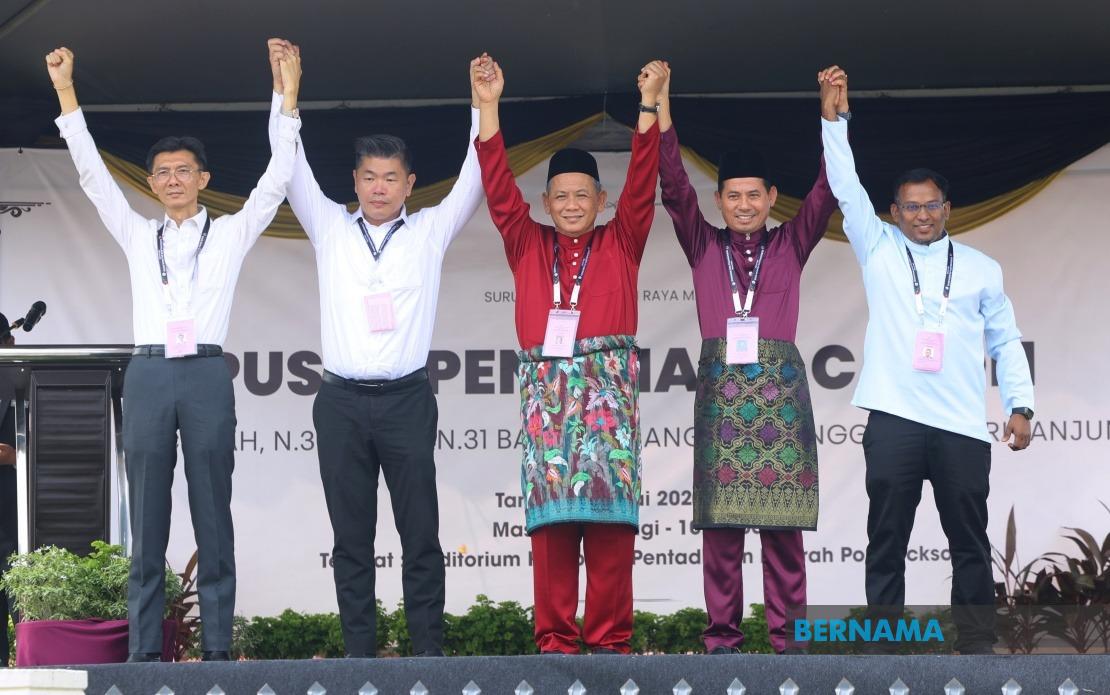
Negeri Sembilan Menteri Besar Datuk Seri Aminuddin Harun has announced ambitious infrastructure plans for the Linggi state constituency, committing to establish both a port facility and an industrial complex if granted the electoral mandate in the 16th Negeri Sembilan state election scheduled for August 1. Speaking at the District Administration Complex Auditorium in Port Dickson following his nomination, the Pakatan Harapan (PH) chairman positioned these major developments as cornerstones of a comprehensive economic revitalisation strategy designed to generate employment and boost prosperity across the constituency.
The proposed initiatives reflect a broader strategic vision to transform Linggi's economic landscape through enhanced infrastructure investment. According to Aminuddin, both the port and industrial projects have been formally presented to party leadership and received approval, signalling institutional backing for the proposals. The port facility would theoretically position Linggi to leverage maritime trade opportunities, while the planned industrial zone would facilitate manufacturing and logistics operations, potentially attracting regional investment and creating employment pathways for local residents across multiple sectors.
Aminuddin's decision to contest in Linggi represents a calculated political gamble, as the constituency has historically been regarded as a stronghold of the Barisan Nasional (BN) coalition. Despite this structural disadvantage, the PH chairman has publicly expressed confidence in his party's organisational capabilities and electoral strategy. His willingness to challenge the incumbent suggests both personal conviction and PH's determination to expand its footprint in Negeri Sembilan, where the ruling coalition seeks to consolidate recent electoral gains and position itself as a viable alternative governance force across the state.
The contest has evolved into a three-cornered battle with incumbent Datuk Mohd Faizal Ramli representing BN and Datuk Zamri Md Said fielding a Bersatu candidacy. This fractionalised opposition dynamic theoretically benefits the incumbent BN candidate, though Aminuddin's explicit commitment to tangible infrastructure projects demonstrates PH's intent to compete on substantive policy platforms rather than rely solely on incumbency advantages. The introduction of major development proposals during campaign season reflects evolving Malaysian electoral dynamics, where voters increasingly demand specific governance deliverables beyond rhetorical promises.
Mohd Faizal, meanwhile, has signalled that despite Linggi's historical voting patterns favouring BN, the coalition cannot afford complacency. His calls for a clean campaign emphasising substantive debate rather than personal attacks or baseless allegations suggest awareness that BN's traditional electoral machinery faces mounting competitive pressures. The incumbent's measured approach indicates recognition that the PH challenge, while not conventionally expected to succeed, demands serious organisational response and policy articulation to maintain voter confidence in BN's development capabilities.
For Malaysian observers tracking Negeri Sembilan's evolving political landscape, this contest carries broader significance. Negeri Sembilan has experienced notable political volatility in recent election cycles, with voters demonstrating willingness to shift allegiances based on perceived governance performance and policy platforms. The Linggi contest thus provides a test case for whether PH's infrastructure-focused messaging can penetrate traditionally BN constituencies, or whether rural and semi-urban constituencies in central Malaysia remain structurally aligned with the long-established coalition.
The proposed port development warrants particular scrutiny given Malaysia's existing port infrastructure landscape and the viability of supporting another major maritime facility. Port Dickson's geographical position relative to other peninsular ports requires detailed feasibility analysis, and the economic sustainability of such a facility would depend on genuine demand from regional shipping networks rather than merely political commitments. Similarly, the industrial zone proposal must address questions regarding land availability, infrastructure requirements, and competitive advantages relative to existing industrial concentrations in Selangor and other neighbouring states.
From a regional economic perspective, such infrastructure investments could potentially reshape freight corridors and manufacturing supply chains across Peninsular Malaysia if implemented effectively. However, campaign-period announcements often reflect aspirational thinking rather than detailed project planning with secured funding, clearly defined timelines, and measurable implementation metrics. Voters evaluating these proposals would reasonably seek clarification regarding budget allocations, construction timelines, environmental impact assessments, and employment projections associated with both initiatives.
Aminuddin's explicit acknowledgement that contesting against BN in Linggi presents formidable challenges demonstrates political realism alongside determination. The Menteri Besar's framing of his candidacy as a personal challenge undertaken for the broader PH cause attempts to reframe the electoral dynamic from a likely loss into a statement about party conviction and willingness to contest competitive terrain. Such positioning, whilst rhetorically appealing to party loyalists, requires translation into actual vote share gains among persuadable Linggi voters to achieve practical electoral results.
The August 1 polling date provides a defined timeline for campaign activities across Negeri Sembilan's seven state constituencies. Linggi's outcome will partially determine whether Negeri Sembilan consolidates as a genuine competitive state where electoral fortunes remain genuinely contested, or whether traditional BN strengths persist despite PH's recent electoral advances elsewhere in Malaysia. The infrastructure promises advanced by both major political forces will likely become campaign focal points, with voters assessing which coalition presents more credible implementation capabilities and genuine commitment to Linggi's economic advancement beyond standard electoral rhetoric.

