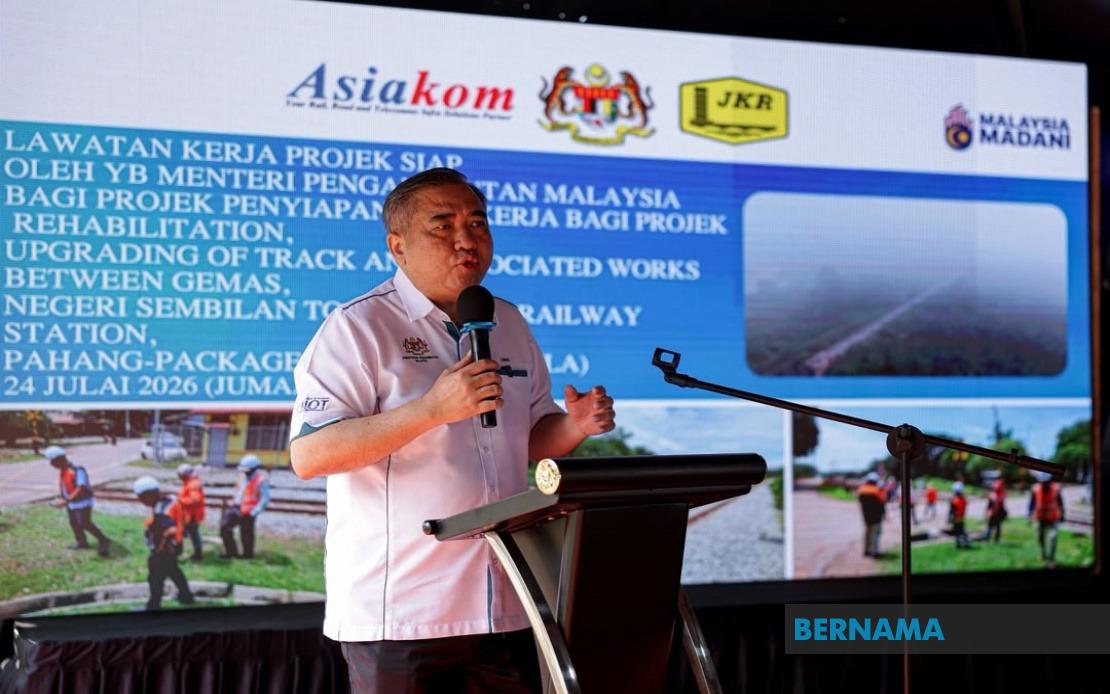
The Pakatan Harapan coalition in Negeri Sembilan has moved to quell mounting speculation about its leadership succession, with senior party officials unequivocally confirming that Datuk Seri Aminuddin Harun remains the sole candidate for Menteri Besar should the alliance retain control of the state. Anthony Loke, secretary-general of the DAP and chairman of the party's Negeri Sembilan division, delivered the emphatic endorsement during a campaign stop in Bahau this week, underscoring what he characterized as unanimous backing from all coalition partners for the incumbent state leader.
The clarification from Loke comes as the Negeri Sembilan election enters its decisive phase, with early voting scheduled for July 28 and election day set for August 1. The timing of his statement suggests a coordinated effort to prevent uncertainty from undermining the coalition's momentum in a state where Pakatan Harapan currently governs. The emphasis on unity reflects a broader political calculus: internal divisions or perceived leadership vacuums can quickly erode voter confidence, particularly in contests where margins may prove tight.
Aminuddin, who serves as chairman of Negeri Sembilan's Pakatan Harapan chapter, has helmed the state administration as Menteri Besar and represents a continuity candidate for the alliance. His position carries particular significance given Malaysia's constitutional framework, which imposes specific eligibility requirements on who can occupy the top executive office in any state. The Negeri Sembilan State Constitution, like those of several other Malaysian states, mandates that the Menteri Besar must be a Malay Muslim member of the State Legislative Assembly, a stipulation that immediately excludes numerous potential candidates from consideration regardless of their political standing or electoral strength.
Loke's intervention addressed what have become persistent rumours within political circles suggesting that the DAP leader himself harboured ambitions for the Menteri Besar position or that the coalition was entertaining alternative scenarios. Such speculation, though apparently without foundation, can prove damaging in a multiracial, multifaith democracy like Malaysia, where questions of representation, inclusivity, and constitutional propriety remain sensitive. By explicitly stating that he does not meet the eligibility criteria and dismissing the notion entirely, Loke sought to neutralize what he viewed as opportunistic claims circulated by opposition parties.
The opposition's strategy reflects a familiar playbook in Malaysian politics: exploit any sign of coalition fracture by questioning succession arrangements or amplifying internal disagreements. Datuk Dr Asyraf Wajdi Dusuki, secretary-general of UMNO, had previously urged Pakatan Harapan to name a backup Menteri Besar candidate in the event that Aminuddin failed to retain his Linggi state seat. This tactic, on the surface, appears to raise a legitimate constitutional question but in practice often serves to sow doubt about an incumbent administration's preparedness and internal cohesion.
The underlying context here involves Aminuddin's own electoral security. Although he chairs the state Pakatan Harapan chapter, his personal retention of the Linggi seat cannot be entirely assumed, particularly in an election cycle. Should he lose his legislative seat, constitutional provisions would automatically remove him from eligibility for the Menteri Besar post, regardless of the coalition's overall performance in the state. This prospect, remote as it may seem given Aminuddin's political standing, creates the theoretical opening that opposition voices have been attempting to exploit through pre-emptive questioning.
The constitutional limitations surrounding the Menteri Besar office exemplify the complex institutional architecture that has evolved within Malaysia's federal system. Unlike the Prime Minister's position, which has no formal religious or ethnic prerequisites written into the Federal Constitution, many state constitutions retain provisions reflecting historical agreements and power-sharing arrangements negotiated at the time of independence. These clauses have remained largely unchanged despite Malaysia's democratic evolution, creating constraints that shape political outcomes and leadership possibilities in ways that may not immediately align with electoral preferences or representational ideals.
For Pakatan Harapan in Negeri Sembilan, the reaffirmation of Aminuddin's candidacy serves multiple strategic purposes. It provides the electorate with clarity about the coalition's leadership intentions, eliminates a potential vulnerability that opposition parties might exploit, and reinforces the message that internal unity and forward planning characterize the alliance's approach to governance. In a state where the Menteri Besar's performance record carries direct implications for voter calculations, having unambiguous succession clarity allows the campaign to focus on policy achievements and future commitments rather than becoming ensnared in institutional speculation.
The timing of Loke's public statement also reflects awareness that election day looms, with fewer than two weeks remaining between his remarks and the anticipated conclusion of voting. In this compressed campaign window, every statement carries amplified weight, and clarity on fundamental questions of leadership becomes particularly valuable. The coalition evidently calculated that addressing the succession question proactively would prove more effective than allowing opposition claims to circulate unchallenged through the final campaign period.
For Malaysian and regional observers, the Negeri Sembilan contest represents a bellwether of sorts for Pakatan Harapan's continuing electoral viability outside its traditional strongholds of Selangor and Penang. The state has experienced coalition rule previously, but maintaining power across successive elections demands strong incumbent performance and maintained voter confidence. Internal stability and clear messaging about leadership contribute materially to both these objectives, which likely explains the coalition's deliberate effort to foreclose speculation about alternatives to Aminuddin well before polling day.
The episode also underscores how constitutional provisions, crafted decades ago in very different political contexts, continue to shape contemporary Malaysian politics in sometimes unexpected ways. The Menteri Besar eligibility criteria demonstrate that democratic elections in Malaysia do not operate in a purely open institutional field but rather within constraints that reflect historical compromises and ongoing political settlements. Understanding these parameters proves essential for interpreting campaign dynamics and assessing what various electoral outcomes might realistically translate into at the level of state administration.

