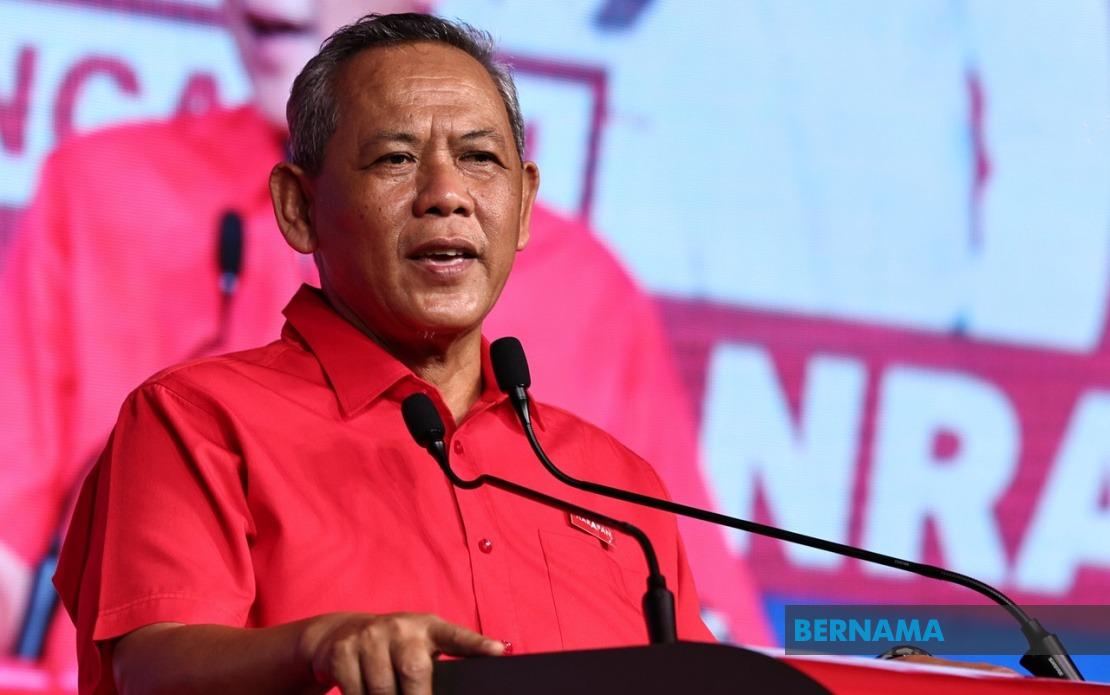
Datuk Seri Aminuddin Harun, Negeri Sembilan's Menteri Besar, has publicly rebuffed mounting speculation that his shift to contest the Linggi state seat in the forthcoming state election represents a tactical retreat from defending his longtime Sikamat stronghold. The move, announced as the 16th Negeri Sembilan state election draws near, has sparked questions about his political calculations at a critical juncture for the state's leadership race. In a statement released in Seremban on July 16, Aminuddin characterized the decision as entirely his own, emphasizing that it reflects his genuine commitment to expanding his service beyond the boundaries of his previous constituency.
As chairman of Negeri Sembilan's Pakatan Harapan (PH) machinery, Aminuddin has reframed the constituency switch as a positive opportunity rather than a defensive maneuver. He expressed determination to serve the people of Linggi with the same vigour and dedication that characterized his four-term tenure in Sikamat, suggesting that the change represents an extension of his political mission rather than an abandonment of it. This framing is strategically significant for PH at a moment when maintaining narrative control over leadership decisions is crucial for electoral momentum in the state.
Aminuddin's political journey in Sikamat has become something of a founding story for his personal brand in Negeri Sembilan politics. He recalled the early years of his representation, when Pakatan Harapan was in opposition and resources were severely constrained. Operating from a modest office situated above a shoplot, with minimal financial allocations, Aminuddin described how he and local supporters pooled resources to assist residents and organize community programmes. These reminiscences serve multiple purposes: they underscore his grassroots credentials, demonstrate his resilience through lean political periods, and position him as someone who has earned his current prominence through genuine hard work rather than inherited advantage.
The Sikamat constituency holds deep emotional significance for Aminuddin's political identity, and his acknowledgment of this in public statements suggests an awareness that abandoning it could damage his image among loyal supporters. By explicitly thanking residents for their unwavering support across his four terms, he attempts to cement goodwill before departing. This approach is particularly important in Malaysian politics, where local constituencies often develop strong personal bonds with their representatives, and sudden departures can be interpreted as betrayal or ingratitude.
Central to Aminuddin's transition strategy is the nomination of Nor Azman Mohamad as his successor in Sikamat. By publicly expressing confidence in Nor Azman's ability to continue serving the constituency with dedication, Aminuddin seeks to create continuity and assure Sikamat voters that their interests will not be abandoned. This succession planning reflects calculated leadership awareness: the endorsement of an heir apparent can smooth the departure of a long-serving representative and maintain PH's institutional strength in the constituency.
The electoral arithmetic for Linggi presents a more challenging contest than his four successful defences of Sikamat. Aminuddin faces incumbent Datuk Mohd Faizal Ramli, who is fielded by Barisan Nasional (BN), suggesting that the Linggi seat may have been previously held by the opposition coalition or represents genuinely competitive territory. This opponent is not a newcomer but an established assemblyman with local roots and institutional support, which contradicts any suggestion that Aminuddin is taking a softer electoral path.
The timing of this strategic repositioning carries implications for PH's broader electoral strategy in Negeri Sembilan. By placing the Menteri Besar candidate in a genuinely contested seat rather than a safer holding, PH signals confidence in both Aminuddin's personal appeal and the coalition's competitive position statewide. This move also prevents BN from claiming that PH leadership is concentrated in uncontested strongholds, a narrative vulnerability that opposition parties often exploit.
For Malaysian readers observing state-level politics, Aminuddin's navigation of this transition offers insights into how leaders manage constituency changes without appearing to dodge challenges. The distinction he draws between personal choice and strategic necessity reflects broader tensions within Malaysian political culture, where electoral decisions are simultaneously personal, institutional, and strategic. His emphasis on continuity with Nor Azman and consistency of values across constituencies attempts to transcend the narrative that would frame his move as purely tactical.
The electoral calendar compounds the pressure on these narratives. With nominations scheduled for Saturday following his statement, early voting on July 28, and polling on August 1, there is minimal time for alternative narratives to displace Aminuddin's framing. PH's need to project unified, confident leadership in the weeks before voting creates incentives for senior figures like Aminuddin to control the interpretation of their own decisions swiftly and decisively.
Aminuddin's public statements also implicitly address concerns within the PH coalition itself. Coalition partners and internal stakeholders may harbor doubts about leadership stability if a Menteri Besar appears to be retreating from contested terrain. By emphasizing his own agency and positive vision for Linggi, rather than discussing internal party negotiations or electoral calculations, Aminuddin maintains the appearance of confident, autonomous leadership that reassures coalition partners of PH's institutional strength.
The underlying question of whether his move truly reflects personal conviction or pragmatic repositioning may ultimately matter less than his success in establishing the narrative of deliberate choice. In Malaysian electoral politics, perception frequently shapes outcome, and a leader who appears to be acting from principle and strength commands more respect than one perceived as reactive or defensive. Aminuddin's framing strategy, therefore, represents an effort to establish the terms on which his Linggi contest will be evaluated by voters and observers.
For the broader Negeri Sembilan electorate, the contest between Aminuddin and Datuk Mohd Faizal Ramli will test whether PH's established state leadership can expand its constituency base through direct competition, or whether voters in Linggi perceive the change as external imposition. The August 1 polling will ultimately validate or undermine the narratives both leaders construct in the intervening weeks.

