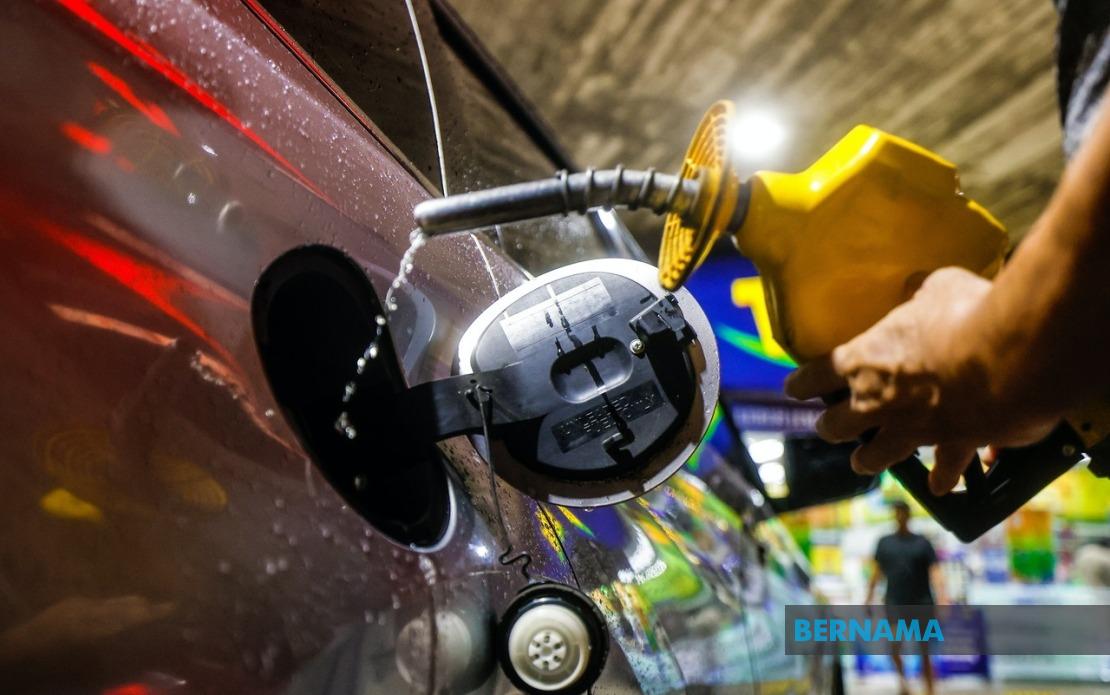
Angkatan Muda Harapan (AMH), the youth wing of Pakatan Harapan, has set out an ambitious five-point agenda aimed at addressing persistent challenges affecting ordinary Malaysians. Leading the list is a call to substantially increase the BUDI95 fuel subsidy programme, with the coalition youth wing pushing for the monthly quota to jump from the current 200 litres to 300 litres per vehicle owner. The proposal, endorsed at a recent conference, reflects growing concerns among young party members about the mounting costs ordinary workers face when commuting to jobs, managing businesses, or handling family responsibilities in an increasingly expensive economic environment.
The rationale behind AMH's push for higher fuel allocations centres on the reality facing Malaysia's working population, particularly those dependent on private vehicles in areas where public transport infrastructure remains underdeveloped or unreliable. The group argues that the existing subsidy ceiling inadequately addresses the genuine needs of target beneficiaries, leaving many workers to absorb substantial out-of-pocket expenses after their monthly quota exhausts. This concern resonates especially in Peninsular Malaysia's suburban and semi-urban communities where vehicle dependence remains high and public transport alternatives are limited, making the cost of fuel a significant household budget item.
Beyond the subsidy increase, AMH has zeroed in on structural weaknesses within the BUDI MADANI Diesel mechanism itself. The youth wing contends that the programme requires comprehensive review to enhance both fairness and clarity, particularly regarding which segments of the population actually qualify for assistance. The group specifically warns that gaps in the mechanism's design—including its registration procedures and eligibility criteria—risk excluding genuinely disadvantaged citizens who deserve support. This critique suggests that despite good intentions, implementation challenges have created loopholes allowing the system to fall short of its equity goals.
The statement issued jointly by AMH chief Woo Kah Leong, Angkatan Muda Keadilan chief Muhammad Kamil Abdul Munim, and Amanah Youth chief Hasbie Muda reflects a coordinated push across Pakatan Harapan's youth structures to ensure that subsidy reform remains central to the government's economic agenda. This unified approach signals that fuel affordability has become a priority issue cutting across the coalition's component parties, particularly among younger supporters who tend to view inclusive economic policy as fundamental to the government's legitimacy.
The coalition youth wing has also launched a direct attack on governance failures within Malaysia's state-owned enterprise ecosystem. AMH demands comprehensive investigations into all allegations involving government-linked companies (GLCs) and government-owned entities, whether touching on scandals, abuse of authority, misappropriation, conflicts of interest, or broader governance shortcomings. Crucially, the statement emphasises that such investigations must proceed regardless of the political affiliations or positions of those implicated—a pointed reference to ensuring that no political allies receive preferential treatment when misconduct allegations emerge.
This governance push extends to structural reforms within GLCs themselves. AMH advocates implementing transparent contract mechanisms, genuinely competitive procurement processes, mandatory conflict-of-interest declarations from decision-makers, rigorous independent audits, and clearly defined accountability frameworks. These demands essentially call for GLCs to operate according to private-sector standards of transparency and oversight, suggesting frustration within Pakatan Harapan's youth wing that state enterprises have historically operated with insufficient external scrutiny. For Malaysian readers, particularly younger professionals and small business owners, GLC governance directly affects market competition, pricing, and opportunity distribution across the economy.
On the democratic front, AMH has staked out positions likely to resonate with Malaysia's civil society organisations and younger voters concerned about political freedoms. The youth wing urges the MADANI Government to continue strengthening the Peaceful Assembly Act 2012 in ways that align with mature democratic practices. More provocatively, AMH explicitly rejects a political climate where citizens feel comfortable expressing only views approved by whoever holds executive power. The statement articulates a vision where the MADANI era becomes characterised by public confidence in speaking candidly and government receptiveness to critical feedback—a not-so-subtle indication that AMH perceives insufficient progress on democratic space expansion since Pakatan Harapan's return to government.
The education and youth mobility component of AMH's agenda targets Malaysia's higher education access problem, proposing that top-performing STPM students achieving 4.0 CGPA and STAM students earning Mumtaz distinctions receive prioritised admission to public institutions. Under this proposal, exceptional students would list three preferred universities and secure consideration for admission to any of them, provided they meet individual programme requirements and available capacity permits. This approach simultaneously recognises Islamic education achievement—a symbolic gesture toward inclusivity in defining academic excellence—while potentially expanding pathways for high-achievers into public institutions currently facing capacity constraints.
The higher education proposal addresses a practical bottleneck affecting tens of thousands of Malaysian students annually. Current admission processes often result in qualified candidates missing admission to public universities despite strong academic records, forcing them into the private sector or overseas options. By allowing high-achieving students choice among multiple institutions simultaneously, AMH's framework could improve allocation efficiency while ensuring exceptional candidates access public education regardless of their first-choice institution's capacity limitations. For Malaysia's socioeconomically diverse student population, this reform could prove transformative in expanding opportunity.
Collectively, AMH's five-point agenda reflects a Pakatan Harapan youth wing attempting to position itself as solution-oriented and responsive to tangible citizen concerns—fuel costs, governance integrity, democratic space, and educational opportunity—while maintaining pressure on the MADANI Government to deliver on promises that helped secure the coalition's return to power. The statement's closing assertion that the MADANI Government retains capacity to strengthen its mandate suggests AMH views these proposals as achievable priorities rather than impossible demands, signalling confidence in government receptiveness even as the coalition faces inevitable popularity pressures from governing.
For Malaysian observers, AMH's agenda reveals where Pakatan Harapan's younger cadre perceive the government's current vulnerabilities and priorities. Fuel subsidies, corporate integrity, civic freedoms, and meritocratic education access represent issues capable of mobilising voting constituencies—working commuters, reform advocates, democratic activists, and ambitious students—who could determine electoral outcomes in coming years. Whether the MADANI Government embraces these proposals will substantially influence how younger Malaysians assess Pakatan Harapan's commitment to the reform agenda that propelled the coalition back into office.

