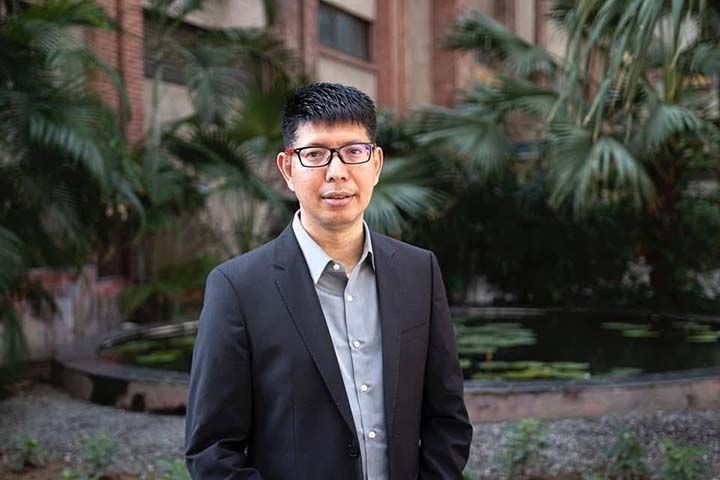
An American scholar who specializes in Myanmar affairs and was apprehended by Chinese authorities in early June had travelled to Kunming for legitimate academic purposes, according to the research institution he founded. The Institute for Strategy and Policy Myanmar released a statement on Wednesday demanding the immediate and unconditional release of Min Zin, its executive director, who was taken into custody while en route to participate in an academic workshop in the southwestern Chinese city. The institute categorically rejected what it termed groundless accusations levelled against the detained researcher.
China's foreign ministry disclosed last week that it had detained Min Zin on suspicion of engaging in espionage and threatening national security. The ministry has maintained that stance in subsequent communications, stating that Beijing will prosecute the case according to its legal framework. However, neither the foreign ministry nor other Chinese authorities have provided detailed evidence or specific information regarding the alleged espionage activities. The vagueness surrounding the charges has raised concerns among international observers about the transparency of China's legal proceedings, particularly in cases involving foreign nationals.
The United States State Department has intervened diplomatically on behalf of Min Zin, rejecting the espionage allegations as unfounded. A department spokesperson confirmed that American consular officers have visited the detained scholar and that Washington is actively engaging with Chinese counterparts to secure his release. The US commitment to providing comprehensive consular assistance underscores the heightened diplomatic tension between Beijing and Washington over the detention, adding another layer of complexity to their already strained relationship on multiple fronts.
The timing of Min Zin's detention carries significant political weight. He was apprehended on June 3, merely weeks before Myanmar's military leader Min Aung Hlaing embarked on a five-day state visit to China. This proximity to a high-profile diplomatic engagement suggests potential linkages between domestic security concerns in China and its bilateral relations with the Naypyidaw regime. China views Myanmar as a strategically vital partner in Southeast Asia, making the coordination between Beijing and Myanmar's military establishment a matter of considerable geopolitical importance.
China's multifaceted relationship with Myanmar's junta reflects Beijing's broader strategic calculations in the region. The military government that seized power in Myanmar through a February 2021 coup enjoys substantial backing from China, which has positioned itself as one of the regime's most dependable international allies. This partnership has deepened despite widespread condemnation from the international community and internal resistance within Myanmar, where mass protests erupted immediately following the coup. The junta's reliance on Chinese economic and military support has made the bilateral relationship a cornerstone of Myanmar's external affairs.
The coup and subsequent military takeover triggered unprecedented upheaval across Myanmar's society. What began as large-scale street demonstrations rapidly transformed into an armed resistance movement, marking a dramatic shift in the nature of opposition to military rule. Pro-democracy groups that lacked formal military structures combined forces with established ethnic armed organizations that have operated in Myanmar's borderlands for decades. This unprecedented alliance between urban pro-democracy movements and ethnic insurgencies has fundamentally altered Myanmar's conflict dynamics, challenging the military's monopoly on organized force in ways the regime had not encountered in previous decades.
Min Zin brings a distinctive perspective to contemporary Myanmar scholarship, shaped by his personal history of political activism. As a former student protester during Myanmar's 1988 democracy uprisings, he carries firsthand experience of the country's struggle for democratic governance spanning multiple generations. His academic training at the University of California, Berkeley equipped him with analytical frameworks grounded in comparative political science, enabling him to situate Myanmar's experiences within broader international contexts. This combination of insider knowledge and rigorous scholarly training has positioned him as an influential voice in understanding Myanmar's political trajectory.
The Institute for Strategy and Policy Myanmar, which Min Zin founded and directed, has established itself as an important research organization focused on understanding Myanmar's complex contemporary challenges. Initially headquartered within Myanmar itself, the organization relocated its operations overseas following the 2021 coup, reflecting the deteriorating space for independent scholarship and critical analysis within the country. From its new base outside Myanmar, the institute has concentrated on investigating the ongoing armed conflict, analyzing potential pathways for political transition, examining the country's economic collapse, and scrutinizing Myanmar's intricate bilateral relationship with China. The institute's scholarship has proven particularly valuable for international audiences seeking nuanced understanding of Myanmar's multifaceted crises.
The detention raises troubling questions about the space available for academic research on sensitive geopolitical topics, particularly those involving China's regional interests. Scholars and think tanks conducting research on China's foreign policy, security concerns, and international engagement increasingly face scrutiny and potential legal jeopardy. Min Zin's case exemplifies how academic inquiry into politically sensitive subjects can expose researchers to legal risks in authoritarian contexts. The Institute for Strategy and Policy Myanmar emphasized that research organizations must be able to pursue their intellectual missions without fear of intimidation or state interference, a principle increasingly challenged in practice across the region.
The detention also illuminates the precarious position faced by Myanmar specialists operating at the intersection of international scholarship and regional politics. Researchers studying Myanmar cannot easily isolate their work from broader geopolitical tensions involving major powers, particularly given China's strategic importance to the military regime. Min Zin's case demonstrates how academic work examining Myanmar's political economy and external relations can inadvertently create friction with powerful actors possessing security concerns. This environment creates a chilling effect on scholarship, potentially constraining the willingness of international researchers to engage substantively with Myanmar's most pressing policy questions. For Malaysian observers and the broader Southeast Asian research community, the implications underscore the importance of protecting intellectual freedom and ensuring that academic inquiry remains insulated from geopolitical reprisals.

