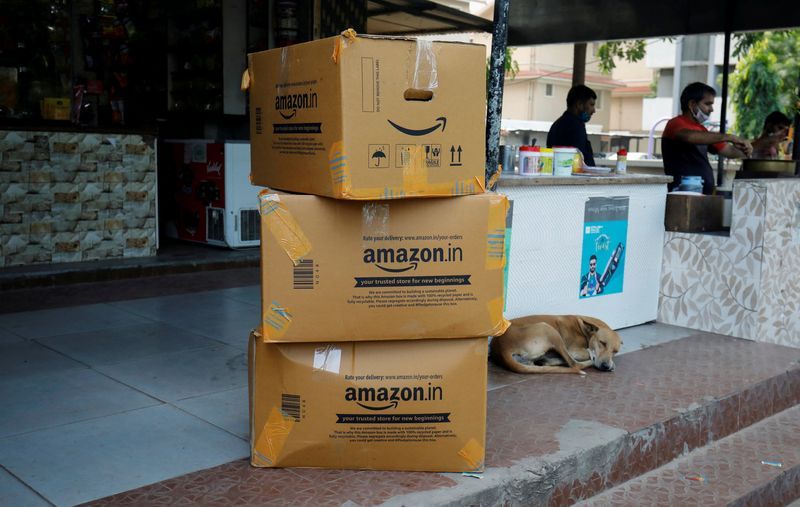
Amazon has committed to taking disciplinary action against one of its major delivery partners in India once police complete their investigation into a deadly warehouse fire that claimed two lives in June. The e-commerce giant, one of the largest online retailers operating across India, issued the statement after details emerged about safety violations at the facility, signalling that the incident has prompted scrutiny of its third-party contractor network's operational standards.
The fire occurred on June 5 at M&M Logistics Solutions, a critical Amazon distribution hub situated in Uttarakhand's northern region. According to police documentation reviewed by international media, the facility suffered from multiple critical safety deficiencies that would have hampered emergency response efforts. The building reportedly operated without valid fire safety certification from local authorities, lacked functional fire alarm systems, had no smoke detection equipment, and featured inadequate emergency evacuation routes—a dangerous combination of failures in a logistics warehouse where workers face inherent occupational risks.
Beyond its public commitment, Amazon has initiated a parallel internal investigation into the circumstances surrounding the deaths, according to sources privy to the company's response. This dual-track approach—cooperating with state authorities while conducting its own review—reflects the complexity of Amazon's position as a major employer whose operations depend substantially on third-party logistics networks across India's challenging infrastructure landscape. The independent probe allows Amazon to gather information and assess compliance breaches according to its own operational standards.
M&M Logistics Solutions operates an extensive network of 45 delivery centers spanning 21 Indian cities, predominantly across the northern regions, making it a significant cog in Amazon's supply chain machinery. The scale of this operation underscores why the incident carries broader implications for Amazon's ability to maintain safety standards across its fragmented contractor ecosystem. When a single facility failure results in fatalities, questions naturally arise about oversight mechanisms and whether Amazon's vetting procedures adequately address infrastructure and safety concerns before contractors begin operations.
The incident has revived concerns about workplace conditions at Amazon's Indian facilities. Earlier this year, the National Human Rights Commission scrutinized Amazon over allegations that labour laws were violated during an extreme heat emergency at a warehouse complex near New Delhi. Those complaints led state authorities to initiate legal proceedings against the company under India's labour protection statutes, establishing a pattern of regulatory attention on Amazon's employment practices and facility management in the country.
Amazon's supplier code of conduct explicitly prohibits working environments that expose staff to uncontrolled hazards, including fires and related dangers, and grants the company authority to suspend or terminate third-party vendors for breaching these standards. However, enforcement of such policies has historically proven complicated in India's logistics sector, where rapid scaling often outpaces infrastructure development and regulatory compliance. The gap between contractual obligations and on-ground reality remains a persistent challenge across e-commerce operations in the region.
Local authorities in Uttarakhand have not yet publicly detailed their findings, and M&M Logistics Solutions has remained silent on the matter. This lack of communication from the directly involved parties suggests ongoing investigations that may uncover additional details about how safety lapses accumulated unchecked. The absence of response from those most directly responsible raises questions about accountability and whether adequate mechanisms exist to compel transparency from contractors in India's booming logistics sector.
The Amazon India Workers Union has escalated demands beyond corporate action, calling for judicial intervention to examine the June deaths as a systemic failure of workplace protection standards. This advocacy positioning treats the incident not as an isolated accident but as evidence of deeper structural problems in how Amazon and its contractors prioritize worker safety against cost and speed imperatives. The union's demand for judicial review signals that worker organisations view internal corporate investigations and third-party discipline as insufficient guarantees of genuine safety reforms.
For Malaysian and broader Southeast Asian readers, the Amazon situation illustrates how rapid e-commerce expansion across the region creates recurring tensions between operational efficiency and worker protection. As logistics networks expand throughout Malaysia, Singapore, and other ASEAN economies, similar questions about third-party contractor oversight, facility safety standards, and enforcement mechanisms will become increasingly urgent. The pressure Amazon faces in India previews regulatory and social expectations that multinational platforms should expect as they scale operations throughout Southeast Asia, where labour advocates and authorities alike are becoming more assertive about workplace safety standards.
The fire at M&M Logistics also highlights how third-party contractor models, while enabling rapid expansion and operational flexibility, create diffused accountability. When a worker dies in a facility technically operated by a contractor rather than the platform company directly, determining responsibility becomes legally and ethically complicated. This structural reality means Amazon's stated commitment to take "appropriate action" once investigations conclude may prove insufficient to address deeper questions about how the company ensures compliance across thousands of contractors managing hundreds of facilities across a vast geography.
Looking forward, the incident may force Amazon and competitors to recalibrate their approach to contractor management in India and across Asia. Rather than treating safety compliance as a contractual obligation that activates only after failures occur, companies may face pressure to implement more rigorous pre-operational audits, regular compliance verification, and potentially stricter financial or operational penalties for lapses. The trajectory of Amazon's response in India will likely influence how other major e-commerce players approach similar situations throughout Southeast Asia and South Asia.

