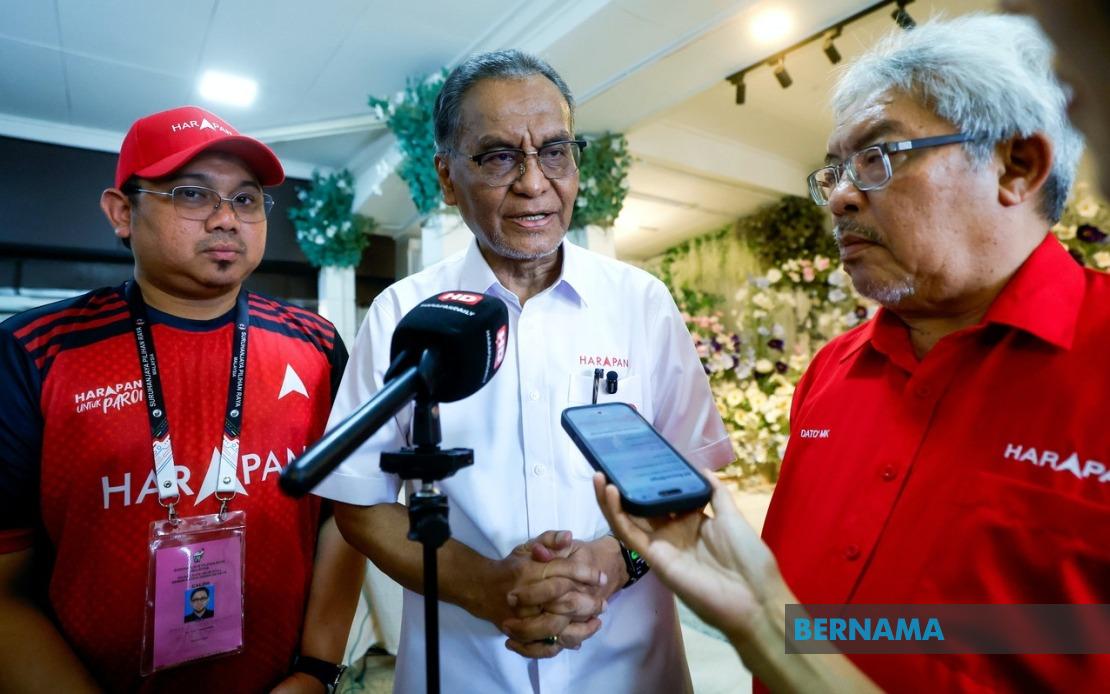
Pakatan Harapan's Parti Amanah Negara is banking on the state government's administrative achievements and a ground-up campaign approach as it contests nine of the 36 seats being fought by the coalition in the 16th Negeri Sembilan state election scheduled for August 1. The strategy reflects the component party's confidence that voters will reward incumbency, provided candidates can demonstrate tangible service delivery and credibility within their constituencies. This measured approach contrasts sharply with the high-decibel campaigning often associated with Malaysian electoral contests, suggesting that PH believes substance will resonate more powerfully than rhetoric in the Dusun Negara state.
According to Amanah vice-president Datuk Seri Dr Dzulkefly Ahmad, the coalition's overall campaign framework depends on each member party leveraging its strengths in designated constituencies while highlighting shared governance outcomes at the state level. Amanah's nine candidates represent roughly a quarter of PH's slate, with the remaining seats allocated to Parti Keadilan Rakyat, which is contesting 16 seats, and the DAP, fielding eleven candidates. This seat distribution reflects negotiated agreements within the coalition and illustrates how PH has attempted to balance representation and electoral viability across its member parties. The allocation also suggests confidence in each party's ability to win assigned constituencies, though the arrangement can sometimes create friction if expectations are not met.
The emphasis on track record marks a deliberate pivot towards demonstrating concrete outcomes rather than making sweeping promises. Dzulkefly articulated this philosophy explicitly, noting that electoral success depends not on campaign volume but on voters' assessment of whether candidates possess the experience, competence and dedication to solve real community problems. This messaging strategy assumes that five years of PH governance in Negeri Sembilan have accumulated sufficient goodwill and visible improvements to justify re-election. It also implicitly critiques opposition parties, positioning them as offering rhetoric without substance. Whether this approach proves persuasive will partly depend on public perception of the state government's actual performance record.
Amanah's campaign methodology emphasises direct, interpersonal engagement over mass media spectacle. Small-group discussions, door-to-door canvassing, and targeted social media outreach form the backbone of the approach. This granular strategy allows candidates to identify constituent grievances firsthand and subsequently channel issues to appropriate government agencies, creating a feedback loop that demonstrates responsiveness. Such tactics, while labour-intensive, can be particularly effective in building trust and generating intelligence about emerging community concerns. For Malaysian readers familiar with electoral campaigns dominated by rallies and billboard advertising, this shift towards intimate engagement represents a significant departure.
The Paroi state constituency exemplifies the scale of challenge facing Amanah candidates. With more than 65,000 registered voters and approximately 140,000 residents, Paroi requires a representative capable of navigating relationships with local authorities and coordinating solutions across multiple agencies. This complexity underscores why Amanah is emphasising candidates' prior experience and track records—managing a diverse, densely populated constituency demands administrative competence and established networks. PH's Paroi candidate Ahmad Shahir Mohd Shah has identified small trader empowerment as a priority, proposing to streamline licensing procedures and upgrade business infrastructure in collaboration with local authorities. This focus on economic enablement suggests Amanah recognises that governance quality is partly measured by business community sentiment.
The nine Amanah candidates are a mix of incumbents and newcomers. Datuk Bakri Sawir is defending the Klawang state seat, signalling confidence in his incumbency advantage. The remaining eight candidates—Yaacob Mahmood in Serting, Zarrina Abu Zarin in Lenggeng, Mohd Hanis Alimin in Senaling, Mohd Zailan Mohd Munawar in Johol, Muhammad Allif Ibrahim in Kota, Nasir Raman in Bagan Pinang, and Abd Latif A. Tambi in Gemencheh—represent Amanah's strategy to broaden its reach across the state's diverse constituencies. This geographic spread suggests the party views itself as competitive across Negeri Sembilan rather than concentrated in particular pockets. Each candidate's local credibility and community ties will prove crucial to translating the campaign's stated emphasis on service delivery into actual electoral victories.
The broader political context shapes this election's significance. In the previous state election in 2023, PH secured seventeen seats compared to Barisan Nasional's fourteen and Perikatan Nasional's five. This configuration gave PH the lead but meant the coalition could not rely on overwhelming dominance. Maintaining or improving the seventeen-seat tally remains essential for PH's ambitions to govern the state comfortably. Any loss of ground to either BN or PN would signal declining voter confidence or emerging weakness. For Amanah specifically, the election represents an opportunity to demonstrate that the party's contribution to PH governance has been valued by Negeri Sembilan voters, potentially strengthening its position within the coalition for future contests.
The timing of the election carries logistical and strategic implications. The Election Commission has scheduled early voting for July 28, allowing voters unable to cast ballots on August 1 to participate earlier. This accommodation reflects electoral best practice and recognises that some constituencies contain mobile populations or shift workers. The roughly one-week campaign period following the official announcement is relatively compressed, intensifying competition for voter attention and media coverage. For an opposition facing multiple competing narratives, this timeframe presents both constraints and opportunities depending on pre-campaign momentum and organisation levels.
Regional considerations add texture to the Negeri Sembilan contest. The state occupies a position between the Klang Valley and southern Peninsular Malaysia, containing both urban-influenced and rural constituencies. This diversity means no single campaign message will resonate uniformly across all seats. Amanah's emphasis on direct engagement and tailored problem-solving reflects recognition that governance priorities differ between urban traders, rural farmers, and suburban commuters. Successfully navigating these distinct constituent needs while maintaining coherent messaging across nine candidates will test Amanah's organisational capacity. Furthermore, developments in other states and the broader federal political environment can influence state-level voting behaviour through national polarisation and perceptions of coalition performance.
The ideological positioning of Amanah within PH deserves consideration. Amanah, as an offshoot rooted in Islamic values and social democracy, brings particular emphasis on inclusive governance and community-focused policies. This profile may differentiate Amanah candidates from PKR or DAP counterparts in certain constituencies, particularly those with significant Muslim-majority populations concerned about both economic management and religious values. Voters' choice among PH component parties can reflect not just local preferences but also broader judgments about which party best represents their values within the coalition framework. Understanding these nuances enriches interpretation of electoral results beyond simple seat tallies.
Sustainability of PH's governance narrative depends on demonstrating that policy commitments translate into lived improvements. Voters assess governments not merely on rhetoric but on observable outcomes—functioning infrastructure, responsive local authorities, economic opportunities, and effective service delivery. For Amanah and its partners, the campaign will ultimately succeed if voters perceive the past five years as having genuinely advanced Negeri Sembilan's development and quality of life. Any perception that governance has stalled or that promised reforms remain incomplete will undermine the track record strategy, regardless of how effectively candidates communicate. This reality-based dimension means campaign messages must align with voters' authentic experiences navigating state institutions and local governance.

