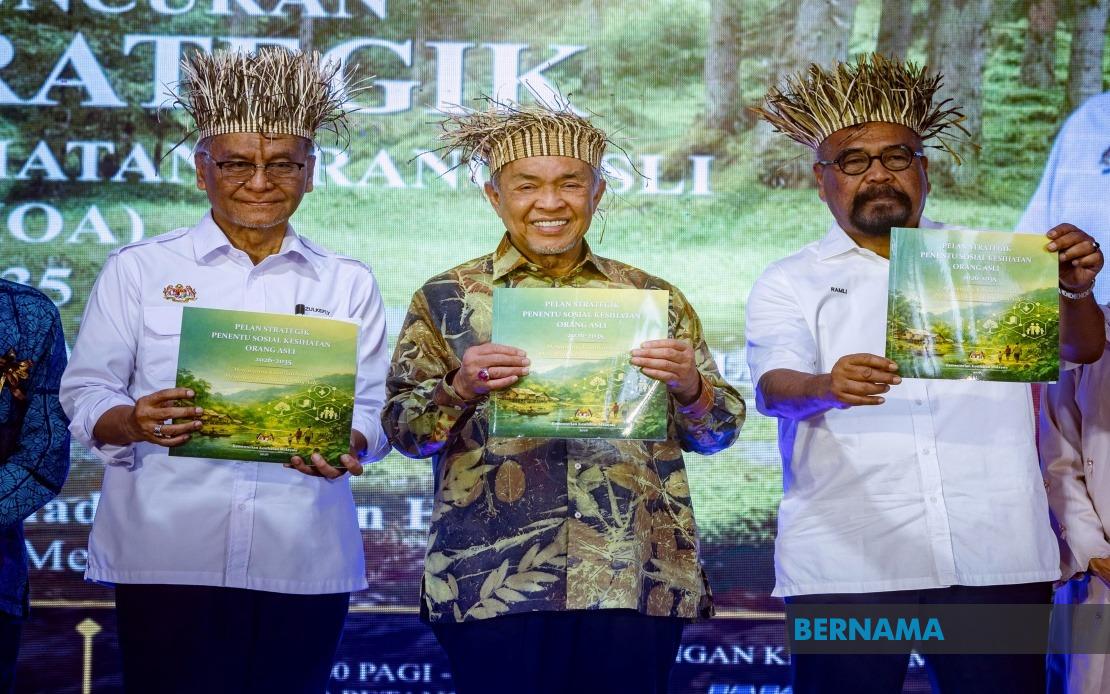
The Malaysian government has committed to a sweeping healthcare expansion targeting the country's indigenous communities, with Deputy Prime Minister Datuk Seri Dr Ahmad Zahid Hamidi unveiling plans to ensure every Orang Asli settlement has access to functional health clinics within the next decade. Speaking at the launch of the 2026-2035 National Social Determinants of Health Strategic Plan for Orang Asli in Gerik, Zahid emphasised that the initiative addresses a critical gap in healthcare accessibility for an often-marginalised population that remains underserved despite their citizenship rights.
The scope of this undertaking reflects the geographical and infrastructural challenges inherent in reaching scattered indigenous communities across Malaysia's diverse terrain. Zahid acknowledged that while some areas already possess basic clinical facilities, the overarching goal requires substantial investment and careful coordination. The plan envisions either upgrading existing clinics or establishing new ones from scratch, depending on current local circumstances, to create a baseline standard of healthcare provision that applies uniformly across all Orang Asli settlements.
Implementing this vision will demand unprecedented interagency collaboration and fiscal commitment. Zahid, who simultaneously holds the Rural and Regional Development portfolio and chairs the National Health Cabinet Committee, positioned the Health Ministry and the Department of Orang Asli Development (JAKOA) as the primary drivers of execution. However, the financial burden presents a genuine constraint, acknowledged frankly by Zahid despite his expressed confidence that budgetary hurdles can be overcome through ministerial cooperation and support from the Finance Ministry. The cost differential reflects not merely the number of clinics required but the inherent expense of delivering healthcare in remote or difficult-to-access areas where infrastructure remains underdeveloped.
Beyond physical infrastructure, the strategic plan embodies a preventative health philosophy tailored specifically to Orang Asli circumstances. Rather than focusing narrowly on treatment after disease emergence, the 2026-2035 framework prioritises disease prevention through nutrition education, health awareness campaigns, and lifestyle interventions embedded within the daily realities of indigenous communities. This approach acknowledges that Orang Asli health disparities stem partly from broader socioeconomic and environmental factors rather than clinic proximity alone, requiring holistic intervention across multiple domains.
A crucial component of the initiative involves equipping district hospitals with specialist medical practitioners capable of managing chronic diseases prevalent within Orang Asli populations. Zahid stressed that having general practitioners operate in isolation proves inadequate when confronting complex health conditions requiring specialised intervention. By positioning specialists in hospital facilities located near significant Orang Asli concentrations, the government aims to ensure that individuals requiring advanced medical care need not undertake prohibitively difficult journeys to urban centres.
The timing of this announcement carries particular significance given ongoing legislative efforts to modernise indigenous rights protections. Zahid indicated that amendments to the Aboriginal Peoples Act 1954 will likely be tabled in Parliament before year's end, representing the first comprehensive revision of legislation that has governed Orang Asli affairs for over seven decades. He characterised the 1954 Act as fundamentally dated, requiring substantial updating to address contemporary realities and protect indigenous interests more effectively.
Land rights constitute a central element of these anticipated legislative amendments, though their implementation presents constitutional complexity. Since land administration falls within state government jurisdiction, proposed changes affecting Orang Asli land tenure must navigate approval processes involving both the Cabinet and the Conference of Rulers. This multi-layered approval mechanism, while essential for constitutional propriety, potentially extends timelines for reform, illustrating the intricate political architecture surrounding indigenous policy in Malaysia's federal system.
The healthcare expansion initiative carries implications extending beyond immediate clinical service delivery. For Malaysian policymakers, establishing functional health infrastructure in remote Orang Asli communities demonstrates commitment to substantive equity rather than nominal inclusion of marginalised groups in national development. For regional observers, Malaysia's approach to indigenous healthcare offers a model—albeit still evolving—for addressing healthcare access in countries with dispersed indigenous populations across challenging terrain.
The Health Minister Datuk Seri Dr Dzulkefly Ahmad's presence at the announcement underscored ministerial alignment behind this agenda, suggesting sustained high-level political backing essential for translating ambitions into implemented reality. Successful execution will require not merely construction of physical facilities but establishment of sustainable operational systems, recruitment and retention of qualified healthcare personnel willing to work in remote settings, and cultivation of community engagement ensuring that new clinics effectively serve local health needs.
The 2026-2035 strategic plan represents an important inflection point in how Malaysia approaches indigenous health policy. Rather than treating healthcare provision as a charitable obligation, the framework positions it as part of broader social determinants work, recognising that lasting health improvements require tackling interconnected factors spanning nutrition, sanitation, education, and economic opportunity. Whether resources ultimately match ambitions will determine whether this initiative becomes a transformative effort elevating indigenous health outcomes or remains a well-intentioned declaration unfulfilled by budgetary reality.

