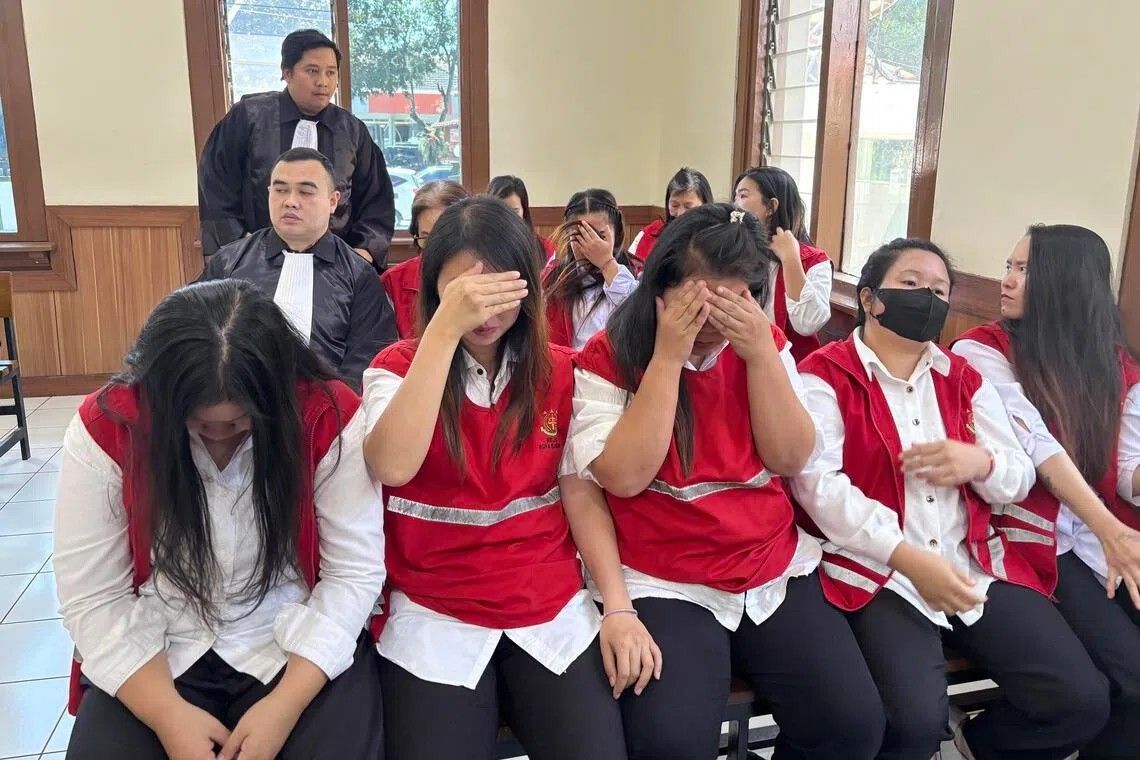
An Indonesian court has completed its prosecution of a major human-trafficking syndicate by sentencing all 19 defendants in a case involving the illegal sale of dozens of babies, several of whom were smuggled into Singapore. The Bandung District Court in West Java handed down verdicts on July 21 after a trial that began in April, marking a significant conclusion to what authorities described as a coordinated scheme spanning multiple countries across Southeast Asia. The convictions underscore growing concerns about transnational baby-trafficking networks that exploit vulnerable families and circumvent international adoption safeguards.
Lie Siu Luan, a 70-year-old identified by the aliases Popo and Lily, emerged as the mastermind orchestrating the entire operation. Judge Gatot Ardian Agustriono, presiding over a three-judge panel, found Lie legally culpable of recruiting infants, harbouring them, arranging their transfer across borders, and receiving payment for their placement abroad. The judge's verdict explicitly stated that Lie had committed the criminal act of recruiting and transferring persons for the purpose of exploitation within Indonesian territory. Lie received a prison sentence of seven years, a penalty that fell short of the prosecution's request for ten years, reflecting the court's assessment of mitigating factors or evidentiary considerations that warranted a slightly reduced term.
The syndicate's operations were disturbingly systematic. Prosecutors established that between 2023 and 2025, the network trafficked at least 34 infants, with documented evidence showing that at least 12 were dispatched to Singapore. The financial incentive driving the scheme was substantial: each baby commanded a price between 200 to 250 million rupiah, equivalent to approximately S$18,110 in Singapore currency. This pricing mechanism underscores how the trafficking ring functioned as a commercial enterprise, with individual infants treated as commodities rather than vulnerable children deserving protection. The relatively high prices per child suggest that customers, whether individuals or intermediaries, were willing to pay significant sums to obtain babies through illicit channels rather than through legitimate adoption processes.
The ring's structure revealed a division of labour typical of organized criminal networks. Astri Fitrinika, identified as the chief recruiter, played a pivotal role in identifying and acquiring infants from their biological families. She received a sentence of six years and seven months imprisonment, matching the penalty given to fellow recruiters Djaka Hamdani and Elin Marlina. These individuals bore particular responsibility for the initial stages of exploitation, identifying vulnerable mothers and persuading them to relinquish their children under circumstances that authorities determined constituted trafficking rather than voluntary adoption. The consistency of their sentences reflects the judicial panel's view that recruitment roles warranted equivalent punishment despite potential variations in their individual conduct.
Document falsification emerged as a critical enabling mechanism for the operation. Lai Su Hua faced charges of forging state documents related to adoption requirements, crimes essential to the syndicate's ability to move babies across borders and establish false legal cover for the transactions. The six-year-seven-month sentence imposed upon Lai demonstrated the court's recognition that without fraudulent paperwork creating the veneer of legitimate adoption, the trafficking network could not have functioned. This dimension of the case illuminates how international baby-trafficking typically requires complicity from individuals capable of producing or manipulating official documents that facilitate border crossings and obscure the illicit origins of child transfers.
The remaining 14 defendants, who allegedly served as caregivers for the infants during their time within the network's custody, received more lenient sentences of three years and four months imprisonment. While these individuals occupied lower positions in the organizational hierarchy, their conviction nonetheless established that everyone within the supply chain, regardless of rank, bore criminal liability for their participation in trafficking. The differential sentencing across the ring's hierarchy reflects standard principles of proportionality in criminal law, where those orchestrating and recruiting face harsher penalties than those in subordinate roles, though all remain culpable.
Despite the comprehensive guilty verdicts, both Lie and Astri maintained throughout the investigation and trial that the infants had not been forcibly removed from their families. Instead, they contended that biological parents had voluntarily surrendered the children and that all babies received proper care without abuse or neglect. This defence narrative, though rejected by the court, touches upon a legal distinction that complicates anti-trafficking efforts: the boundary between coercive trafficking and impoverished families making desperate decisions about child relinquishment. Indonesian prosecutors and judges evidently concluded that circumstances surrounding the transfers—including the financial inducements offered to parents, the falsified documents, and the organized nature of recruitment—constituted trafficking regardless of whether explicit force was employed at every stage.
The syndicate's reach into Singapore carries particular significance for the city-state, which maintains some of the world's most rigorous adoption standards and child protection frameworks. The fact that at least 12 trafficked infants were placed in Singapore reveals gaps in verification systems despite Singapore's reputation for strict regulatory oversight. The case implicates not only Indonesian criminal networks but also potential middlemen, intermediaries, or receiving parties within Singapore who may have facilitated or benefited from the arrangement. Subsequent investigations in Singapore would likely focus on identifying recipients and determining whether additional prosecutions are warranted among those who purchased or facilitated placement of trafficked infants.
This case exemplifies the transnational nature of modern human trafficking, which increasingly extends beyond traditional labour exploitation to encompass child commodification and illegal adoption markets. The sentencing of all 19 defendants sends a deterrent message within Indonesia and across Southeast Asia, signalling that authorities are willing to pursue comprehensive prosecutions against entire criminal networks rather than targeting only high-level figures. However, the relative lightness of some sentences and the successful operation of the ring for approximately two years before detection raise questions about monitoring capacity and whether Indonesia's legal and law-enforcement frameworks are adequately resourced to prevent similar schemes.
For Malaysia and other Southeast Asian nations, this case serves as a cautionary indicator of vulnerabilities within regional child protection systems. Traffickers exploit poverty, limited regulatory oversight in rural areas, and cross-border coordination difficulties to operate sophisticated smuggling operations. The case demonstrates that even developed urban centres and countries with strong adoption frameworks remain exposed to trafficking risks when international coordination and document verification systems contain exploitable loopholes. Malaysian authorities, drawing lessons from the Indonesian prosecution, must strengthen inter-agency coordination, enhance border monitoring of undocumented infant movements, and reinforce training for adoption-related officials to identify fraudulent documents and suspicious transactions.
The broader implications extend to questions of why families relinquish infants to trafficking networks in the first place. Poverty, lack of access to family planning services, inadequate social safety nets for single mothers, and limited legitimate adoption pathways all contribute to creating supply-side vulnerabilities that traffickers exploit. Addressing baby trafficking thus requires not only criminal prosecution of offenders but also social interventions addressing the conditions that make families vulnerable to exploitation. Without simultaneous efforts to reduce demand from childless couples seeking to circumvent formal adoption processes and to strengthen support systems for struggling families, similar syndicates will likely continue emerging despite convictions of their predecessors.

