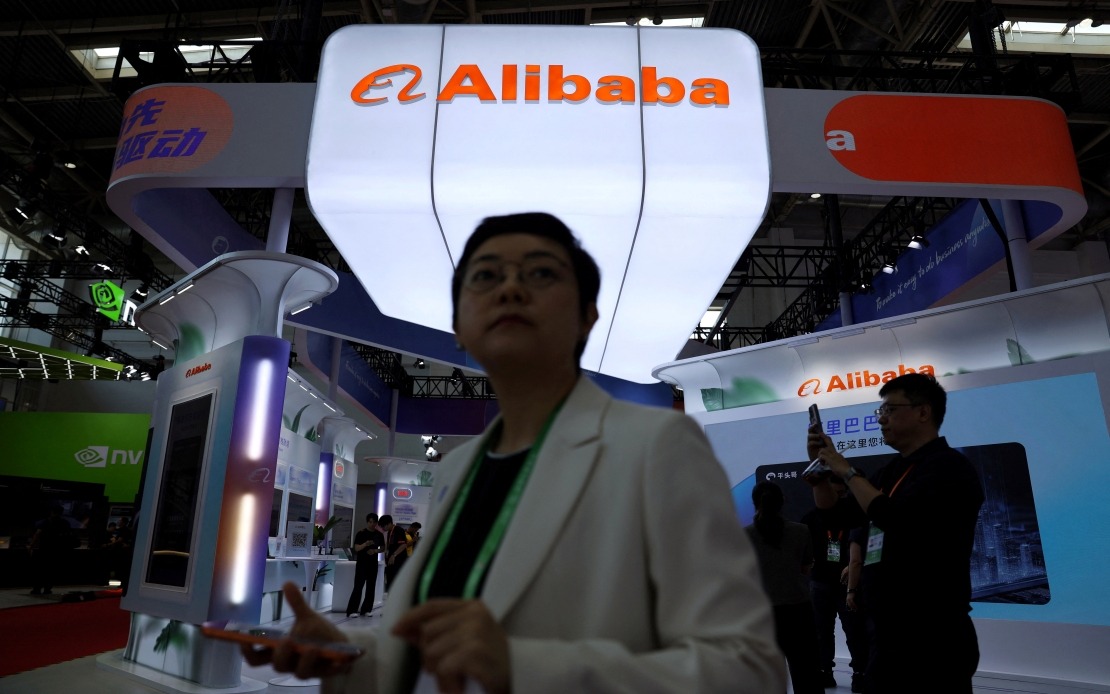
Chinese technology conglomerate Alibaba has initiated legal action against the United States Department of Defense, challenging its recent classification as an entity connected to China's military-industrial establishment. The court filing, disclosed on Tuesday, represents a significant escalation in tensions between American regulators and one of Asia's most influential technology companies, underscoring the deepening friction between Washington and Beijing over national security concerns in the technology sector.
Alibaba's legal team contends that the Pentagon's determination is fundamentally flawed, arguing in the filing that "the determinations have no basis in fact or law." The company emphasises that its governance structure remains independent from military influence, with board members having no affiliation to defence organisations or state military institutions. This assertion forms the cornerstone of Alibaba's defence against what the company characterises as an unjustified regulatory action.
Central to Alibaba's argument is its assertion that business operations focus exclusively on civilian applications spanning retail commerce, logistics infrastructure, and enterprise-level information technology services. The company maintains that this exclusively commercial focus distinguishes it fundamentally from entities with genuine military connections or defence industry involvement. Furthermore, Alibaba highlights internal policies that explicitly prevent deployment of its technology platforms for military purposes, positioning compliance mechanisms as evidence of its non-military orientation.
The company's legal documents further underscore that it maintains no military certifications, licences, or authorisations from defence authorities. This claim attempts to establish a clear operational boundary between its activities and any defence sector engagement, suggesting that formal governmental recognition of military capability simply does not exist for the organisation. The argument represents Alibaba's effort to demonstrate institutional separation from China's defence apparatus.
The Pentagon's decision to designate Alibaba as military-connected emerged in early June, when American defence officials announced an expanded list encompassing 188 Chinese companies deemed to possess links to the country's military-industrial complex. This comprehensive designation swept in major technology enterprises including Tencent, another Chinese tech powerhouse, as well as BYD, the world's leading electric vehicle manufacturer. The breadth of the listing reflects Washington's heightened scrutiny of Chinese technological advancement and potential dual-use applications that could benefit military modernisation.
For Malaysian and Southeast Asian business observers, the Alibaba lawsuit illuminates critical complexities surrounding technology investment and supply chain integration across the region. Many Malaysian enterprises maintain substantial commercial relationships with Chinese technology platforms, particularly in e-commerce and cloud services. This legal challenge raises important questions about regulatory risk for Southeast Asian companies that depend upon relationships with entities subject to American sanctions or restrictions.
The designation carries tangible consequences for companies on the Pentagon's list, potentially affecting their ability to conduct transactions with American firms, access cutting-edge semiconductor technology, or participate in global supply chains dependent on US components. These restrictions create significant business headwinds for affected entities and may force recalibration of international partnerships. Malaysian companies with Alibaba exposure should monitor this litigation closely, as regulatory changes could reshape technology sourcing decisions across the region.
The lawsuit also reflects broader geopolitical fragmentation in digital infrastructure and technology governance. As the United States pursues increasingly restrictive approaches toward Chinese technology companies, alternative technology ecosystems emerge, creating a bifurcated global landscape. Southeast Asian nations face complex navigation of this polarisation, requiring careful calibration between economic relationships with China and technological dependencies on American systems and standards.
Alibaba's legal challenge is unlikely to succeed quickly, given the Pentagon's substantial regulatory authority and existing judicial deference to national security determinations. However, the filing signals the company's determination to contest what it views as economically damaging and legally unsupported classifications. The outcome could influence how American authorities categorise other major technology companies and how Chinese firms respond to regulatory pressures.
The broader context involves fundamental disagreements about technology governance between competing world powers. China contests American claims that its companies operate under government direction, while Washington maintains that state control over Chinese enterprises makes independent commercial operations implausible. This philosophical gulf underpins much of contemporary technology policy divergence. For Southeast Asian stakeholders navigating between these systems, understanding these tensions proves essential for informed decision-making regarding technology partnerships and supply chain resilience strategies.

