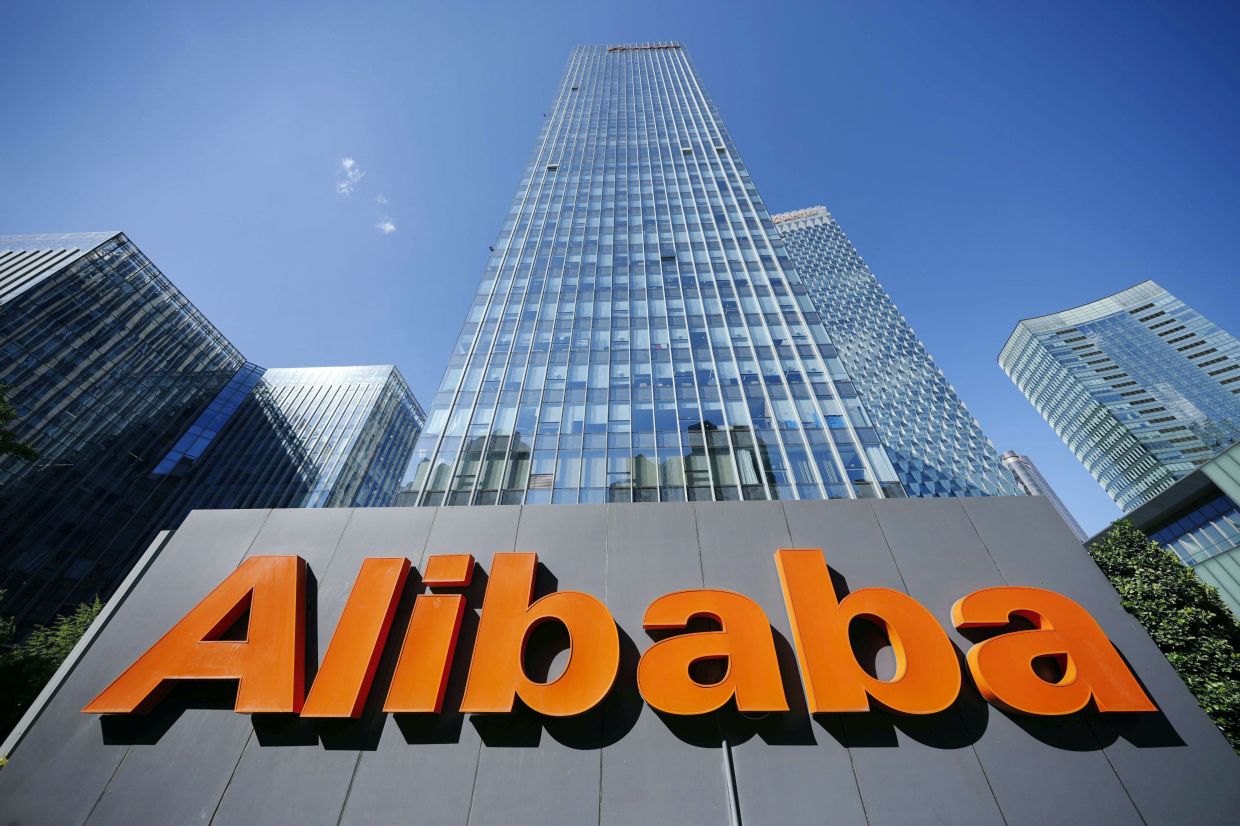
Alibaba Group Holding, the Hangzhou-based e-commerce and technology conglomerate, has escalated its dispute with Washington by launching a legal challenge against the US Department of Defence over its inclusion on a list of companies identified as supporting China's military apparatus. The suit, filed Tuesday in federal district court in San Jose, California, represents a direct confrontation between one of China's most prominent technology firms and the Pentagon's increasingly assertive stance on what it perceives as national security threats emanating from Beijing's tech sector.
The Pentagon added Alibaba to its blacklist on June 9 alongside electric vehicle manufacturers BYD and Nio, search giant Baidu, robotics company Unitree Robotics, networking equipment maker TP-Link, and numerous other Chinese firms operating in artificial intelligence, biotechnology, and renewable energy. The designation was made under Section 1260H of the National Defence Authorisation Act, legislation that grants the Pentagon authority to identify Chinese entities it considers engaged in military or defence-related activities. While the listing does not automatically impose sanctions, it creates significant barriers for these companies seeking access to American capital markets and federal government contracts—consequences that threaten their global operations and investor relationships.
Alibaba's legal strategy centres on asserting that the Pentagon's decision lacks constitutional foundation and violates fundamental American legal principles. The company argues that the designation breaches due process protections and infringes upon corporate free speech rights. In its complaint, Alibaba specifically challenges the Pentagon's findings that linked it to China's State-owned Assets Supervision and Administration Commission, asserting categorically that no such relationship exists. The company further contests the Pentagon's suggestion that Alibaba participates in China's "military-civil fusion" strategy through alleged connections to the Ministry of Industry and Information Technology.
Alibaba characterised its interactions with Chinese government agencies as routine regulatory compliance rather than evidence of military collaboration—a distinction that highlights the challenge foreign companies face navigating Beijing's bureaucratic landscape. The company notes that it held meetings with Pentagon officials in January to discuss the potential designation and submitted written responses in March, yet the Defence Department proceeded with the blacklisting in June regardless. This sequence of events shapes Alibaba's legal narrative around arbitrary decision-making and the absence of meaningful procedural fairness.
The lawsuit reflects deeper structural tensions in the technological competition between the United States and China, sectors deliberately chosen for Pentagon scrutiny. Companies on the blacklist operate in domains central to both nations' strategic ambitions: artificial intelligence, semiconductors, renewable energy, and advanced manufacturing. For Malaysian and Southeast Asian technology investors and enterprises, Alibaba's legal confrontation carries significant implications. Many regional companies maintain business relationships with blacklisted Chinese firms or rely on their platforms for market access. A prolonged legal battle could create uncertainty around supply chains and partnerships stretching across the region.
Other Chinese technology giants have similarly rejected the Pentagon's designation. Baidu and BYD have issued strong public statements opposing the decision, signalling unified resistance from China's major tech and manufacturing players. The Chinese embassy in Washington has formally condemned the blacklist as reflecting an "overstretched view of national security" and criticised the United States for deploying "discriminatory lists" as policy instruments. This diplomatic pushback underscores Beijing's view that American actions constitute economic coercion masked as security measures.
Beijing has responded with its own countermeasures, intensifying the cycle of technological and economic retaliation. China's Ministry of Commerce announced restrictions on ten American companies including Aveox, Red Cat Holdings, Teal Drones, IMSAR, Ball Aerospace & Technologies, Oshkosh Defense, and L3Harris Maritime Services, adding them to export control lists in response to what Beijing characterised as "malicious actions" by Washington. Simultaneously, China's Ministry of Finance restricted 46 American firms from government procurement contracts, a measure taking immediate effect. The restricted procurement list includes major defence contractors such as Lockheed Martin, Raytheon Missiles & Defense, General Dynamics Land Systems, and Boeing Defense, Space & Security—firms that occupy central positions in the American military-industrial complex.
The escalating tit-for-tat measures reveal how technological competition between Washington and Beijing increasingly resembles economic and regulatory warfare, with consequences radiating throughout global supply chains. Southeast Asian economies, deeply integrated into both American and Chinese technology ecosystems, face mounting pressure to navigate these divisions. Companies operating in the region must now assess their exposure to blacklisted entities and consider potential constraints on their own international operations should they maintain relationships across the dividing line separating American and Chinese tech spheres.
Alibaba's lawsuit also raises fundamental questions about how government designations function as policy tools in an era of intensified great-power competition. The Pentagon's Section 1260H process operates without the transparency typically associated with American legal proceedings, and companies facing designation have limited opportunity to contest determinations before they take effect. This regulatory environment contrasts sharply with the due process frameworks Alibaba invokes in its complaint, creating tension between national security imperatives and established legal protections.
The outcome of Alibaba's case could establish important precedent for how American courts evaluate Pentagon designations of foreign companies. Should the court rule in Alibaba's favour, it would constrain the Pentagon's authority to blacklist Chinese firms without rigorous procedural justification and detailed factual substantiation. Conversely, if the Pentagon prevails, it signals that national security determinations receive substantial judicial deference, strengthening Washington's ability to leverage its control over capital markets and technology ecosystems as geopolitical leverage.
For Malaysian policymakers and business leaders, Alibaba's confrontation with the Pentagon underscores the deepening technological bifurcation between American and Chinese spheres. Regional companies and investors must develop strategies acknowledging this reality—diversifying partnerships, understanding regulatory exposure, and preparing for scenarios where maintaining relationships across both ecosystems becomes increasingly difficult. The case also demonstrates how trade disputes and technological competition increasingly flow through legal channels, with courts becoming battlegrounds for broader geopolitical contests.
Alibaba's ownership of the South China Morning Post adds another dimension to this dispute, connecting corporate litigation to media narratives and information flows. As the company fights its Pentagon designation through American courts, it simultaneously controls a prominent English-language publication covering Hong Kong and Asia-Pacific affairs, creating potential questions about how it reports on its own legal battles and the broader US-China technological divide affecting regional readers and investors.

