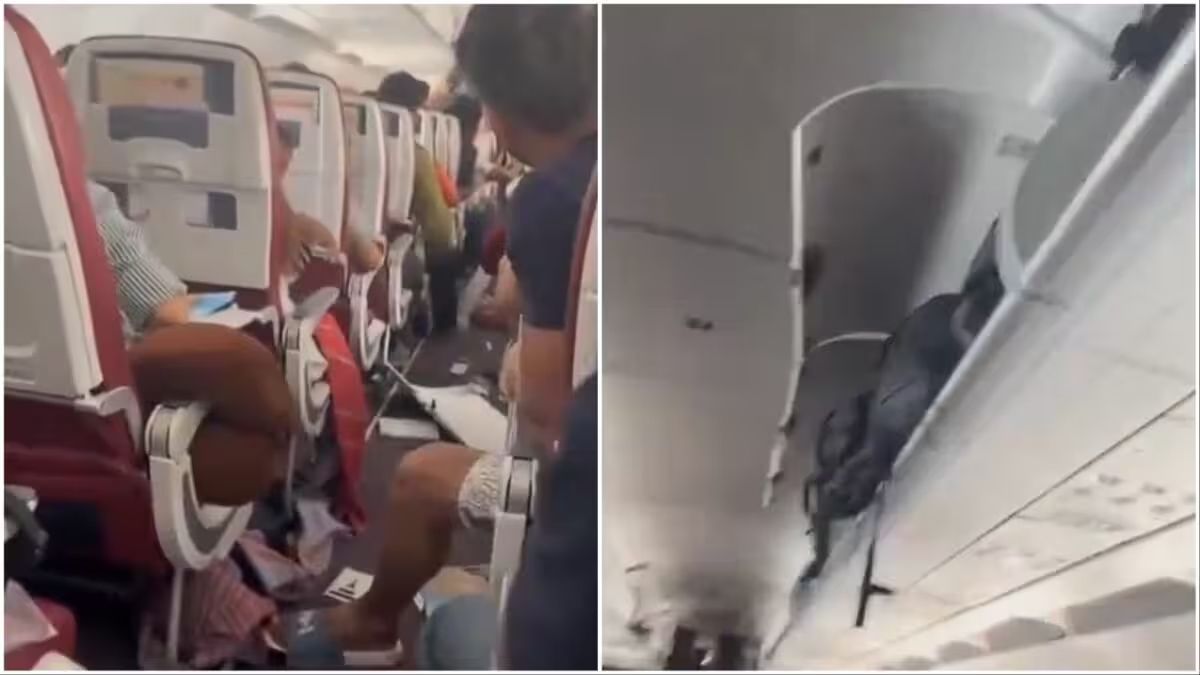
Airbus is mobilising a team of technical experts to New Delhi this week to support the official investigation into an Air India flight that experienced a sudden and severe loss of altitude, injuring 17 passengers and crew members in a frightening incident above the skies between Thailand and India. The aircraft manufacturer confirmed on Monday that specialists would be dispatched to assist Indian aviation authorities as they work to establish the precise cause of the mid-air emergency.
The Air India A320 incident occurred on August 4 when the jet, carrying 137 passengers and eight crew members, was en route from Phuket to New Delhi. During the flight, the aircraft dropped approximately 300 feet before the pilots regained control and successfully landed the plane at its destination. Eight passengers and four cabin crew members required hospitalisation following the landing in the Indian capital, making this one of the more serious safety incidents involving the carrier in recent years.
Indian aviation authorities have formally classified the occurrence as a Serious Incident, placing it under the jurisdiction of the Aircraft Accident Investigation Bureau, or AAIB. This classification reflects the severity of the event and the potential safety implications for commercial aviation in the region. The decision to launch a full investigation signals the seriousness with which Indian regulators are treating the matter, particularly given growing concerns about aviation safety standards and maintenance protocols across South Asian carriers.
Airbus has committed to providing comprehensive technical assistance to the investigating authorities, though the company has not yet offered detailed explanations about what may have caused the dramatic descent. The aircraft manufacturer's involvement in the probe is standard procedure for such incidents, as Airbus possesses intimate knowledge of the A320's systems, avionics, and potential failure modes. Indian media outlets have reported that the aircraft experienced several technical irregularities immediately preceding the loss of altitude, though neither Air India, the Indian government, nor Airbus have publicly confirmed the nature of these reported malfunctions.
A significant aspect of the investigation centres on the actions and condition of the flight crew at the time of the incident. Indian aviation authorities administered standard psychoactive substance screening tests to both pilots immediately after the aircraft landed safely. The screening test conducted on the pilot-in-command produced results that warranted confirmatory testing, with samples subsequently sent for detailed laboratory analysis. The final results of this confirmatory testing have not yet been publicly released, creating a period of uncertainty around one potentially critical factor in the investigation.
Both pilots have been suspended from flying duties pending the completion of the investigation, a precautionary measure that is typical when crew conduct or capability is under scrutiny. This action underscores the investigative focus on human factors alongside technical and mechanical considerations. The removal of the pilots from the roster does not necessarily imply wrongdoing but reflects standard investigative protocol when incidents of this magnitude occur and when substance testing produces ambiguous preliminary results.
This incident arrives during an especially turbulent period for Air India, which has faced mounting operational and reputational challenges in recent months. The airline has grappled with significant disruptions stemming from geopolitical tensions in the Middle East, which have affected route planning, fuel costs, and operational efficiency across the industry. Beyond these external pressures, Air India confronts deeper structural challenges that have complicated its operational performance and customer confidence.
The airline suffered a catastrophic blow to its reputation and safety record in June 2025 when Air India Flight 171, operating a Boeing 787 Dreamliner service from Ahmedabad to London, crashed shortly after takeoff. The disaster claimed 241 of the 242 people aboard the aircraft, as well as 19 people on the ground, making it one of the deadliest aviation accidents in recent memory. The scale of this tragedy raised urgent questions about the airline's maintenance standards, crew training protocols, and safety culture, prompting intensive scrutiny from regulators and the international aviation community.
In an apparent effort to stabilise operations and rebuild confidence following the June crash, Air India appointed former Ethiopian Airlines chief executive Tewolde Gebremariam to lead the carrier last week. Gebremariam brings extensive experience from one of Africa's most respected and operationally successful airlines, and his appointment signals Air India's commitment to comprehensive operational reform. His mandate will likely include rigorous reviews of maintenance practices, training standards, crew rest policies, and safety management systems across the entire organisation.
For Malaysian and Southeast Asian aviation observers, these incidents highlight the critical importance of robust regulatory oversight and consistent adherence to international safety standards across regional carriers. The incidents underscore how quickly reputational damage can accumulate in the aviation sector and how closely the travelling public monitors safety records. Airlines operating in Southeast Asia, including those based in Malaysia, operate within a highly competitive environment where safety performance directly influences market competitiveness and passenger confidence.
The investigation into the August 4 incident will likely yield important findings about aircraft maintenance practices, crew training effectiveness, and adherence to standard operating procedures within Air India's operations. These findings could have broader implications for regional aviation standards and may influence how other Southeast Asian carriers approach safety audits and maintenance protocols. The involvement of Airbus in the investigation process will also provide valuable technical insights that may benefit the wider aviation community operating A320 aircraft across the region.
As the investigation progresses and results become available, attention will focus on whether systemic issues within Air India's operations contributed to the incident or whether isolated technical or human factors were responsible. The appointment of Gebremariam and the current investigation together represent critical junctures for an airline attempting to recover from serious safety concerns while operating within an increasingly demanding regulatory and competitive environment. The outcomes of this investigation will substantially influence not only Air India's future trajectory but also broader perceptions of aviation safety standards across South and Southeast Asia.

