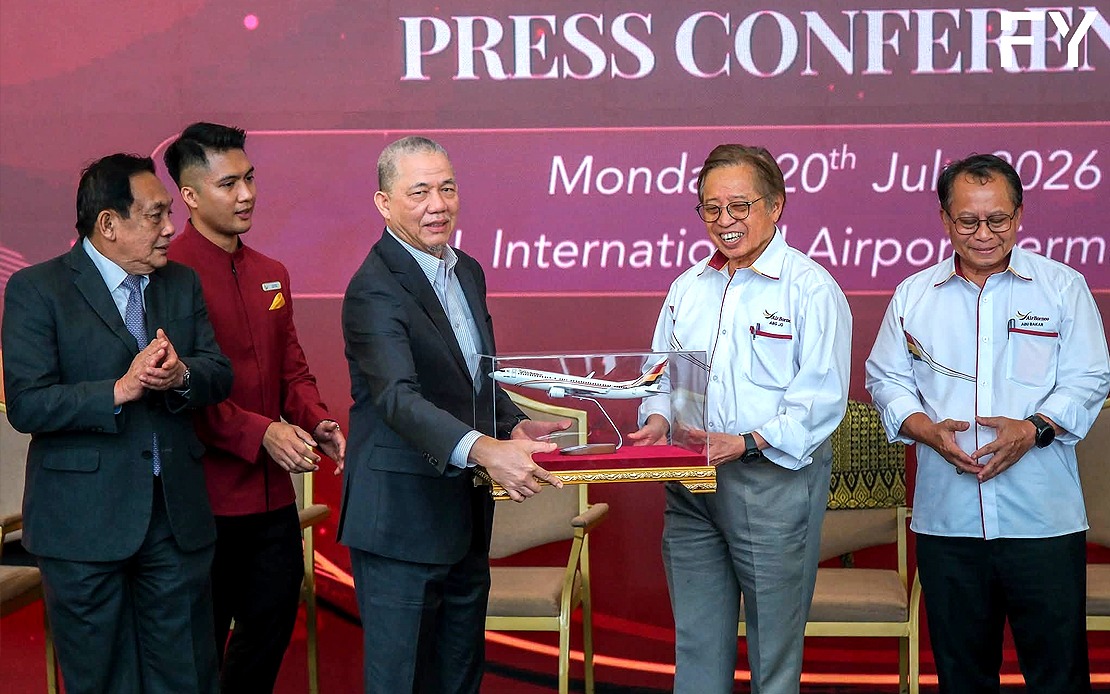
The inaugural flight of AirBorneo Airways touched down at Kuala Lumpur International Airport Terminal 1 on July 20, marking a milestone for Sarawak's ambitious venture into commercial aviation. The service, operating the Kuching-KLIA route, represents the state government's direct intervention in addressing a persistent grievance among Sarawakians: the prohibitive cost of air travel that has constrained economic mobility and tourism development across the peninsula's largest state.
Deputy Prime Minister Datuk Seri Fadillah Yusof used the occasion to underscore the strategic importance of the new carrier, framing it not merely as a business venture but as a fundamental instrument for reshaping Sarawak's economic trajectory. His statement emphasised a commitment to delivering air services that balance affordability with operational transparency and passenger comfort, while maintaining the safety and quality standards expected of modern carriers. This positioning reflects growing regional pressure on governments to ensure that essential transport infrastructure remains accessible to citizens regardless of income level.
The timing of AirBorneo's launch carries symbolic weight in Sarawak's political calendar. Occurring just two days before the state's July 22 founding day celebrations, the airline's debut functions as a tangible demonstration of state capacity and self-determination. Sarawak Premier Tan Sri Abang Johari Tun Openg has characterised the venture as strategic infrastructure critical to the state's long-term prosperity, signalling that both the federal and state governments view aviation connectivity as integral to economic modernisation.
The problem AirBorneo targets is well-documented. Sarawak's geography—vast land area with dispersed population centres and limited overland transport alternatives—makes air connectivity essential for linking remote communities to major economic hubs. Historically, limited airline competition on routes serving Sarawak has resulted in fares substantially higher than comparable domestic routes elsewhere in Malaysia, effectively taxing residents and businesses whilst dampening tourism inflow. This market structure has frustrated regional economic development efforts and disadvantaged Sarawakians' cost of living calculations.
Beyond immediate fare relief, the government's vision extends to catalysing broader economic sectors. Enhanced air connectivity through competitive pricing is expected to stimulate tourism, as more travellers can justify trips to Sarawak's natural attractions and cultural sites. Similarly, improved transport links reduce friction for business investment, allowing companies to more efficiently manage operations spanning multiple locations. Regional trade and commercial activity benefit when transport costs decline, potentially repositioning Sarawak within Southeast Asian supply chains and commerce networks.
A particularly significant dimension of AirBorneo's mandate involves maintaining service to rural and remote areas where commercial viability alone would not justify airline operations. Sarawak contains substantial populations in underserved regions where air travel represents the only practical transport option to medical facilities, educational institutions, and economic opportunities in larger towns. By anchoring rural connectivity within AirBorneo's operational responsibilities, the state government prioritises social equity and regional cohesion over pure profit maximisation, a model that distinguishes state-owned carriers from purely commercial operators.
The launch flight itself carried ceremonial significance, transporting Abang Johari and Sarawak state ministers to KLIA. This passenger manifest transformed the inaugural service into a political statement, physically embodying state leadership's commitment to the enterprise and signalling confidence in the carrier to both domestic and international audiences. The presence of senior government officials also communicated that AirBorneo operates under sustained political backing and would receive necessary institutional support.
From a Malaysian perspective, AirBorneo's emergence reflects evolving approaches to regional development and federal-state cooperation. Rather than relying exclusively on incumbent carriers or private sector solutions, Sarawak has opted for direct state ownership of transport infrastructure. This strategy mirrors approaches taken by other Malaysian states seeking greater autonomy over services deemed critical to local development. The success or challenges AirBorneo encounters will likely influence similar initiatives elsewhere in Malaysia and provide lessons for Southeast Asian governments considering comparable interventions.
The affordability agenda underlying AirBorneo's establishment also addresses income inequality dimensions within Malaysia's transport system. High airfares disproportionately affect lower and middle-income Sarawakians, restricting their mobility for economic opportunities, family visits, and access to services. Competitive pricing from a state-backed carrier can compel market adjustments across the industry, benefiting all passengers regardless of which airline they patronise. This consumer welfare dimension gives AirBorneo political resonance beyond transportation efficiency, connecting it to broader development equity objectives.
Looking forward, AirBorneo's sustainability will depend on operational efficiency, route expansion strategy, and competitive positioning against established carriers. The airline must balance commercial viability with its social mandate, a tension inherent in state-owned aviation enterprises globally. Successful navigation requires disciplined cost management, strategic fleet deployment, and potentially revenue diversification through partnerships or ancillary services. Route expansion beyond the initial Kuching-KLIA service, potentially encompassing regional destinations, will test the airline's financial model and operational capacity.
The launch also positions Sarawak within emerging patterns of state-level economic autonomy in Malaysia. By establishing its own airline, Sarawak demonstrates institutional capacity to execute complex infrastructure projects independently, reinforcing its political standing in federal negotiations. This autonomy dimension extends beyond transportation to encompass broader aspirations for state control over resources and development priorities, making AirBorneo symbolically significant within Sarawak's political economy.
Fadillah's characterisation of AirBorneo as a manifestation of Sarawak's future-building capacity reflects how transportation infrastructure carries meanings beyond logistics. The airline represents state agency, economic ambition, and commitment to constituent welfare simultaneously. Whether it achieves its affordability objectives whilst maintaining financial health will largely determine whether similar state-owned aviation ventures elsewhere in Southeast Asia prove viable, making AirBorneo's trajectory a significant regional development case study.

