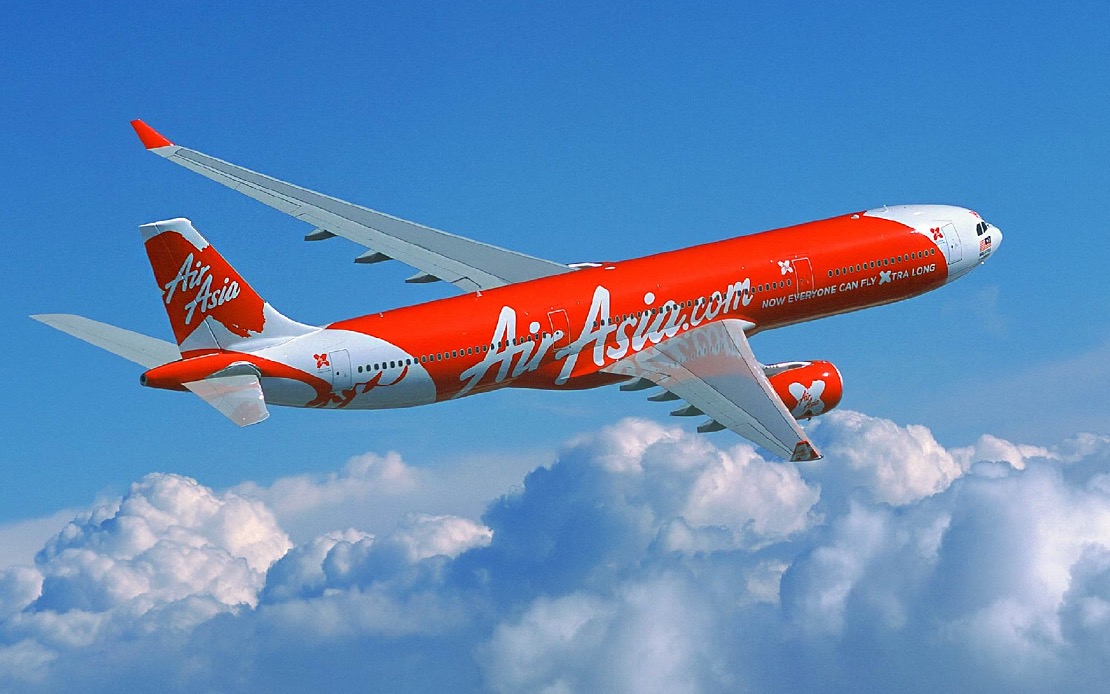
AirAsia has commenced direct air service between Jakarta and Kota Bharu, marking a milestone for Kelantan's tourism development and regional connectivity ahead of the Visit Malaysia 2026 (VM2026) campaign. The inaugural flight AK2354, operating a 180-seat Airbus A320 aircraft, touched down at Sultan Ismail Petra Airport on Tuesday afternoon with 117 passengers aboard, representing a 63 per cent load factor. The passenger manifest reflected the route's immediate international appeal, comprising visitors from Indonesia, Thailand, the Philippines and other countries, alongside returning Malaysian residents.
The new Jakarta-Kota Bharu connection addresses a significant gap in Malaysia's regional aviation network, where direct services between major Indonesian cities and East Coast destinations have been limited. Kota Bharu's geographic position as a cultural and heritage hub has long struggled with connectivity constraints that hindered visitor arrivals from neighbouring markets. By establishing this direct link to Indonesia's capital—the region's largest origin market for Malaysian tourism—AirAsia is removing a critical barrier that previously forced prospective visitors through Kuala Lumpur, adding travel time and expense. Tourism Malaysia describes the development as a strategic pillar of the VM2026 agenda, which aims to position Malaysia as a premier regional tourism destination through enhanced accessibility and market penetration.
Kelantan's tourism appeal centers on its distinctive cultural credentials and natural attractions that currently remain underexploited among regional audiences. Iconic sites such as Pasar Siti Khadijah, the historic Kampung Laut Mosque, traditional craft villages at Kampung Kraftangan, and the geological formations at Stong Geopark represent authentic Malaysian experiences that resonate particularly with Indonesian and Thai visitors seeking cultural immersion beyond mass-market resort tourism. The direct route immediately democratises access to these attractions for middle-class Indonesian travellers, a demographic segment showing robust growth and increasing propensity for regional leisure travel. Kelantan's tourism director emphasises that the connection positions Kota Bharu as a critical entry point not merely for local attractions but as a gateway facilitating onward travel to southern Thailand and the East Coast's resort islands, potentially catalysing broader regional tourism circuits.
Indonesia represents Malaysia's largest tourism source market within Southeast Asia, and this service deepens penetration in a critical demographic. According to Tourism Malaysia statistics current as of April 2026, Malaysia and Indonesia already sustain 634 weekly flights with combined weekly capacity exceeding 114,806 seats, yet most traffic concentrates on established trunk routes via Kuala Lumpur International Airport. The Jakarta-Kota Bharu addition represents deliberate strategy to distribute tourist flows beyond the capital, supporting secondary cities and addressing regional development imperatives. This dispersal model aligns with broader Malaysian policy objectives to strengthen tourism's contribution to local economies beyond the Klang Valley, distributing foreign exchange earnings and employment opportunities across provincial communities historically dependent on manufacturing and agriculture.
Beyond conventional leisure tourism, the route carries implications for Malaysia's emerging health tourism sector, which targets affluent Southeast Asian patients seeking specialist medical treatment. Indonesian medical tourism demand—driven by high-income urban professionals seeking advanced procedures at competitive costs—has traditionally flowed through established Malaysian medical hubs. Direct Kota Bharu connectivity opens possibilities for health tourism diversification, potentially channelling patients toward regional medical facilities and private hospitals developing specialist capabilities. This dimension adds economic substance beyond hotel and restaurant spending, anchoring longer stays and higher per-visit expenditure, particularly among accompanied family members who generate secondary consumption.
AirAsia's commitment to underserved markets reflects the airline's broader business model predicated on unlocking latent demand at secondary airports where competitor presence remains limited. Captain Fareh Mazputra's statement regarding connection of underserved destinations with regional hubs articulates a philosophy that prioritises network density and market development over yield maximisation at congested primary airports. For Kelantan, this approach translates competitive advantage, as AirAsia's cost structure and operational efficiency enable sustainable service on routes where legacy carriers would demand higher fares or larger markets. The 63 per cent opening load factor, whilst respectable for inaugural service, suggests demand calibration; sustained growth depends on marketing amplification and product reliability during initial months when route awareness remains constrained.
The timing of this launch within the Visit Malaysia 2026 framework amplifies its significance. The VM2026 campaign represents Malaysia's most comprehensive tourism promotion since Visit Malaysia 2020, incorporating coordinated marketing across government agencies, private operators, and international partners. AirAsia's service activation provides tangible capacity enhancement supporting campaign objectives, converting promotional messaging into actionable visitor pathways. Tourism Malaysia's director-general characterises the route as advancing Malaysia's regional connectivity agenda, positioning the nation as an accessible destination for middle-class Southeast Asian travellers seeking cultural experiences and natural attractions beyond Thailand's saturated coastal markets.
People-to-people connectivity, emphasised by Tourism Malaysia leadership, extends beyond commercial transactions into cultural and diplomatic dimensions. Indonesian-Malaysian travel strengthens social bonds within the broader ASEAN community, facilitating mutual understanding and reinforcing regional stability through private-sector tourism. This soft power dimension, whilst less tangible than visitor receipts or employment creation, carries strategic weight in Malaysia's regional positioning. Increased visitor familiarity with Malaysian culture, institutions, and standards strengthens informal advocacy networks that support broader bilateral relationships.
The service's sustainability, however, hinges on several factors beyond initial enthusiasm. Demand must grow beyond the 63 per cent load factor to support profitable operations; this requires sustained marketing investment in Jakarta's competitive travel market and product differentiation highlighting Kelantan's unique positioning versus competing Thailand and Malaysia domestic destinations. Aircraft utilisation efficiency depends on return-leg demand equilibrium; imbalanced flows favour Jakarta-Kota Bharu directional travel but create operational constraints if Kota Bharu originating traffic trails. AirAsia's ability to integrate this route within broader network connections—potentially linking Kota Bharu to other Southeast Asian hubs—will determine long-term viability.
For Kelantan specifically, the aviation connection represents necessary but insufficient condition for tourism acceleration. Supporting infrastructure including accommodation capacity, dining establishments, trained hospitality workforce, and English-language signage requires coordinated investment from state tourism authorities and private investors. Historical patterns suggest East Coast destinations have struggled converting accessibility improvements into sustained visitor growth when supporting infrastructure lags demand. Successful monetisation of the Jakarta-Kota Bharu connection therefore demands complementary development across Kelantan's tourism ecosystem, positioning the state to capture demand rather than merely transit passengers onward to established resort destinations.
Looking forward, this service establishes a template for future connectivity development across Malaysia's secondary cities. Kota Bharu's success—or underperformance—will influence AirAsia and competitor decisions regarding similar developments connecting other East Coast or Sabah-Sarawak destinations to major regional markets. A thriving Jakarta-Kota Bharu service could stimulate comparable services from Kuching to Indonesia or Kota Kinabalu to Bangkok, progressively shifting Malaysia's tourism geography from Kuala Lumpur concentration toward distributed development. This structural shift aligns with long-standing policy objectives but has proved elusive due to demand and infrastructure constraints that direct aviation connections, whilst necessary, cannot unilaterally resolve.

