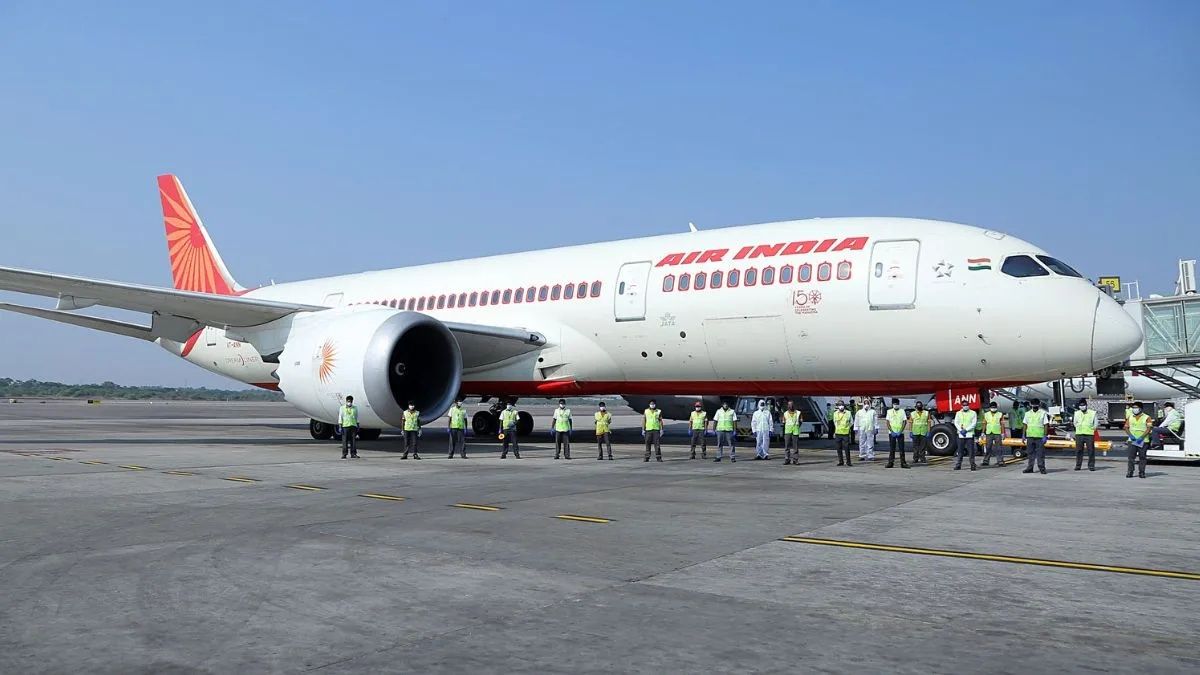
An Air India passenger jet strayed briefly into Pakistani airspace on the evening of June 22 after suffering a technical malfunction in its navigation systems, authorities have confirmed. The incident involving Air India flight AI-463, operated by an Airbus A321 aircraft, was resolved without incident, though the flight ultimately arrived in Amritsar more than three and a half hours late following a diversion back to the national capital for technical checks.
The aircraft had departed from Delhi's Indira Gandhi International Airport at 9.18pm on Monday evening, bound for Amritsar in Punjab. Within minutes of takeoff, the crew detected irregularities in the onboard navigation system. This technical failure caused the aircraft's flight path to deviate westward from its intended route, carrying it across the International Border and into Pakistani airspace—a sensitive area where accidental incursions can trigger diplomatic tensions and security responses.
The breach was identified almost immediately by Pakistani air traffic control authorities monitoring their airspace. Rather than treating the deviation as a security concern, Pakistani ATC personnel took the professional step of alerting the Air India flight crew to their position and the airspace violation. Upon receiving this notification, the pilots quickly corrected their course and guided the aircraft back across the border into Indian territory. The swift coordination between Pakistani and Indian air traffic authorities prevented what could have become a more serious incident, underscoring the importance of professional communication channels between neighbouring countries despite broader geopolitical tensions.
However, the operational complications surrounding this flight were far from resolved once the aircraft re-entered Indian airspace. As the Airbus approached Sri Guru Ram Dass Jee International Airport in Amritsar around 10.30pm, the airport's airspace was congested with heavy traffic. Ground controllers determined that no immediate landing slot was available, and faced with the dual constraints of traffic congestion and the need for technical inspections following the navigation failure, they instructed the flight to divert back to Delhi.
The return journey to the capital added further complexity to an already disrupted flight. Upon landing at Delhi, the aircraft underwent the necessary technical inspections and diagnostic checks to establish what had caused the navigation system malfunction and to verify that the aircraft was safe to return to service. After receiving formal clearance from air traffic authorities, the flight was cleared for its second attempt to reach Amritsar.
The aircraft finally touched down at Amritsar at approximately 2.20am on Tuesday morning, nearly four hours behind its originally scheduled arrival time. While no passengers or crew were injured, and the aircraft safely completed both legs of its journey, the incident highlighted vulnerabilities in modern aviation systems and the cascading effects that a single technical failure can have on flight operations. The late arrival would have impacted connecting passengers and created operational headaches for the airline.
Neither Air India nor India's Directorate General of Civil Aviation (DGCA) has yet released a detailed public statement explaining the specific nature of the navigation system failure. However, aviation authorities have formally initiated a routine investigation to determine the exact technical circumstances that led to the route deviation. Such investigations typically examine whether the failure stemmed from sensor malfunction, software issues, or other factors, and whether similar problems exist in other aircraft of the same type and configuration.
This incident is particularly significant given its occurrence in the context of heightened sensitivities surrounding airspace operations in South Asia. Just a month prior, a Pakistan International Airlines flight had briefly entered Indian airspace due to adverse weather conditions, only to be safely guided back to its designated route by Indian air traffic controllers. That incident, like this one, demonstrated that both nations' air traffic systems can handle such situations through professional cooperation, even amid broader tensions.
For Malaysian and Southeast Asian aviation professionals and observers, such incidents serve as reminders of the critical importance of maintaining robust air traffic management systems and investing in modern navigation technology. The region's own airspace—particularly in areas where multiple nations' flight information regions overlap—requires similar levels of coordination and professionalism. As air traffic volumes continue to grow across Asia, the ability of neighbouring countries to handle unexpected situations through professional communication becomes ever more essential to aviation safety.
The incident also underscores the hidden complexities that passengers rarely witness. What appears as a simple delay or inconvenience on an airline schedule may mask technical issues, congestion management decisions, and coordinated international responses that together ensure safety remains paramount. For Air India and the Indian aviation authorities, addressing the root cause of the navigation failure and implementing any necessary fixes will be crucial to preventing similar incidents in future.

