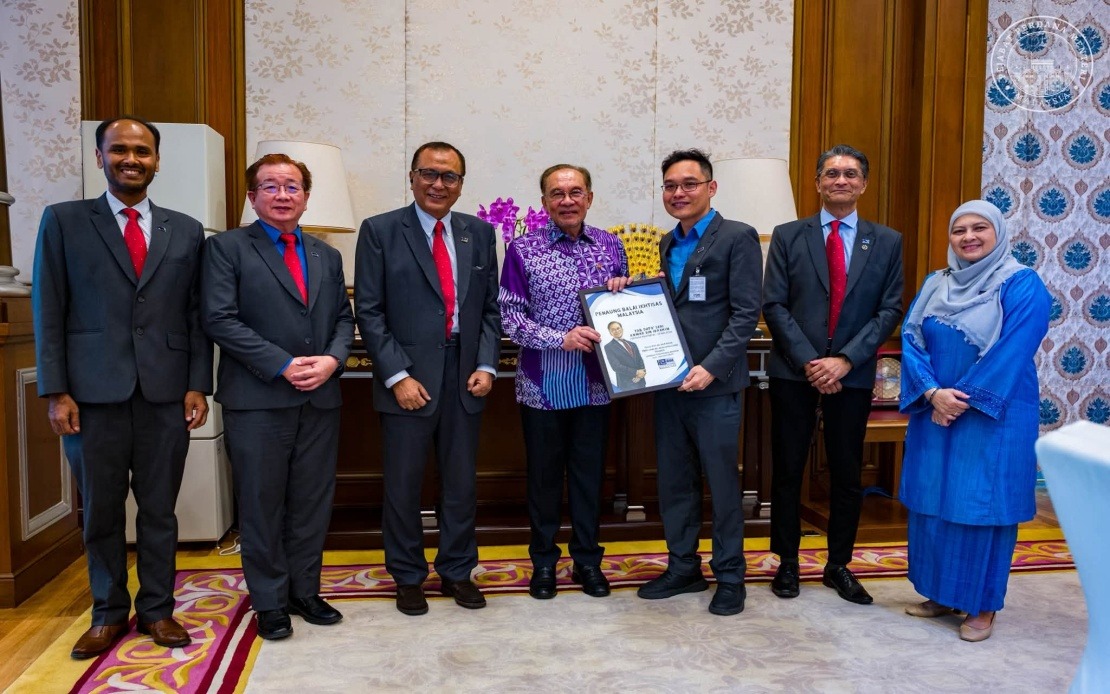
Prime Minister Datuk Seri Anwar Ibrahim has placed artificial intelligence capability and the cultivation of professional talent at the heart of Malaysia's economic agenda, signalling that the government views these areas as essential pillars for the nation's regional standing. During a courtesy visit from Balai Ikhtisas Malaysia (BIM), also known as the Malaysian Professional Centre, the Prime Minister engaged with delegation leadership led by President Prof ChM Dr Juan Joon Ching to chart pathways for deepening the government's collaboration with Malaysia's professional community.
The meeting reflects a strategic pivot toward recognising professionals not merely as practitioners within their fields, but as essential stakeholders in the broader national development framework. Anwar's emphasis on AI readiness comes at a critical juncture when Southeast Asian economies are racing to position themselves as innovation hubs capable of competing in a rapidly digitising global marketplace. By linking talent development directly to artificial intelligence proficiency, the government is acknowledging that Malaysia's future competitiveness depends on equipping its workforce—particularly those in professional and knowledge-intensive sectors—with capabilities that align with technological transformation.
The government's framing of professionals as strategic partners in boosting national competitiveness represents a departure from treating professional bodies as mere consultation points on sectoral issues. Instead, the administration appears committed to embedding professionals into the machinery of the MADANI agenda, the government's flagship initiative centred on achieving shared prosperity and enhancing people's wellbeing. This positioning suggests that the Prime Minister views professional excellence not as a luxury sector concern but as foundational to translating policy ambitions into tangible improvements in living standards across Malaysia.
Artificial intelligence adoption remains uneven across Malaysia's economy, with significant disparities between large multinational corporations and domestic small and medium enterprises. By prioritising AI readiness among professionals, the government may be attempting to create a cadre of subject-matter experts and thought leaders who can facilitate broader adoption across their respective industries and professional networks. Such a multiplier effect would be particularly valuable for sectors ranging from engineering and architecture to finance, healthcare, and management consulting, where professional standards and practices directly influence organisational capabilities.
The invitation extended to the Prime Minister to attend Hari Ikhtisas Malaysia—a dedicated observance honouring the professional community's contributions to national development—underscores the mutual recognition being cultivated between government and professional institutions. This symbolic commitment carries practical implications, as government participation in professional community events typically translates into policy attention and resource allocation. For Malaysia's professional bodies and their members, such recognition can facilitate advocacy for policies that support professional development, continuing education in emerging technologies, and workplace conditions that enable innovation.
Anwar's emphasis on nurturing talent characterised by integrity, competitiveness, and visionary leadership addresses a persistent concern within Malaysia's professional ecosystem: the brain drain phenomenon that sees talented individuals seeking opportunities abroad. By reframing professional excellence as integral to the nation's future and positioning the government as an active partner in professional advancement, the administration may be attempting to create stronger incentives for talented Malaysians to build their careers domestically rather than pursuing overseas opportunities. This retention strategy has significant implications for Malaysia's ability to develop deep expertise in critical sectors.
The focus on AI readiness also carries implications for Malaysia's position within the broader Southeast Asian region. As countries like Singapore, Vietnam, and Thailand accelerate their own digital transformation initiatives, Malaysia risks falling behind if professional competency in artificial intelligence remains concentrated among elite institutions and multinational firms. By positioning BIM and the professional community as focal points for AI capability development, the government is attempting to democratise access to knowledge and expertise in this transformative technology, ensuring that Malaysia's professional base broadly understands and can apply AI tools and methodologies.
The government's engagement with BIM also signals recognition of professional bodies as channels for translating policy objectives into practice. Professional institutions maintain ongoing relationships with thousands of practitioners across the country and exercise significant influence over professional standards, codes of conduct, and continuing education requirements. By cultivating stronger partnerships with such bodies, the government can more effectively disseminate policy frameworks and ensure that professional practice evolves in alignment with national development priorities. This collaborative approach may prove more effective than top-down directives in driving meaningful adoption of new practices and standards.
However, the success of these ambitions hinges on translating commitment into concrete support mechanisms. Talent development at the professional level requires investment in training infrastructure, updated curricula that incorporate emerging technologies, access to world-class educational resources, and incentive structures that reward continuous learning. Similarly, advancing AI readiness demands not only theoretical understanding but practical experience with tools, platforms, and real-world applications. The government's next steps will likely involve allocating resources toward professional development programmes, facilitating partnerships between professional bodies and technology providers, and potentially establishing centres of excellence where professionals can develop and demonstrate AI competency.
The meeting also reflects broader recognition that Malaysia's development trajectory increasingly depends on intangible factors such as knowledge, expertise, and professional capability rather than traditional comparative advantages in natural resources or low-cost manufacturing. This intellectual repositioning, if sustained through concrete policy and investment, could catalyse a transition toward a knowledge-driven economy where professional excellence becomes a defining characteristic of Malaysian competitiveness. For the millions of Malaysians working in professional capacities across diverse sectors, the Prime Minister's emphasis on government support for talent development and AI readiness offers both acknowledgment of their importance and an invitation to participate actively in shaping the nation's future.

