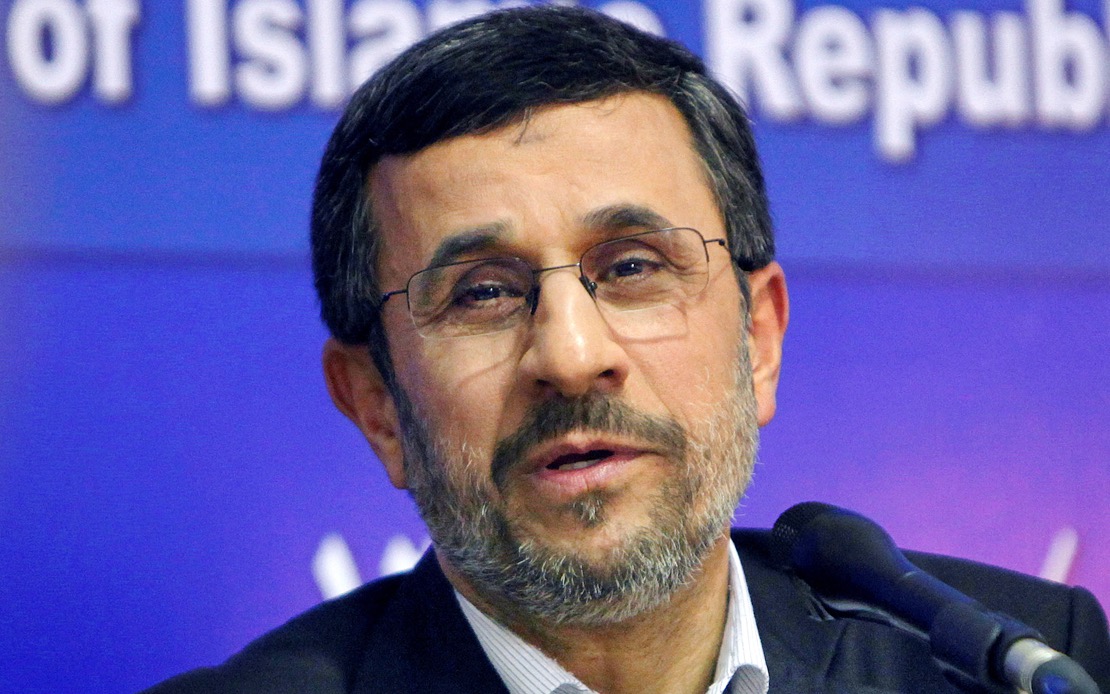
Former Iranian President Mahmoud Ahmadinejad has firmly rejected allegations published by The New York Times that Israel's Mossad intelligence agency attempted to recruit him and that he currently remains under house arrest. In a statement released on Tuesday, his office branded the report "completely false" and accused the American newspaper of deliberately fabricating claims intended to manipulate public perception and deepen existing rifts within Iran's political establishment.
The New York Times piece, published on Monday, contained several explosive allegations centring on what it described as a covert Israeli operation to remove Ahmadinejad from Tehran during the opening phase of escalating US-Israeli military action against Iran earlier this year. According to the reporting, which drew on accounts from American officials and unnamed sources, Mossad operatives had made repeated contact with the former president over recent years, including meetings in Budapest and elsewhere abroad, with the purported objective of positioning him as a potential alternative leader for Iran.
The newspaper's investigation presented a detailed account of what it characterised as financial inducements offered by Israeli intelligence to Ahmadinejad, specifically noting that he allegedly received covert payments for housing and travel expenses. This alleged arrangement formed part of a broader strategic initiative by Israel to engineer political transformation in Iran by cultivating relationships with influential figures who might serve as assets in furthering regime change objectives.
Central to the Times report was an incident dated February 28, when an Israeli airstrike targeted what the publication identified as Ahmadinejad's residential compound. The strike reportedly destroyed a building occupied by his security detail and damaged an armoured vehicle. According to testimony cited from four Iranian officials, a black Peugeot automobile arrived at the scene in the aftermath of the bombardment and transported the former president to an undisclosed secure location within Iranian territory, with the newspaper suggesting that Mossad operatives controlled the vehicle.
Ahmadinejad's office responded to these claims by flatly denying the characterisation of events and questioning the newspaper's journalistic standards. The statement asserted that assertions about house arrest were particularly fabricated, designed to lend credibility to what the office termed "absurd" broader allegations regarding supposed intelligence contacts. Officials emphasised their categorical rejection of all claims advanced in the report, framing the entire narrative as a propaganda exercise intended to mislead international audiences about conditions within Iran.
The timing of this dispute carries particular significance given recent developments in Middle Eastern geopolitics. Ahmadinejad, who served as Iran's president during the contentious 2005-2013 period, made a notable public appearance last week when he attended the funeral of Iranian Supreme Leader Ali Khamenei, marking his first visible presence in the public eye since escalating military tensions between Iran and the US-Israeli coalition intensified. This funeral attendance itself appeared designed to signal his continued engagement with Iran's political scene, seemingly contradicting claims that he is incarcerated or severely restricted in his movements.
The broader context illuminates why such allegations matter beyond their immediate factual accuracy. Reports suggesting that Israeli intelligence has cultivated relationships with prominent Iranian figures strike at fundamental questions about national security, state cohesion, and the vulnerability of Iran's political elite to foreign manipulation. For Malaysian observers and others in Southeast Asia closely monitoring Middle Eastern developments, such narratives reflect the depth of mistrust and intelligence competition characterising relations between Iran and Israel, with implications extending to regional stability and international alignments.
The dispute between Ahmadinejad and The New York Times also underscores the challenge of verifying claims about covert intelligence operations, where evidence by its nature often remains hidden from public scrutiny. The newspaper's sourcing relies heavily on unnamed American and Iranian officials, making independent verification difficult while simultaneously raising questions about motivations behind such disclosures. Ahmadinejad's categorical denials represent the expected counter-narrative in such circumstances, yet without access to primary evidence, observers must navigate between competing claims presented through media channels and official statements.
This exchange sits within a longer pattern of allegations and counter-allegations regarding foreign interference in Iranian politics and the supposed cultivation of alternative leadership figures by external powers. Such reports, whether accurate or not, contribute to an atmosphere of suspicion that shapes policy decisions and political calculations within Iran. For the broader Middle Eastern region, including Southeast Asian states with economic and diplomatic interests in Iran, the persistence of such narratives complicates efforts to establish stable, predictable relationships with Iranian institutions and leadership.
The situation also reflects the intense intelligence competition between Israel and Iran, which has frequently played out through media disclosures and official accusations. Both states employ complex strategies involving intelligence operations, covert support for opposition figures, and strategic communications to advance their regional objectives. The asymmetry in capabilities and resources between the parties shapes how such confrontations are conducted and publicly narrated, with Western media outlets often serving as conduits for official claims from various interested parties.
Moving forward, this episode demonstrates how allegations of espionage and recruitment efforts contribute to the broader diplomatic and political landscape shaping Iran's international relations. Whether or not the specific claims about Ahmadinejad prove accurate, the mere existence of such reporting influences how Iran's government perceives threats to its stability and how it calculates responses to external pressure. For Southeast Asian nations maintaining balanced approaches to Middle Eastern powers, understanding the complex information environment surrounding such allegations becomes essential for informed policymaking and avoiding manipulation through selective information.

