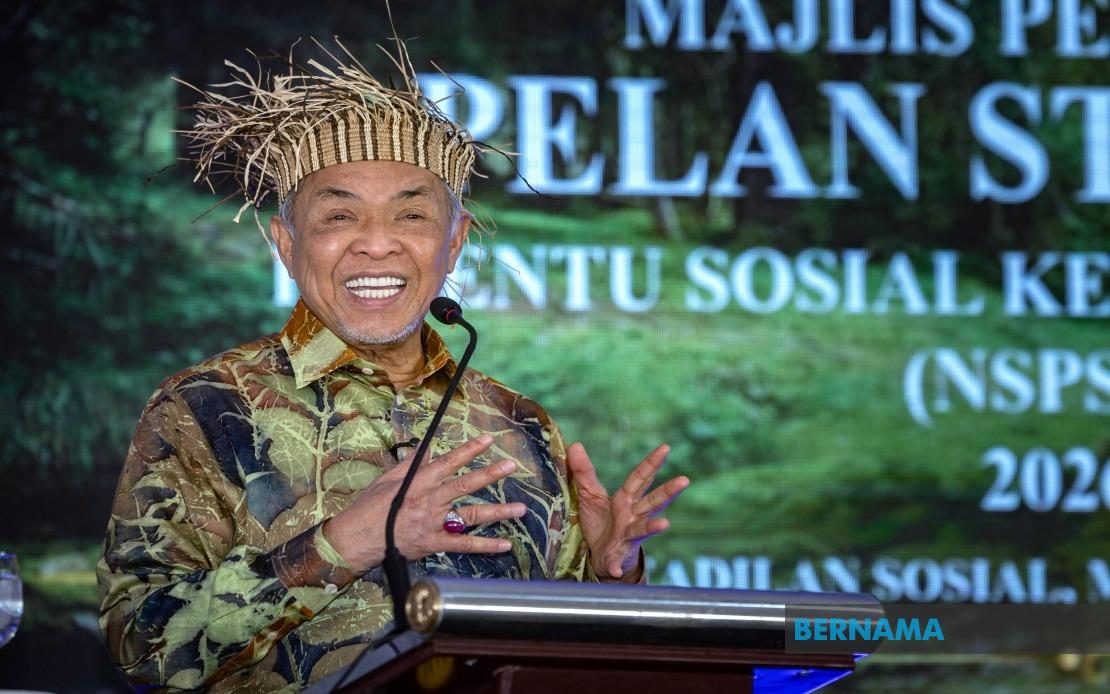
Deputy Prime Minister Datuk Seri Dr Ahmad Zahid Hamidi has appealed to the Malaysian public to offer prayers for Prime Minister Datuk Seri Anwar Ibrahim as he recuperates from a minor surgical intervention. Speaking in Gerik on August 10, Zahid expressed confidence that the Prime Minister would require only a brief period of rest before resuming his full responsibilities leading the nation. The appeal reflects the government's effort to maintain public confidence during a transition period at the highest levels of leadership.
Anwar underwent an elective laparoscopic procedure to address a para-umbilical hernia, a condition requiring surgical correction rather than conservative management. The Prime Minister's Medical Team head, Datuk Dr Asri Ranga Abdullah Ramaiah, confirmed that the procedure proceeded without complications under the supervision of specialist surgeons. The choice of a minimally invasive laparoscopic approach, rather than traditional open surgery, indicates a focus on faster recovery and reduced post-operative discomfort, enabling the Prime Minister to return to state duties more quickly than would be possible with more invasive interventions.
Zahid revealed that Anwar had personally notified him of the scheduled surgery on Tuesday, August 4, suggesting a planned procedure rather than an emergency requiring urgent intervention. This advance notification facilitated smooth administrative continuity within the government structure. The Deputy Prime Minister emphasised that even routine surgical procedures demand adequate recovery time, noting that Anwar would require a minimum of two days away from his official duties. This measured approach balances the need for proper healing against public expectations for swift restoration of full executive function.
To ensure uninterrupted governance during Anwar's convalescence, the Prime Minister delegated authority to Zahid to chair Cabinet meetings in his absence. This succession arrangement demonstrates institutional preparedness and the existence of clear protocols for leadership transitions, whether temporary or prolonged. Such mechanisms are crucial for maintaining administrative continuity and preventing power vacuums that could undermine policy implementation or create uncertainty in government decision-making processes during sensitive periods.
The medical team has placed Anwar under intensive post-operative monitoring, with physiotherapy sessions already underway to facilitate rehabilitation and restore full mobility. The emphasis on specialised physiotherapy reflects contemporary post-surgical best practices, designed to prevent complications such as blood clots or muscle weakness that occasionally emerge after abdominal procedures. Regular supervision by the medical team ensures that any unexpected developments are identified and managed promptly, minimising the risk of prolonged recovery or secondary complications.
For Malaysian readers accustomed to political uncertainty or abrupt leadership changes in the region, the transparent communication surrounding Anwar's medical situation provides reassurance that the government is operating with institutional stability. The prompt public announcement and clear succession arrangements contrast with opaque practices in some neighbouring jurisdictions, where similar situations might generate speculation or anxiety about power dynamics. This openness strengthens public trust in governance institutions and demonstrates that constitutional processes function reliably even during periods when the head of government is temporarily incapacitated.
The incident also highlights the physical demands of serving as Prime Minister, a role that requires sustained energy and presence across multiple portfolios and obligations. While hernia surgery is increasingly routine, the requirement for recovery underscores that even minor procedures impose meaningful interruptions to schedules. In Anwar's case, the timing and nature of the surgery suggest careful medical planning to minimise disruption to the parliamentary calendar and ongoing policy initiatives. Government offices would have coordinated with the medical team to identify an optimal window for the procedure.
From a broader Southeast Asian perspective, Malaysia's transparent handling of executive health matters contrasts with varying practices across the region. Some countries maintain strict secrecy around leaders' medical conditions, while others, like Malaysia, have opted for public disclosure and clarity. This approach reduces rumour and speculation that sometimes destabilise markets or international relations. The confidence that Zahid expressed in Anwar's swift recovery, coupled with the medical team's clear explanation of the procedure and its expected duration, provides stakeholders—both domestic and international—with reliable information to base their assessments.
The Deputy Prime Minister's invocation of prayer, blending religious sentiment with medical pragmatism, reflects the cultural context in which Malaysian governance operates. Such appeals resonate across the country's diverse religious communities, even as the government simultaneously relies on modern surgical expertise. This integration of traditional values with contemporary medicine characterises Malaysia's approach to many social issues and reinforces Zahid's role as both a political figure and a representative of broader national values.
Zahid's public remarks were made while inaugurating the 2026-2035 National Social Determinants of Health Strategic Plan for Orang Asli in Kampung Air Banun, indicating that government business continued without disruption despite the Prime Minister's absence. This parallel scheduling demonstrates the government's commitment to ongoing policy initiatives in healthcare and indigenous welfare, areas that require sustained attention regardless of transitions in executive availability. The government's capacity to advance multiple policy priorities simultaneously during a leadership transition indicates a relatively well-coordinated bureaucratic apparatus.
As Anwar progresses through his recovery phase, the public focus will shift from the medical procedure itself to the timeline for his full return to office. The two-day minimum rest period mentioned by Zahid suggests a relatively quick resumption of duties, though complete restoration of full energy levels following surgery sometimes extends beyond initial expectations. The government's proactive communication strategy—combining transparent medical facts with appropriate cultural messaging—establishes a template for managing similar situations in future, should they arise.

