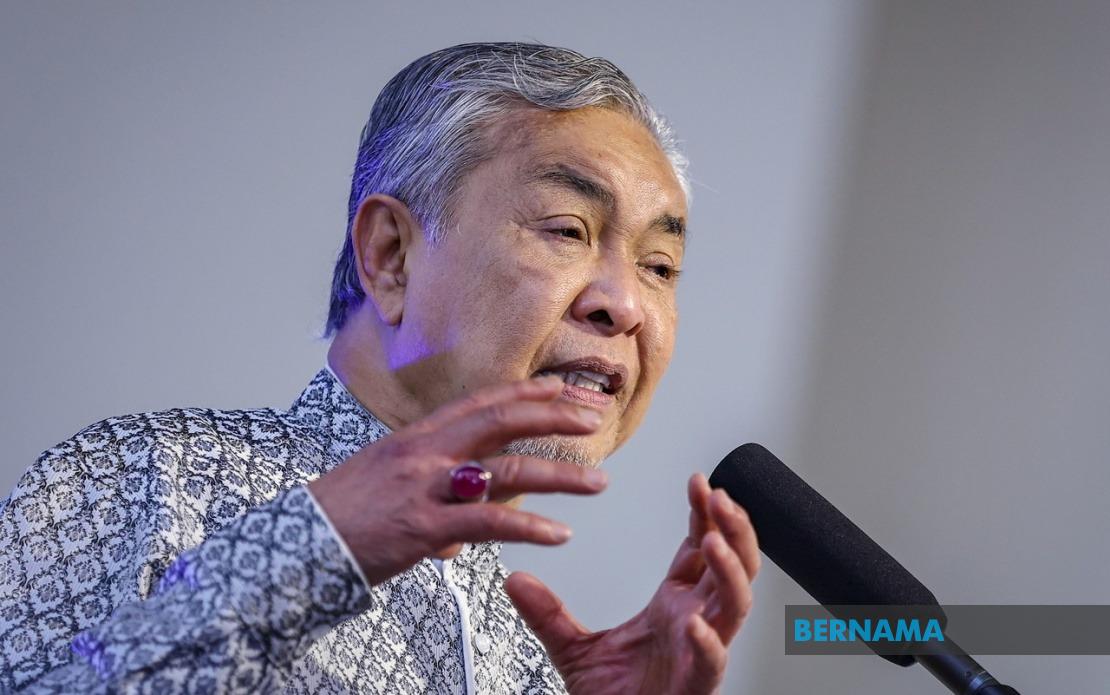
The chairman of Barisan Nasional, Datuk Seri Dr Ahmad Zahid Hamidi, has called upon all contesting parties to move beyond historical disputes during the ongoing Johor state election campaign, advocating instead for a campaign environment grounded in substance and respect. Speaking in Johor Bahru on July 3, the Deputy Prime Minister stressed that the electoral process would benefit from a focus on what candidates can offer the electorate rather than scores to settle from the past, particularly when several parties maintain cooperative relationships at the federal government level.
Ahmad Zahid's remarks come at a time when political contestation in Johor carries particular significance for the ruling coalition. The state election, scheduled for July 11 with early voting on July 7, represents a major electoral battleground where BN is fielding candidates across all 56 seats. The party's performance in Johor carries implications not only for state governance but also for the broader political stability of the federal government, given the interconnected nature of Malaysian politics where state and national administrations often feature overlapping coalitions.
The BN chairman was explicit about his concern regarding the re-emergence of divisive historical matters during campaign activities. He acknowledged that certain quarters have been directing criticisms at UMNO and the broader BN coalition, leveraging old controversies as campaign ammunition. However, Ahmad Zahid argued that such tactics are counterproductive, particularly given the institutional reality that leaders from different parties frequently find themselves working together in the Cabinet. Raising contentious historical issues, he suggested, risks creating unnecessary awkwardness when these same individuals must collaborate on governance matters weeks after the election concludes.
This appeal reflects a pragmatic understanding of contemporary Malaysian politics, where single-party dominance has given way to coalition governance requiring cooperation across traditional party rivalries. The federal government comprises BN, Pakatan Harapan, and other parties working within a unity framework, meaning that personal or partisan animosity from campaign season must be set aside for effective administration. Ahmad Zahid's intervention suggests that BN leadership sees a risk of this unity being undermined if the Johor campaign becomes a venue for dredging up past controversies that could poison future working relationships.
Contrary to perceptions that might characterise BN as a confident frontrunner, Ahmad Zahid presented the coalition as approaching the election from a position of vulnerability. He explicitly described BN as the underdog, attributing this assessment to significant shifts in Johor's political landscape in recent years. The coalition captured 40 seats in the previous state election, and improving substantially on that result will require intensive effort rather than relying on historical dominance. This characterisation, whether strategically motivated or genuinely reflective of internal assessments, underscores the competitive nature of the contest.
Demographics present both challenge and opportunity for the ruling coalition. According to Ahmad Zahid, more than half of Johor's voters are now young people, a cohort whose political preferences cannot be assumed to align with BN's traditional support base. This generational shift necessitates that the party's campaign messaging and policy offerings directly address the concerns and aspirations of younger voters, moving beyond appeals to established constituencies. The coalition's strategy, as articulated by Ahmad Zahid, centres on positioning itself as the party best positioned to provide young Johoreans with pathways to economic security and professional advancement.
The BN manifesto, as endorsed by Menteri Besar Datuk Onn Hafiz Ghazi, places particular emphasis on youth-oriented policies, with technical and vocational education and training forming central planks of the party's offer to younger voters. This reflects recognition that formal university education alone cannot absorb or adequately prepare Malaysia's youth for the labour market, and that skills-based training represents both a more inclusive pathway to employment and a genuine economic necessity. The manifesto's focus on skills development connects directly to Malaysia's broader economic challenge of transitioning toward higher-value activities while ensuring that workers possess the capabilities demanded by modernising industries.
Ahmad Zahid cited recent economic data to support the coalition's broader economic narrative. The unemployment rate has fallen to 2.9 per cent, a figure presented as evidence of improving labour market conditions under the current federal administration. However, the BN chairman acknowledged that aggregate unemployment statistics mask a more nuanced reality. Joblessness figures alone do not capture underemployment, wage stagnation, or the prevalence of precarious work arrangements. Young workers particularly may find themselves in positions that provide income but lack the stability, benefits, or wage levels necessary to support independent adult lives. By emphasising access to premium-wage employment through skills training, Ahmad Zahid implicitly recognised this distinction.
The vocational training emphasis holds particular resonance for Southeast Asian economies facing similar demographic and labour market pressures. As Malaysia and its neighbours grapple with automating routine manufacturing while requiring workers for more sophisticated production and service sectors, technical education becomes essential infrastructure for shared prosperity. BN's manifesto positioning itself as the champion of skills development could prove electorally significant if the party successfully communicates to young voters that the coalition understands their employment challenges and offers concrete, credible solutions.
Ahmad Zahid's dual role as both BN chairman and Minister of Rural and Regional Development adds another dimension to his electoral advocacy. Rural and regional development priorities often intersect with youth employment concerns, as younger people in less-developed areas may lack local opportunities and face pressure to migrate to urban centres. A coherent BN strategy connecting vocational training initiatives with regional development investments could address both urban and rural youth constituencies, broadening the coalition's appeal beyond its traditional strongholds.
The electoral stakes extend beyond Johor itself. The state's voting patterns historically influence perceptions of national political momentum, with strong performances by either the ruling coalition or opposition contributing to narratives about government stability and public confidence. A BN success in Johor would provide the federal coalition with evidence that it retains the capacity to mobilise voters despite internal tensions and rivals' critiques. Conversely, opposition gains would suggest that the unity government faces genuine electoral vulnerabilities, potentially emboldening challenges to federal stability. Ahmad Zahid's campaign messaging and strategic positioning therefore carries implications well beyond the state's borders.
The Deputy Prime Minister's appeal for campaign maturity and focus on substantive policy offers represents an attempt to shape the tone and substance of electoral competition in Johor. Whether this appeal succeeds depends on the willingness of all contesting parties to prioritise governance over grievance airing. For Malaysian voters and regional observers watching Johor's election, the campaign's character will reveal much about the health of institutional democracy and the degree to which political rivals can compete vigorously while maintaining the cooperative relationships increasingly necessary for effective governance in Malaysia's coalition-dependent political system.

