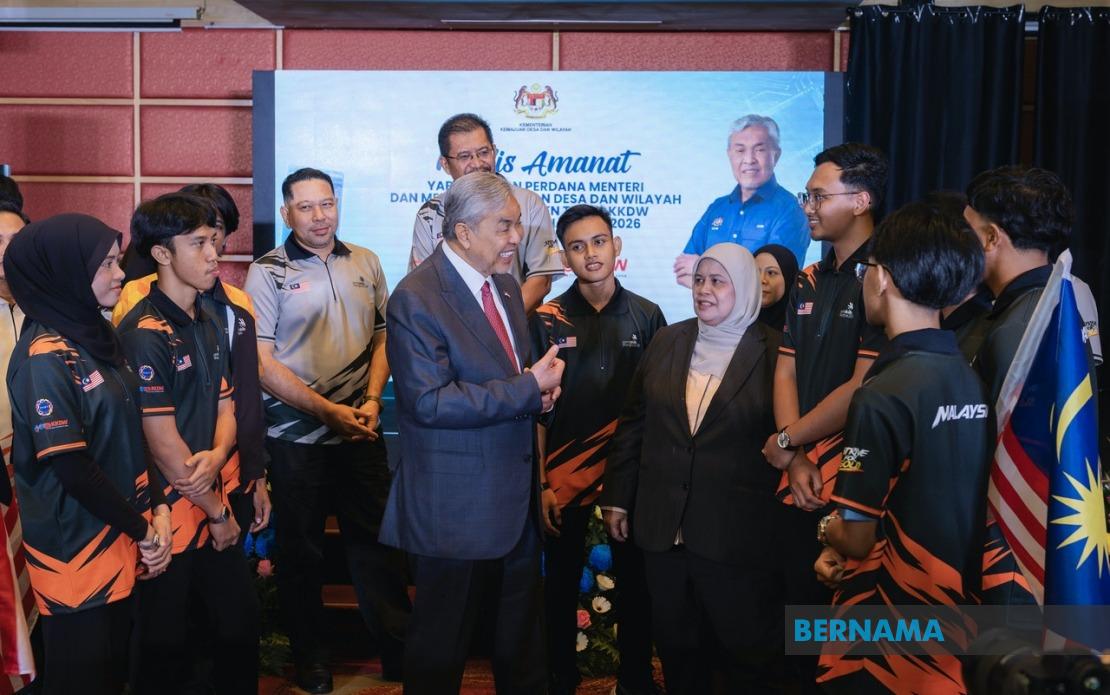
Deputy Prime Minister Datuk Seri Dr Ahmad Zahid Hamidi has made a significant personal pledge to fund umrah pilgrimages for Malaysian technical vocational students who secure gold medals at the forthcoming WorldSkills Competition 2026 in Shanghai, China, scheduled for September 22 to 27. The commitment, announced during an address to the TVET@KKDW contingent, underscores the government's investment in recognising excellence among Malaysia's skilled workforce and aligns with broader efforts to elevate the status of technical education within the nation.
Ahmad Zahid, who holds the dual portfolio of Deputy Prime Minister and Rural and Regional Development Minister, emphasised that the sponsorship would be drawn entirely from his personal financial resources rather than government coffers. This distinction carries symbolic weight, positioning the initiative as a personal gesture of gratitude toward participants who represent Malaysia's technical prowess on an international platform. The minister's willingness to commit private funds demonstrates the value placed on TVET excellence at the highest levels of government.
The pledge extends beyond individual gold medallists to encompass their parents, a gesture that acknowledges the family sacrifice often required when students pursue technical education pathways and commit to international competition preparation. Ahmad Zahid articulated this dimension explicitly during his remarks, stating his intention to sponsor not only the participants themselves but also their accompanying parents for the religious journey. Should all nine representatives achieve gold medal success, the full cohort and their parental escorts would benefit from the sponsorship arrangement.
Malaysia's contingent to Shanghai comprises nine competitors selected to represent the nation across diverse technical disciplines. The roster demonstrates the breadth of skills development within Malaysia's TVET ecosystem, spanning traditional craftsmanship through to emerging digital competencies. Nadratulliyana Ab Malek will compete in Fashion Technology, while Haziq Syahmi Nazri represents Automobile Painting. The digital and construction sectors are covered by Mohammad Ezaly Iman Ramli in Cyber Security, Muhamad Nashrul Zulkifli in Digital Construction, and Muhammad Haziq Lailla Zamri in Electrical Installations.
Electronics expertise will be presented by Amirul Sharif Sharifudin, while manufacturing and engineering dimensions feature through Khairul Idham Bahari's participation in Cabinetmaking, Muhammad Huzairy Mohamad Thes in Mechanical Engineering CAD, and Wan Hamiz Ozai Wan Hamidzi in Rail Vehicle Technology. This composition reflects deliberate portfolio management, ensuring Malaysia's technical capabilities are showcased across sectors crucial to economic development and regional competitiveness.
The WorldSkills Competition represents one of the premier international platforms for demonstrating technical excellence among younger workforces. For Malaysia, participation in these biennial competitions carries strategic importance beyond individual achievement. Success metrics translate into international recognition that directly benefits national reputation in skills development, influences foreign investor perceptions regarding workforce quality, and provides benchmarking data against regional competitors including Singapore, Thailand, and South Korea.
Ahmad Zahid's involvement and personal commitment signal heightened political attention toward TVET as a policy priority. Historically, technical education pathways have competed for student enrolment and institutional resources against traditional academic routes. Executive-level advocacy and tangible incentivisation through prestigious rewards like sponsored religious pilgrimages can influence perceptions among families considering educational options for their children. The umrah sponsorship, in particular, carries meaningful resonance within Malaysia's Muslim-majority population, where the hajj and umrah pilgrimages hold profound spiritual and social significance.
Also present during the announcement was Deputy Rural and Regional Development Minister Datuk Rubiah Wang, whose attendance underscored institutional commitment from her ministry. This joint engagement across ministerial levels reflects coordination mechanisms designed to ensure TVET students receive comprehensive support ranging from curriculum development through to international competition preparation and post-competition recognition. Such structural involvement helps insulate programmes from political discontinuity that might otherwise disrupt long-term skills development initiatives.
The Shanghai venue carries particular relevance for a Southeast Asian economy increasingly oriented toward regional trade and cooperation. China's dominance in manufacturing, engineering, and emerging technologies means that competitive performance on Chinese soil carries additional implications for Malaysia-China bilateral relations and workforce mobility discussions. Success achieved in Shanghai reverberates beyond individual participant achievement into broader narratives about Asian economic integration and Malaysia's positioning within regional supply chains.
From a policy perspective, Ahmad Zahid's initiative addresses a structural challenge within TVET systems across Southeast Asia: the psychological and social valorisation of technical pathways relative to academic alternatives. Concrete rewards, particularly those with cultural or religious significance, contribute to perception shifts regarding career trajectories. Parents contemplating whether their children should pursue Form 5 studies or enter vocational programmes weigh not only economic prospects but also social standing and recognition frameworks. Government-backed incentives like umrah sponsorships enhance the perceived status elevation associated with technical excellence.
The nine-person contingent represents Malaysia's deliberate selection process through which prospective competitors undergo rigorous evaluation and preparation spanning months. Such intensive preparation periods strain family finances, as students often require additional coaching, travel for regional qualifying competitions, and opportunity costs associated with time diverted from employment. Personal sponsorship commitments from senior government figures provide psychological reassurance to participants and families that their sacrifices receive recognition and that excellence will be appropriately rewarded.
Looking toward the September competition, Malaysia competes within a regional context where other Southeast Asian nations allocate substantial resources toward WorldSkills preparation. Thailand, Vietnam, and Indonesia maintain competitive contingents, creating an implicit rivalry that energises domestic media attention and public engagement. Malaysian gold medal achievements would provide domestically relevant success stories, offering journalists and commentators reference points when discussing the nation's technical education quality and youth skill development effectiveness.
The broader implications extend into workforce planning discussions, as employers increasingly reference WorldSkills achievements when assessing graduate quality and determining recruitment strategies. Universities and vocational institutions that produce medallists gain recruitment advantages and can command stronger employer partnerships. For Ahmad Zahid's ministry, successful medal outcomes at Shanghai provide evidence supporting budget allocation arguments for TVET investment and help justify policy decisions prioritising skills development over other regional development alternatives.

