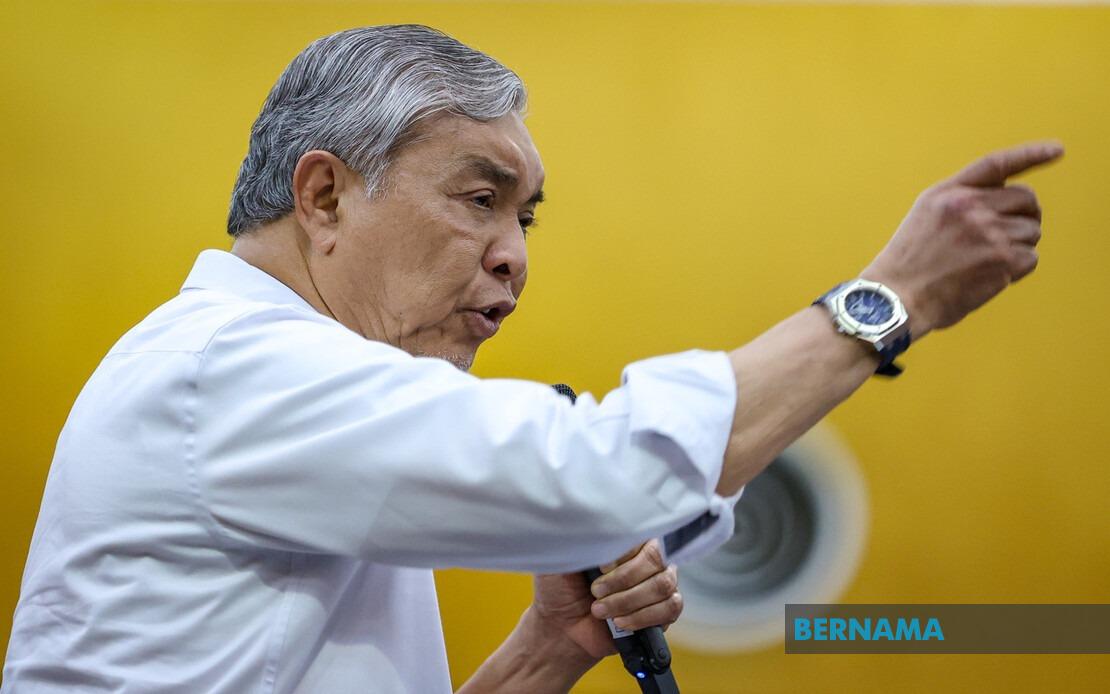
Deputy Prime Minister Datuk Seri Dr Ahmad Zahid Hamidi has unveiled a proposal to equip student leaders with structured training in civics and political literacy, seeking to bridge what he perceives as a knowledge gap among Malaysia's younger generation. Speaking in Johor Bahru on July 9, Ahmad Zahid suggested that Student Representative Councils (MPP) operating across Malaysia's institutions of higher learning should participate in specially designed courses exploring leadership dynamics and the nation's political framework. His intervention signals growing concern within government circles about the level of political consciousness among first-time voters and suggests a strategic push to ensure young voters make informed electoral choices.
The Deputy Prime Minister, who chairs the Barisan Nasional coalition, framed the initiative as essential groundwork for developing a generation equipped to grapple with Malaysia's complex contemporary challenges. He contended that exposure to structured political education would help student leaders develop the intellectual tools necessary to understand and ultimately influence the country's political direction. Rather than viewing such engagement as optional or peripheral to campus life, Ahmad Zahid positioned political literacy as a foundational competency that university leaders ought to possess, particularly given their influence over peer communities.
Crucially, Ahmad Zahid pledged that the federal government would absorb the financial burden of these courses, removing potential cost barriers that might otherwise limit participation. The commitment remained conditional on formal approval from Higher Education Minister Datuk Seri Dr Zambry Abd Kadir, suggesting that implementation would require coordination between multiple cabinet-level departments. This funding offer represents a tangible commitment to the concept, moving the proposal beyond rhetorical posturing into the realm of potential policy action, though the timeline and specific curriculum content remain undefined.
The framing of his remarks reveals a nuanced approach to youth political engagement. Ahmad Zahid explicitly stated that young Malaysians need not become active party operatives or campaign volunteers to benefit from such education. Instead, he distinguished between passive political literacy and active partisan involvement, arguing that the former constitutes a civic responsibility regardless of whether individuals choose to pursue the latter. This distinction proves important given Malaysia's sensitivity around student activism and the historical tensions between university administrations and politically mobilized student bodies.
Drawing on his own trajectory, Ahmad Zahid recounted his formative experiences as a student leader at Universiti Malaya, suggesting that institutional involvement during tertiary education can catalyze lifelong political engagement. His personal example served to legitimize student leadership roles and implied that such positions naturally create opportunities for political learning. By positioning his own early activism as unremarkable and beneficial, he sought to normalize political engagement among campus influencers.
The proposal carries particular relevance as Malaysia confronts the challenge of engaging an increasingly diverse youth demographic. Eighteen-year-old first-time voters now constitute a substantial proportion of the electorate, yet many lack the contextual understanding necessary to evaluate competing political narratives or assess the substantive differences between parties. Ahmad Zahid's concern that young voters "waste" their ballots by casting votes without adequate information reflects frustration with low-quality democratic participation, suggesting that the government views educational intervention as preferable to either dismissing youth disengagement or mandating participation.
The timing of Ahmad Zahid's announcement coincides with Johor's state election preparations, with 56 seats set for contest on the Saturday following his remarks. This proximity to polling day suggests that the proposal, while presented as long-term institutional reform, also functions as a messaging strategy ahead of the state contest. By emphasizing the government's commitment to youth development and political education, Ahmad Zahid simultaneously burnishes the Barisan Nasional's credentials as a force for nation-building while potentially mobilizing first-time voters in Johor.
For Malaysian institutions of higher learning, the proposal opens questions about the appropriate relationship between university administration and political education. While structured civics courses exist within formal curricula at many campuses, externally funded and government-designed courses targeting student leadership structures could blur lines between educational autonomy and political influence. Universities would need to navigate carefully to ensure that such training enhances students' analytical capacities rather than channeling them toward particular ideological conclusions.
The proposal also reflects broader regional patterns. Across Southeast Asia, governments face similar challenges engaging youth voters and combating political apathy. Malaysia's approach—offering state-funded education rather than attempting to control or suppress student activism—represents a relatively permissive strategy, though its effectiveness remains uncertain. Whether students provided such training would develop more sophisticated political judgment or simply absorb government-favored interpretations of Malaysian politics would depend substantially on course design and instructor selection.
Looking forward, Ahmad Zahid's initiative suggests that the Barisan Nasional leadership believes demographic shifts necessitate more sophisticated youth engagement strategies. Rather than assuming automatic deference or relying on traditional patronage networks, the government increasingly recognizes that younger voters require persuasion through demonstrated competence and policy attention. Educational initiatives targeting campus influencers represent an investment in this persuasion effort, targeting node leaders who can multiply the government's messaging among their peers.
The proposal ultimately raises fundamental questions about what Malaysian democracy requires of its citizens. Ahmad Zahid's insistence that voters understand political realities reflects a conception of democracy emphasizing informed choice over mere ballot-casting. Whether this vision aligns with Malaysian electoral practice—where complex federalist arrangements, coalition politics, and patronage networks often obscure meaningful voter choice—remains uncertain. Nonetheless, his willingness to fund educational initiatives signals that at least some government leaders recognize that sustained democratic legitimacy demands more than procedural voting; it requires electorates capable of sophisticated political judgment.

