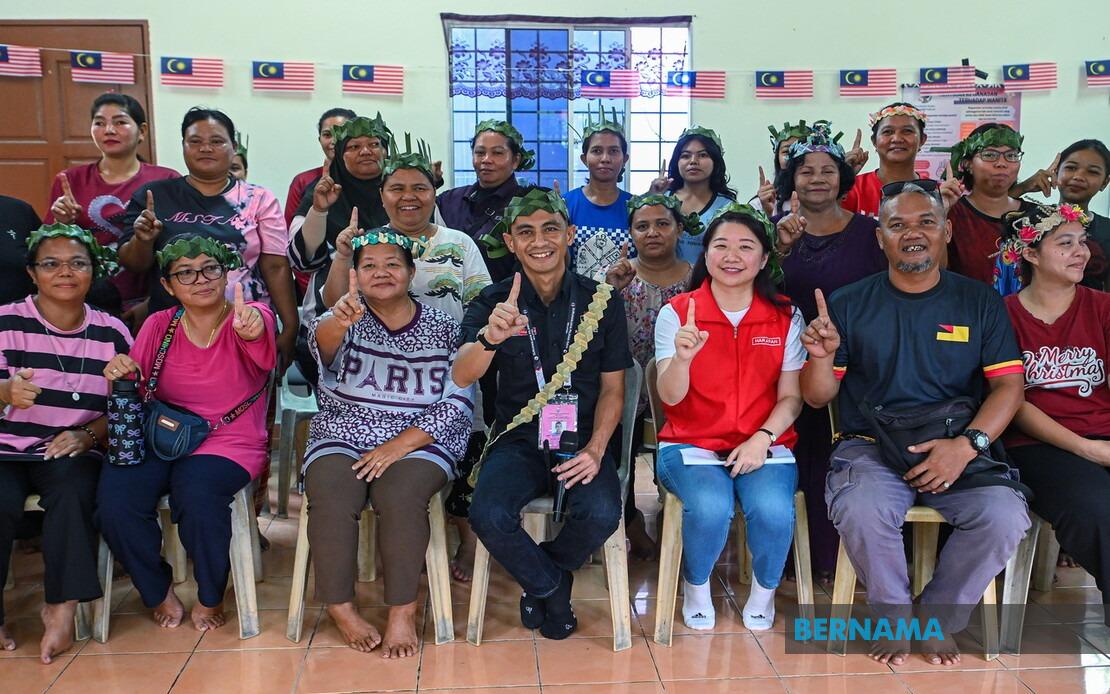
Datuk Ahmad Faez Abdul Razak, contesting the Labu state seat for Pakatan Harapan in the upcoming Negeri Sembilan state election, has positioned the development and economic upliftment of the Orang Asli community as a central plank of his campaign. Speaking at an Orang Asli Women Empowerment programme in Kampung Orang Asli Tekir, Ahmad Faez outlined a detailed platform aimed at transforming living standards and economic prospects for the indigenous residents, reflecting broader PH initiatives to address marginalised communities in East Coast and central peninsula constituencies.
The candidate's policy framework encompasses several interconnected development priorities designed to address longstanding infrastructure deficits and economic constraints facing the village of approximately 796 residents. Should PH secure the mandate in the August 1 poll, Ahmad Faez intends to escalate the contentious issue of customary land rights at Kampung Orang Asli Tekir to the Negeri Sembilan State Legislative Assembly, signalling his commitment to formalising indigenous land tenure—a perennial challenge affecting Orang Asli communities across Peninsular Malaysia. This initiative carries significant symbolic weight, as land rights disputes have historically marginalised indigenous populations from resource access and development benefits.
Infrastructure modernisation constitutes another critical dimension of Ahmad Faez's platform. Current conditions in the settlement lack adequate road connectivity and digital access, factors that compound economic isolation and limit educational and commercial opportunities. His proposed improvements include enhanced road networks and expanded internet coverage, infrastructure investments that would facilitate market access for local producers and enable students to engage with digital learning resources. These upgrades would address immediate quality-of-life concerns while establishing foundational conditions for broader economic participation by younger villagers seeking income diversification beyond traditional livelihoods.
Economic opportunity generation represents perhaps the most ambitious element of the candidate's vision for Kampung Orang Asli Tekir. Ahmad Faez has identified handicraft production as a sector with substantial growth potential, proposing targeted marketing strategies to expand the customer base beyond local and regional markets. This recognition of existing artisanal capabilities aligns with successful models implemented in other Orang Asli settlements, where cooperative frameworks and e-commerce platforms have substantially increased producer incomes. The expansion of handicraft markets would preserve cultural production practices whilst creating sustainable livelihoods that do not depend upon resource extraction or agricultural labour.
Agricultural modernisation through biotechnology represents a complementary economic development pathway. Ahmad Faez has committed to introducing fertigation systems—drip irrigation combined with nutrient delivery—to enhance agricultural productivity and create more stable farming incomes. Such technological adoption would increase crop yields per unit of land whilst reducing water consumption, a particularly valuable advancement given climate variability affecting monsoon-dependent agriculture across the peninsula. This approach positions farming not as a subsistence activity but as a commercially viable enterprise capable of generating household savings and capital investment for agricultural diversification.
Educational and youth development priorities in Ahmad Faez's platform address the demographic reality that younger Orang Asli residents possess considerable potential but confront barriers to skill acquisition and formal employment pathways. By emphasising youth-focused initiatives alongside infrastructure and economic development, the candidate acknowledges that sustainable community advancement requires human capital investment. Young villagers require not only educational access but targeted vocational training aligned with emerging economic opportunities in handicraft production, agricultural commerce, and digital-economy sectors.
Ahmad Faez's campaign narrative emphasises sustained engagement with Kampung Orang Asli Tekir extending beyond electoral cycles. The candidate claims a two-year history of community involvement and ground-level problem-solving, positioning himself as distinctly committed to constituent service rather than transactional political engagement. This framing responds directly to Orang Asli electoral sophistication; indigenous voters have repeatedly demonstrated awareness of candidate credibility and historical follow-through on campaign commitments. Village chief Nasir Musil's endorsement of Ahmad Faez's frequent visits and material assistance lends credibility to these claims of sustained engagement, though independent verification of assistance levels remains important for voter assessment.
The electoral context in Labu reflects broader Negeri Sembilan political dynamics. Ahmad Faez's maiden candidacy represents PH's competitive positioning in the state following the 2023 federal election, when the coalition substantially expanded its parliamentary representation. The three-cornered contest pits the PH candidate against incumbent Mohamad Hanifah Abu Baker of Parti Pribumi Bersatu Malaysia (Bersatu) and Barisan Nasional's Siti Nur Umaira Hasim, fragmenting the opposition vote and creating potential pathways for PH victory in a swing constituency. Orang Asli voters may occupy a pivotal position in determining the outcome, particularly if Ahmad Faez's community engagement strategies have successfully mobilised indigenous political consciousness around specific development grievances.
The election commission's schedule—early voting on July 28 followed by general polling on August 1—provides limited campaign window for candidates to consolidate voter messaging. Ahmad Faez's intensive focus on Orang Asli development represents a deliberate electoral strategy targeting a demographic segment whose votes may prove decisive in a closely contested seat. The emphasis on addressing specific community grievances including the stray cattle menace, highlighted by village chief Nasir Musil, demonstrates responsiveness to constituent concerns beyond headline development agendas.
Orang Asli political mobilisation in Negeri Sembilan reflects broader peninsular patterns whereby indigenous voters increasingly expect concrete policy commitments addressing historical marginalisation and resource access restrictions. Ahmad Faez's platform, whether genuinely implementable or primarily electoral positioning, signals that Malaysia's major political coalitions recognise indigenous communities as constituencies whose interests merit targeted policy engagement. The electoral test will determine whether Labu residents view the candidate's commitments as substantive development promises deserving electoral support or whether competing candidates' approaches resonate more powerfully with voter priorities and demonstrated commitment to community welfare.
The Labu contest thus transcends local significance, representing a crucial indicator of indigenous electoral preferences and the credibility of different political actors' development commitments to marginalised communities. Should Ahmad Faez successfully mobilise Orang Asli voters through his development platform, PH may replicate similar strategies in other constituencies with substantial indigenous populations, potentially reshaping electoral competition in states including Perak, Selangor, and Pahang where Orang Asli settlements remain politically underdeveloped. Conversely, if incumbent or BN candidates effectively counter Ahmad Faez's development messaging, established political actors would retain capacity to maintain indigenous constituency support despite competing coalitional platforms.

